
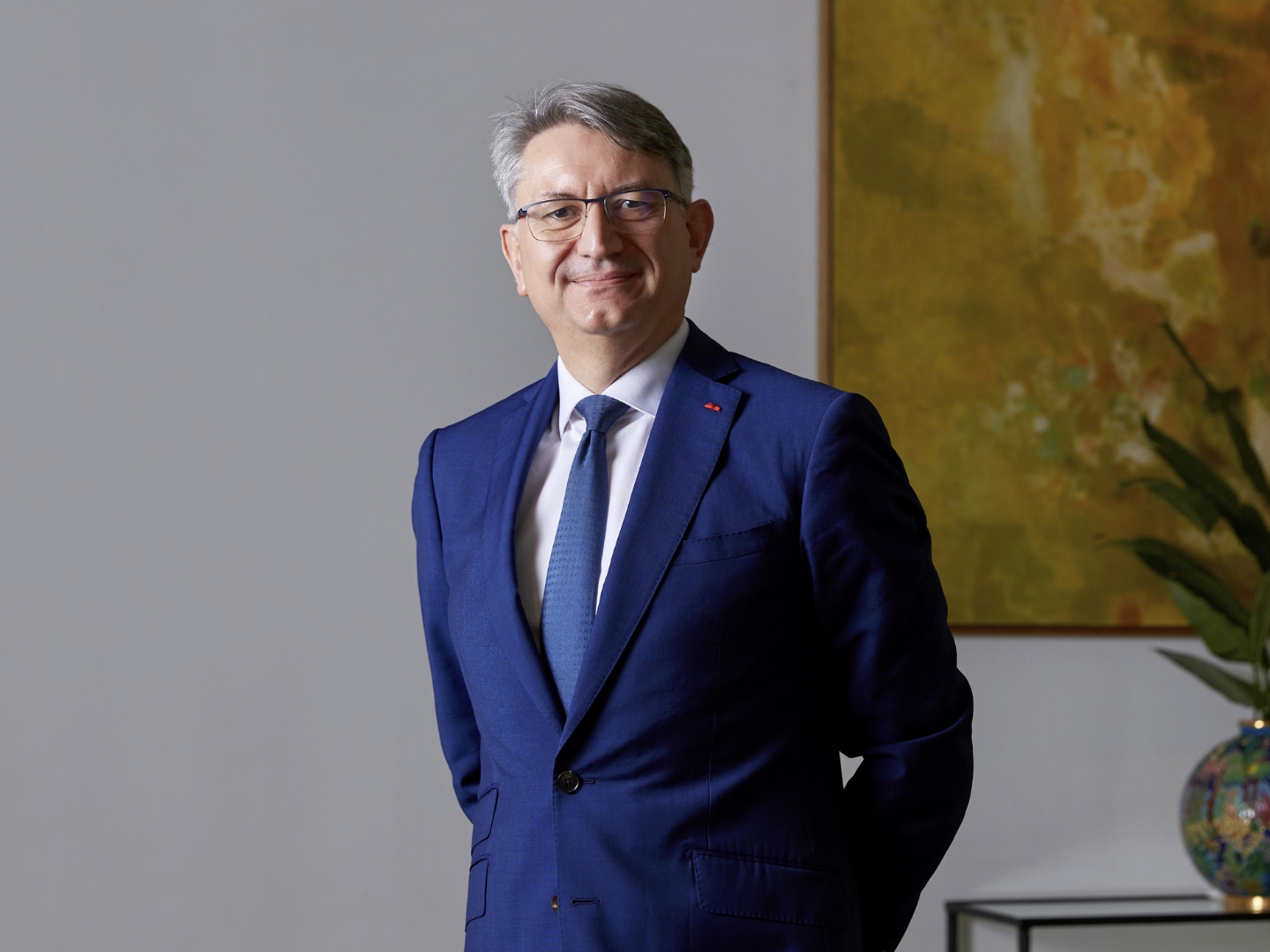
"To anyone considering a diplomatic career, know that is is impactful and fulfilling. Ultimately, you are networking, showcasing, influencing and convincing people about your country." (Photo: SooPhye)
Saying it has been a tense few months on the world stage would be putting things very mildly indeed. Talk about WWIII and the nuclear Doomsday Clock ticking towards midnight has become commonplace conversation these days. So, as global security becomes the most pertinent issue facing modern-day society, there is no more timely reminder of how crucial diplomacy is in charting the path to peace.
“Granted, there have been periods of growth and stability but, if you were to really analyse history, the world has never truly been at peace,” muses HE Axel Cruau, ambassador of France to Malaysia. “Even if we were to look back at recent times, there were very challenging instances. Even Covid-19 itself can be considered a great challenge, not forgetting other events, like the 2022 invasion of Ukraine. Whether we like it or not, this is the world we are living in: always changing, sometimes turbulent.”
Instagram vs reality
Fairly or unfairly, particularly to those of us living in what has been termed the “Klang Valley bubble”, hobnobbing within the diplomatic circle is a primarily pleasurable pastime. From evening soirées to
national-day fêtes, champagne receptions and exclusive gatherings in sprawling diplomatic residences at the plummiest addresses in town, black-tied swishness is par for the course. And although this romanticised view may form a small part of the overall reality, the truth is that diplomatic life is intense and commands long hours, and a significant part of one’s working life is spent researching, analysing, negotiating and nurturing relationships, no matter how trying the circumstance.
After all, to be a diplomat, in essence, is to be able to quickly and easily adapt to different environments — be it countries, cultures or languages (usually all three) — while fostering ties and allegiances. The representative of any country needs high intelligence and emotional quotient, as one has to quickly grasp socio-political vibes — that is, to read the room — lest it suffers the consequences. A diplomat has to safeguard his country’s interests at all times while tirelessly championing its foreign policy objectives. Upon hearing this, Cruau immediately cites Claude Martin’s book, La diplomatie n’est pas un diner de gala, as a perfect literary example. “It is exactly as Martin says: Diplomacy is not a gala dinner! Those days are definitely over,” he states. “We have to face facts that, more than ever, we need to work harder to do what we can to achieve mutually beneficial results for our countries, our people and the world in general.”
wife.jpg

Holding a bachelor of arts in history and a master in political sciences from Sciences Po Paris and having studied further at the École Nationale d’Administration (National School of Administration), a university founded by Charles de Gaulle that has been the choice of many of France’s key political figures such as incumbent president Emmanuel Macron, Dominique de Villepin, Élisabeth Borne and Alain Juppé, Cruau began his career with the Ministry of Europe and Foreign Affairs in 2001 before moving to New York to take up the position of First Secretary at the French Permanent Mission to the United Nations.
A Baedeker life duly followed, with postings to Beijing (which remains particularly special for Cruau, as it was in the Chinese capital that he met Dourène, his wife and the mother of his three children), Los Angeles and Shanghai, serving as consul general in the latter two.
During the pandemic, Cruau was recalled to Paris, where he headed the Coronavirus Task Force, before another appointment as director of Cabinet of the Minister Delegate to the Ministry of Europe and Foreign Affairs followed. Malaysia is Cruau’s first ambassadorial posting, a position he officially took up in February 2023 after presenting his credentials to the Yang di-Pertuan Agong.
Vive la Diplomatie
g20_summit.jpg

Although times have never seemed more challenging, onlookers might consider recent months a gilded hour in Franco-Malaysian ties. Things really kicked off last November when Macron got Malaysians all excited on the X social media platform when he tweeted compliments and encouraging words in fluent Bahasa Melayu, following a meeting with Prime Minister Datuk Seri Anwar Ibrahim, complete with a photo of both of them all smiles and locked in a handshake at the G20 Summit in Rio de Janeiro, Brazil.
This month proved even better, however, with Anwar’s official visit to France on July 3 and 4, accompanied by several ministers, including from the Ministries of Foreign Affairs; Transport; Agriculture and Food Security; Investment, Trade and Industry; and Defence. As the PM also currently holds the position of chairman of Asean, France, naturally, pulled out all the stops, with Prime Minister François Bayrou welcoming the Malaysian leader at his official residence of Matignon, before culminating in a working dinner with Macron.
This tour proved particularly significant, as it has been 15 years since a high-ranking Malaysian official last visited France (the last, it has to be said, was by Datuk Seri Najib Razak, who met Nicolas Sarkozy at the Élysée Palace in October 2009). Even the French president hailed Anwar’s visit as a success, as both leaders jointly revived partnerships across all sectors.
“As ambassador, truth be told, I would have loved a longer visit, it is important enough that the president and prime minister got to meet and talk heart to heart, leader to leader,” Cruau says. “After all, both our countries think along the same lines — we believe in multilateralism, the UN Charter, a rule of law and, above all, to work towards world peace and security. We also strongly believe the EU and Asean should do more together. So, this visit was a success, which will lead us towards the next steps we must take.”
Besides serious economic deals, such as the newly signed project in the critical minerals and rare earth sector with the Lyon-based Carester, the historic cooperation between AirAsia, Malaysia Airlines and Airbus, whose main office is located in Blagnac, Malaysians on homeground have also enjoyed the resumption of direct flights between Kuala Lumpur and Paris, with the first part of the journey — the ride on the KLIA aerotrain — taken in Innovia APM 300R trainsets by French multinational rolling stock manufacturer, Alstom, which operates worldwide in rail transport markets.
french_pm.jpg

Not content with merely visiting France, a growing number of Malaysians are also taking up the language. “His Excellency, the French ambassador Axel Cruau, has always been very active and on the ground, working hard to improve ties, not just with the business community and French companies based in Malaysia, but also between the Malaysian community,” says YAM Tengku Datin Paduka Setia Zatashah Sultan Sharafuddin Idris Shah, president of Alliance Française Kuala Lumpur. Certainly under his leadership, Franco-Malaysian ties are growing, even at the grassroots level. Already, AFKL is ranked one of the best performing in the world.
With regard to international DELF/DALF language proficiency certifications, Malaysia clinched the top spot in Asia and ranked fifth worldwide in 2023. “Although the official statistics for 2024 are not out yet, we already know that more Malaysians did better, with 3,696 candidates sitting for the globally recognised French government language exams last year,” says Zatashah. “It is also interesting to note that the students came from all over the country, including the East Coast states and Sarawak. This shows a keen interest in French language and culture and we are glad to enjoy his and the embassy’s support in various ways, without which we would not have been able to pull off the many other events that contribute towards building better ties and understanding between Malaysia and the French-speaking community, such as the annual French Festival, the Fête de la Musique and the French Film Festival.”
With the upcoming Bastille Day celebrations on July 14, not long after the official Malaysian visit to France, it would appear that Cruau has had little to no time to rest. “After Le 14 Juillet, which will be celebrated at AFKL on July 13, I will fly to Terengganu to award Christine Longuet a medal of merit,” he says, referring to the 81-year-old Parisian who has called Pulau Duyong home for more than five decades, becoming a pillar of the community for whom she has built a library. “She has done so much for both countries. Finally, we can honour her and thank her.”
It is a move that will undoubtedly please many Malaysians, particularly those who call the East Coast state home. As Dr Jarina Mohd Jani, an associate professor with the Universiti Malaysia Terengganu and a Francophone herself, says: “I was thrilled when I heard the French government was honouring Christine with the prestigious Le Chevalier de l’Ordre national du Mérite, because she is the embodiment of ‘Vouloir, c’est pouvoir’ — a very famous French saying about determination. When I got to know her over two decades ago, she was doing her master’s degree at 60! I remember thinking what an amazing feat that was. So, when she said she wanted to do a PhD to ‘inspire my grandchildren’ after turning 70 and asked me to be her supervisor, I was unable to say no, despite knowing how tough it was going to be for a free spirit like her to ‘conform’ to rigid academic requirements. Against all odds — between homemaking, grandmothering, commissioned book-writing and many other interesting pursuits — she persevered and finished her PhD, perhaps the first octogenarian to do so in Malaysia. Kudos to the French Embassy of Malaysia for championing her nomination and securing it for her. This award is a wonderful celebration of her unbreakable spirit, and may it inspire others to bravely conquer their dreams, too.”
La Vie en Rose
books.jpg

On an equally happy note, Cruau practically beams when he speaks of life in KL. “It will never be a perfect time, but we must remember what our grandparents went through during WWII and do our part to make things better … to forge better relationships, to keep prosperity development ongoing for all — and, at the very least, prevent wars,” he says, only half-jokingly. “Yes, the world is a dangerous place. But it is also a beautiful place with great people. To try to be happy is our duty, since we are granted the gift of life; but, most of all, we must all strive to make the most of what we have been given.” He concedes, however, that it is easy to be happy in Malaysia. “I can honestly say the great highlight of my time here — and long may it last — is the truly great people you meet, from every walk of life.”
Although he is no stranger to Asia, this is Cruau’s first posting to Malaysia. “In a way, this is good, as I had formed no prior conceptions,” he jokes. But delve into the country’s history he did, by his preferred preparation method of reading, reading, reading. Adopting a multi-faceted approach to literature, he began with Malaisie by the famous planter Henri Fauconnier, which won the Prix Goncourt in 1930. A legendary name in the oil palm industry, Fauconnier was credited with being the first to commercially plant oil palm over a century ago at the Tennamaram Estate in Batang Berjuntai (now Bestari Jaya), Selangor, forever transforming the country’s economy. Cruau then picked up Le Sacrilège Malais by Pierre Boulle, a satirical novel but this time by a rubber planter; Les Sultanats de Malaisie by Laurent Metzger; and then, David Delfolie and Elsa Lafaye de Micheaux’s Malaisie Contemporaine.
Being a history buff and having studied it at university, Cruau is well aware that there has never been a true golden age. “It is a myth, but a myth we all need and one we keep on clinging to,” he smiles. “Every period was dangerous in its own way. For example, the 1960s are often called a golden age, owing to the groundbreaking advancements in so many fields, the rise of rock ’n’ roll and pop culture, significant decolonisation on the continent of Africa and more. But it was also a time when nuclear annihilation was very possible, with the 13-day Cuban Missile Crisis bringing the world the closest it has ever been to full-scale nuclear conflict. Those times were very tense indeed. Now, it is still tense — just in different ways. It is like what [Italian philosopher Antonio] Gramsci said: The old world is dying, and the new world struggles to be born. Now is the time of monsters.
“You know, it is strange when diplomacy is discussed as a career. I mean, it is not something you would think of as a childhood ambition. There is also this pervading image of diplomacy being an endless round of dinners, talks and writing papers that don’t have any impact. But I can tell you it is not true. And to anyone considering a diplomatic career, know that it is impactful and fulfilling. Ultimately, you are networking, showcasing, influencing and convincing people about your country. So, it really is up to you to make things happen. But also know that it is a long-term process, sometimes intangible. You might not live to see the results, but you can live with knowing you played a part in serving your country at every level, big and small.”
8.jpg
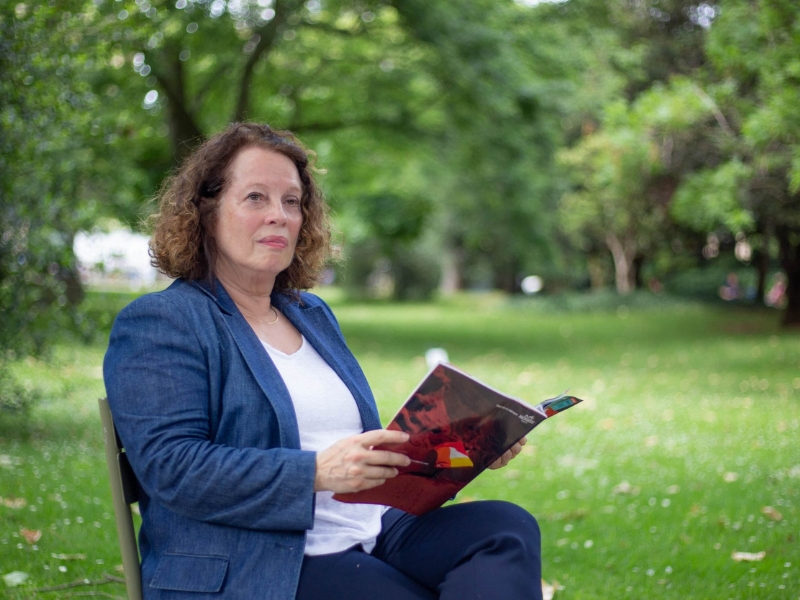
Cruau acknowledges a former mentor and accomplished diplomat herself, Sylvie Bermann, who helped him with his initial footing in the corps. “I was very lucky to have had my first working experience under a great diplomat, who was to become ambassador to countries like China and Russia,” he says. “She is retired now but I still remember her fondly. How you start sets the tone for what lies ahead.”
Asked what qualities were needed to succeed in this multi-faceted arena, Cruau lists “courage” as the primary element. “Ha, you think it is a strange quality but, believe me, you need courage. Besides the possibility of being posted to a country where conflict and strife is normal, you also need to be brave to constantly be uprooted every few years, to live in strange and new places, to totally restart often. You need to understand your relationships with family and friends will be affected. You will miss out on a lot. Your spouse must be not just supportive but equally adaptable to new ecosystems and environments. So, yes, to thrive as a diplomat, I would say you need to be courageous.
“I had a very good class with an ex-colonel of the British army who was based in what was then Malaya during the Emergency, a Colonel Hartford. Although the conflict was limited to the peninsula, Borneo became involved through the British recruitment of Ibans and [other] Dayaks as rangers and trackers. He was a great guy and taught the best class I ever attended. I remember it vividly, as he was no-nonsense and very practical, teaching us several things, chief of which was: 1) never forget the world is a dangerous place; 2) those who don’t know history are bound to repeat it; and 3) NATO matters. For a French person in 1996, it was also a good reminder of the importance of certain alliances,” he says, referring to a time when France was navigating a complex relationship with the intergovernmental transnational military alliance. “You could say I was very lucky to have had such real and stern lessons long before becoming a diplomat. They are lessons I will never ever forget.”
Native of Nantes
nantes.jpg

Born on June 20, 1973, in Nantes, to a doctor father and nurse mother, Cruau did not come from a globetrekking family. “An uncle who was working for a telecommunications company was posted to the French West Indies … that’s about it,” he laughs. “But way, way back, at the beginning of the 20th century, a great granduncle was the captain of a ship and we grew up hearing of him and his exploits, sailing all over the world. To be able to live a similar life now, well,” he exclaims, throwing out his arms in happiness. Although he has little time to spare whenever he is back in France, ever the diplomat, Cruau extols the virtues of the city of his birth. “I would sell the idea of Nantes as a cultural city,” he says. “It used to be quaint, but sleepy. I would liken it to Bordeaux, but a smaller one.”
Set along the Loire and about 50km from the Atlantic Ocean, Nantes was often bypassed by travellers en route to the Île de Ré or the scenic beaches along the Bay of Biscay coastline, such as Les Sables d’Olonne in the Vendée region or Pornic in the Côte de Jade. But, now, the city is reclaiming its position as a place of inspiration, as well as the birthplace of the ultimate “traveller” of all — Jules Verne — whose imagined exploits spanned the centre of the earth, floating cities and five weeks travelling in a balloon. The seeds of the author’s celebrated 54-novel series Voyages Extraordinaires were said to have been planted during his childhood, spent watching ships leave the harbour. “The municipality has done a fabulous job in terms of culture,” he notes.
“For many years, especially now in the summertime, Nantes is packed with cultural festivals, such as the annual Voyage à Nantes with sculptures and contemporary art installations, as well as Aux Heures d’Été and Les Rendez-vous de l’Erdre, both offering free concerts, shows in parks and gardens, and even jazz with a boat parade. It is a great destination, especially in the summer months, so I would encourage everyone to spend a few days, first in Nantes, and then to enjoy the whole Loire Valley region. And if you are interested in war history, there is also St Nazaire, a port town. Those who like cycling will need a whole week for this, riding along the banks of the Loire and enjoying all the châteaux along the way. The whole Loire Valley is just fabulous.”
Accustomed already to the Malaysian proclivity for food, Cruau adds — even before being asked — several suggestions of Nantais specialities, including a rum and lemon-flavoured moist almond cake, Petit-Beurre butter biscuits and a colourful, fruit-flavoured pyramid-shaped candy called berlingots. “We French are similar to Malaysians in that we share the same obsession with food,” he quips.
oyster.jpg
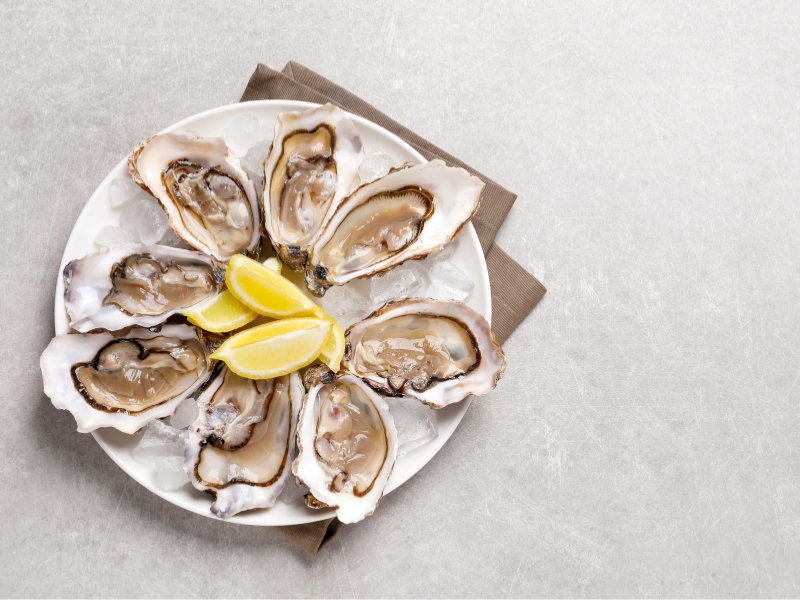
It would be remiss to talk about Nantais culinary traditions and omit beurre blanc. The emblematic sauce of the Nantes region, beurre blanc (also called sauce Nantaise) is a warm emulsified butter sauce made using a reduction of vinegar or Muscadet. “The sauce, with lots of butter in it, goes particularly well with white fish. But I would recommend brochet (pike), a common catch in the Loire. All you need is that, and a few potatoes. But please, don’t take my word for it. Go explore the food scene in France, which keeps getting better and better, especially with a new generation of young chefs from various cultures. Each of them is doing very inventive spins on traditional things, which makes it very exciting for anyone who is interested in cuisine.”
His Excellency also shares memories of a traditional eel dish that is now very rare, owing to overfishing, pollution, climate change and the ray-finned fish’s overall declining populations. “It is now almost impossible to be eaten anymore, of course, but these civelles, or baby glass eels, were once a speciality of Nantes, best boiled and served cold with a nice vinaigrette.”
As Nantes was a thriving colonial port in the 18th and 19th centuries, which traded a lot with African colonies, there was an availability of exotic ingredients such as sugar and rum. “I would imagine the local chefs and pâtissiers trying to figure out how to use these new things, which probably led to the birth of the famous rum-soaked Gateau Nantais.”
Future friendship
As we wrap up and he prepares for his next engagement, Cruau offers a pithy observation. “[The relationship between] Malaysia and France can only thrive, as we share many similarities. We like to lead a good life — a life that is not only just about work, but also the importance of family. Both countries also know there are other important things in life beyond the office: There are art, culture, religion, spirituality and, of course, food. This is imperative because what is life without sharing something? Every society understands the importance of breaking bread. It is informal diplomacy, if you will. If you are willing to first share a meal, you can then take the next step of sharing something more.” The great French statesman Talleyrand himself could not have said it better.
This article first appeared on July 14, 2025 in The Edge Malaysia.