

Lin originally joined SJMC as a financial analyst in the 1990s, and now, as CEO, he takes a people-first approach and remains committed to the welfare of staff and patients alike (Photo: SooPhye)
Unless you are a doctor, nurse or medical student, you would probably associate hospitals with awkward health screenings and physical examinations, being severely ill or facing life-threatening situations. Having to visit a hospital often means putting normal life on pause, whether it is just for a day to get a routine test done or for an extended period of time for intensive treatment.
However, healthcare — the quality of it and advancement of what is available to us — is a crucial part of the human experience. Hospitals can also be the nucleus of innovation and new approaches to wholesome living. Subang Jaya Medical Centre (SJMC), one of the country’s leading private institutions, is a prime example of this.
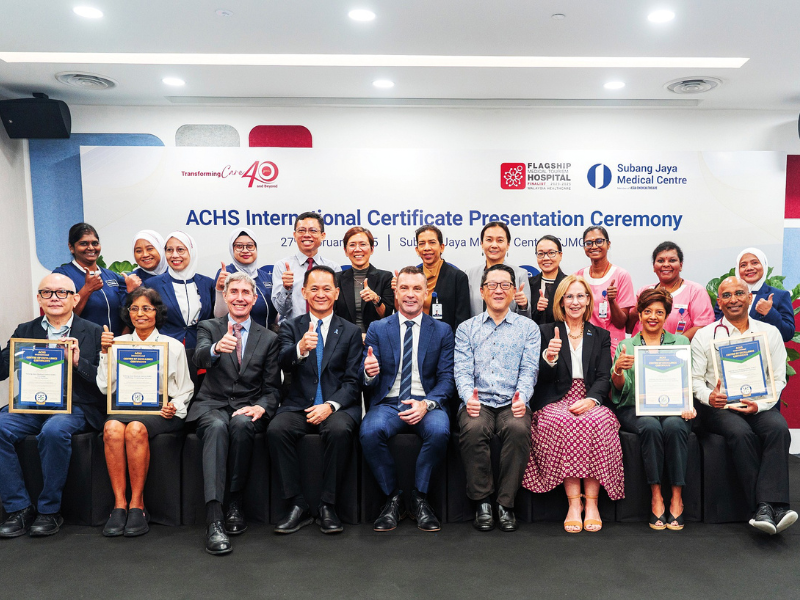
The recipient of multiple industry awards and the first of its kind to be accredited as a Centre of Excellence by the Australian Council of Healthcare Standards International (ACHS), SJMC is no stranger to setting the regional standard for world-class care. Many of its clinicians are well-known names in their respective niches and often travel overseas to participate in knowledge exchange programmes as well as offer medical aid to those in remote areas of the country where access is scarce.
At the helm is CEO Bryan Lin, once a man of finance and now a prominent figure in the Malaysian medical scene. Although not a practitioner himself, he possesses what is arguably the most vital element for any in this line of work — a sincere concern for patient welfare and an eagerness for modernisation. In an unpredictable post-pandemic age characterised by unstable socioeconomic conditions, the industry is in desperate need of novel and groundbreaking approaches. Lin tells us about some of the developments at SJMC, where efforts to build a more robust nation are well underway.
Life path
As a child, Lin did not dream of a career in healthcare; modelling himself after his parents appeared to be the natural path. “Growing up with parents who were businesspeople, I thought I would just go into finance or be an entrepreneur,” he says.
However, everything changed when his mother lost her vision due to retinal detachment as a complication of other health issues. The blindness set in gradually over time and for months, his father’s key goal was to seek a magic bullet. “I watched my dad take her to all the hospitals he could to find a cure. They even travelled overseas to Singapore and the UK. Despite the efforts, she never regained her sight.”
This incident left a mark on the Lin household and a lasting impression on the boy. Today, he feels he was fated to have this career as his mother’s medical problem showed him how dedicated clinicians are to their work. That opened his eyes to a purpose bigger than any one person can attain: improve the lives of those in need. “Everyone will probably need to receive medical care at one point in their life,” he says. “This work [in the healthcare industry] is an opportunity to serve the society. Maybe you can even save a life.”
While he stayed true to his initial aspirations, his keenness to get people back on their feet led to his first job at a kidney transplant centre in the US (where he attended university), where his role involved helping patients procure and afford the transplants they needed. There, he quickly realised how assisting one person has a ripple effect throughout the community and how one simple act can touch the lives of countless family members and friends.
1.png

In the late 1990s, Lin returned to Malaysia and was recruited into the ranks of SJMC’s financial team. His time abroad allowed him to be a bridge between the American senior management team members and local staff. One may think that a job in finance mainly entails tallying up digits and staring at a computer screen all day but he assures that it goes much deeper than that. The finance division at SJMC were expected to not only know the numbers but also the reasons behind each report and finding. This meant getting to know every niche and department.
“Something I learnt from my bosses, the Americans at SJMC, was that anyone can read a positive or negative variance. My role was to find the story behind it. To do that, I had to go down to the ground. I could not be sitting at my desk looking at my computer 24/7 and unravel the questions that way. I had to talk to the people such as the concierge, nurses, radiographers, clinicians, IT technicians and more.”
Six years later, he brought this crucial lesson to his next job at another hospital, where he became the financial controller. This leadership position taught him the importance of delegating and putting sustainable systems into motion — the tell of a great captain is how well the ship sails in his absence. Some 12 years down the road, this mindset would lead him to his very first stint as a CEO at an establishment in the Klang Valley, which he helped build from the ground up.
4.png
There was something about SJMC, almost like a feeling of being called home, that drew Lin back in 2022. The fundamental teachings he took away nearly three decades ago still ring clear in his present day work, influencing his people-first approach and commitment to the welfare of patients and staff alike. On any given day, it is quite normal to find the CEO walking the floor, checking in with colleagues, helping visitors find their way and even surveying the state of washrooms. “If the toilets are clean, then I know everyone is doing their job. If even these are not maintained, there’s someone slacking off somewhere.”
Always in the mood for a chat and laugh, Lin is far from the intimidating god-like image associated with some CEOs. He sees himself as another cog in the well-oiled machine, just a man with a vision and a knack for empowering experts. Propelling SJMC forward requires a strong connection with each department — the same ones he would visit daily all those years ago and still does. “Every establishment has its bells and whistles but your people are the ones who make these things work. Human capital is the more important asset in any organisation. As a leader, I have to trust my people, give them the appropriate training, guidance and coaching,” he affirms.
Tough pill to swallow
In early September, the country was shaken by reports on a parliamentary press conference where it was revealed that even the nation’s top 20% income group (T20) was seeking care at government facilities due to rising insurance premiums and medical costs at private hospitals. It presented an unsettling reality that many had been anticipating but wished would never materialise, where even the wealthy found themselves between a rock and a hard place, leaving little hope for the rest.
Malaysians’ gripe with private hospitals is not new. For decades, there has been a widespread belief that these institutions are driven by profit and have no interest in affordability. This sentiment particularly stings when paired with the misconception that these same establishments offer more attentive care and even better outcomes due to their likely investment in renowned (and usually Western) technologies and medicines. It is hard not to come to the conclusion that one’s economic standing determines their access to decent healthcare, and even the value of their life.
Lin affirms that while profit will always be a dominant topic with all companies, SJMC’s approach places patients at its core. “We are built on a patient-first cornerstone,” he explains. “While some profit is shared among stakeholders, much of it is channelled towards investing in technologies and treatments. The average profit margin in the industry is 9% to 12%. Close to 80% is put into investing in advancement.”
While this does not solve cost issues for patients (Lin says this is a problem faced by the government and private hospitals alike, and can only be properly addressed if all the relevant parties — lawmakers, device and medicine manufacturers, insurance companies and providers — band together), it creates some comfort knowing that money is predominantly poured into upgrading the grounds and services.
5.png

One impressive investment SJMC has made in recent years is Next-Generation Sequencing, a type of molecular cancer cell test. Lin clarifies: “No two cancers are the same. With this technology, we can break down the genetic code of the cells and determine targeted, precise treatment — which chemos and therapies will actually work.” He also notes that prior to the introduction of the system in 2020, those who opted for this procedure had to send test samples overseas, usually to the US, and wait for weeks or even months to obtain the results. Now, the turnover rate is just a few days, enabling doctors to draft therapy plans faster and increase recovery rates.
Other cutting-edge technologies offered include Synchrony and ExacTrac Dynamic. The first is particularly useful for lung cancer cases as it uses artificial intelligence to time radiation beams according to a patient’s regular breathing pattern, avoiding the need for them to hold their breath during the procedure, which can be difficult and uncomfortable. The latter, also a form of radiotherapy, has the ability to target tumours down to the submillimetre and is commonly employed for cancers located in sensitive areas like the brain, where even the smallest error can have dire consequences.
While it is always good to buy into the latest tech and cures, the areas which Lin is most proud of are SJMC’s comprehensive multi-disciplinary approach and heart for growth. Every clinician here is a specialist, but whenever there is a serious case on hand, the various departments and personnel will join minds to come up with the best path forward. This includes post-therapy care, where patients are referred to support groups and offered life skill classes such as cooking and floral arrangement to give them a sense of normalcy and belonging.
When Lin and his team expand into a new niche, like with the recently opened neuroscience and surgery unit, it is a non-negotiable that any practitioners brought on board must believe in and adhere to these methods. This steadfast concern for patients’ overall well-being creates trust — which Lin says is the one thing that can never be breached — and why many view SJMC as the go-to place for complex medical concerns.
3.png
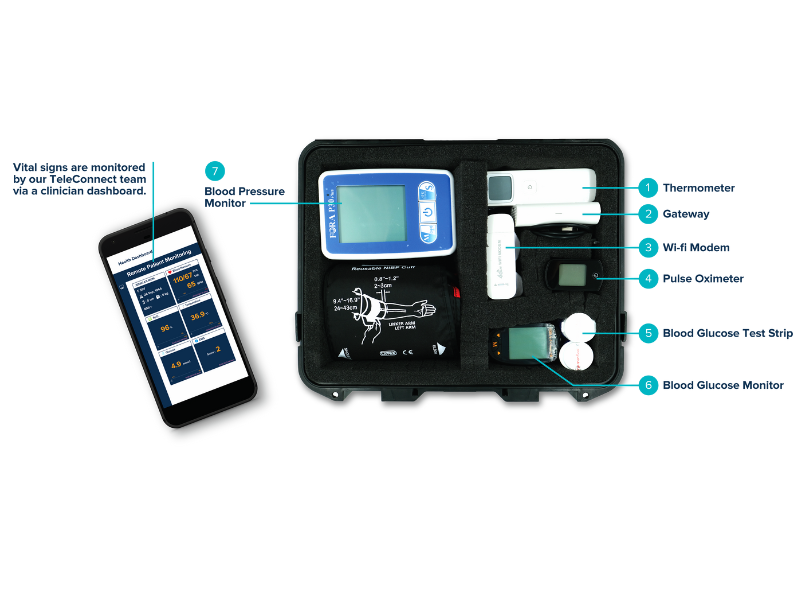
Not everything worth building on needs to be ultra-complicated and high-tech. Over the past few years, the hospital has been implementing Connected Care, an evolution of its TeleConnect (a 24-hour hotline for health enquiries) and SeniorConnect (a focus on the elderly now offered under the Connected Care umbrella) programmes. The system is simple yet incredibly beneficial — patients with conditions that can be monitored from home are supplied with the necessary tools to measure their vitals such as pulse oximeters and blood pressure/glucose readers that are connected to SJMC’s data cloud. Readings are taken throughout the day and observed from a command centre. Upon any warning signs, the doctor can call the patient’s residence to check their condition and dispatch an ambulance or make an appointment for further investigation as needed. This reduces the need for costly therapies.
The pandemic proved that most Malaysians can take care of themselves and their loved ones when unwell. Being infirm already takes a physical toll, so the comfort of home can ease the psychological effects. Embracing systems like Connected Care and other forms of telehealth has created a more wholesome approach to welfare, one where a trip to the hospital is the final resort. “It is about seeing patients not just as cases, but as human beings and practising healthcare in a way that focuses on the overall good health that people need instead of just treatments,” Lin notes.
Fighting fit
In June 2024, Bloomberg published an article titled “Yes, People Really Are Getting Sick More Often After Covid”, about a matter we have all thought about in the past couple years. An analysis by London-based disease forecasting company Airfinity found that due to the decline in vaccinations, compromised immunities and even climate change, communicable diseases from the flu to tuberculosis are on the rise. The survey, conducted globally, reported that 44 countries and territories had experienced resurgences in at least one infectious disease 10 times more severe than pre-pandemic norms. With Covid-19 being the first global pandemic in the age of modern medicine, the world is concerned about what may come next.
There is another aspect to the troubling picture. While overall interest in outdoor activities and fitness has gone up after the lockdowns, on a whole, people are still not taking care of themselves well. Poor diets and hectic schedules go hand in hand. Cooking at home regularly has become less of a habit, and few know how (or care) to read labels while grocery shopping and make healthy meal plans. Under the pressures of a wobbly economy, working individuals are spending more time on the clock, and getting sufficient rest is a luxury. It is commonly said that the body remembers. The fact that chronic illnesses are diagnosed even more among the young is a harsh reminder of the unsustainable lifestyles we have normalised — of how we take health for granted until it is too late.
While Lin does not deny the dread caused by rising healthcare costs, he notes that approaches to our own self-care must also shift if we are to see a meaningful change in public well-being. Tending to just one corner of the garden does not equate to a lush landscape — consistent and effective exercise, healthy diet and stress management must all be attained. Not only would this take the excess strain off the industry and allow for a balancing of prices, but it would also curb the alarming rates of serious conditions and improve the chances of full recuperation when we do fall sick.
The issue has deep roots, so SJMC has several initiatives in place to turn this hope into reality, starting with youth education. It is all fun and games when freshly independent 20-something-year-olds take to the internet to joke about not daring to make doctor’s appointments without the aid of their parents, but this reflects a real problem of medical confusion and even fear among Gen Z and millennials — a worrying notion as they are beginning to have families of their own.
“It all starts from home, in early childhood,” says Lin. “To address that, we must begin with parents or couples who are looking to start a family”. SJMC’s maternity programmes include classes that go beyond just what to expect from pregnancy and labour, and dive into the intricacies of raising healthy children and instilling good habits from a young age. It also offers soon-to-be and new parents a safe place to refer to for any concerns they may have. “If they notice anything off in their child’s development, we have development paediatricians and child psychologists they can consult. All these measures are already in place, but a greater awareness and action is key to ensuring children cultivate healthy habits early on.”
SJMC is also a big advocate of staying on top of your annual health screenings, an area that Lin is looking to further refine with the introduction of a sports physician. “It’s not about making the next Lee Chong Wei, but to monitor how someone is living a healthy lifestyle and help put them on wellness and exercise programmes,” he points out, adding that an early prognosis typically means less necessary intervention and subsequently lower cost. The hospital also collaborates with gyms and vendors to launch interactive initiatives such as daily walk challenges to get people up and moving.
2.png

While public awareness campaigns, talks and comprehensive testing are important, SJMC is taking things a step further for guaranteed impact with its Alumni Circle programme that concentrates on individuals born at the hospital. “We are 40 years old, and there have been many babies delivered here who are now in their twenties and thirties. The Alumni Circle primarily focuses on those who are now in the workforce and might have young families of their own,” Lin explains.
The project, which began in the first half of the year with a public announcement calling for SJMC babies born between 1985 and 2005, aims to provide members with networking opportunities, group activities and simple privileges like screening package discounts to encourage them to take a more diligent role in their own health. “Our inaugural kick-off activity was pickleball!” he recalls. “There was a good crowd and I feel they are hungry for more. We hope to do an official launch at the end of the year and hold more engagements, introduce more productive lifestyle initiatives and resource sharing.”
With Lin at the helm of SJMC, its core dedication is to keep those who are healthy out of the hospital. “Many of our initiatives are designed to ensure more people know how to look after themselves. You can always talk about concepts but it only makes sense when you offer the right tools. Create a wellness chart that touches on all aspects of the body — physical, emotional, mental. We cannot only focus on what happens after we get very sick, but also how to prevent progressing to that stage.”
This article first appeared on Sept 29, 2025 in The Edge Malaysia.