
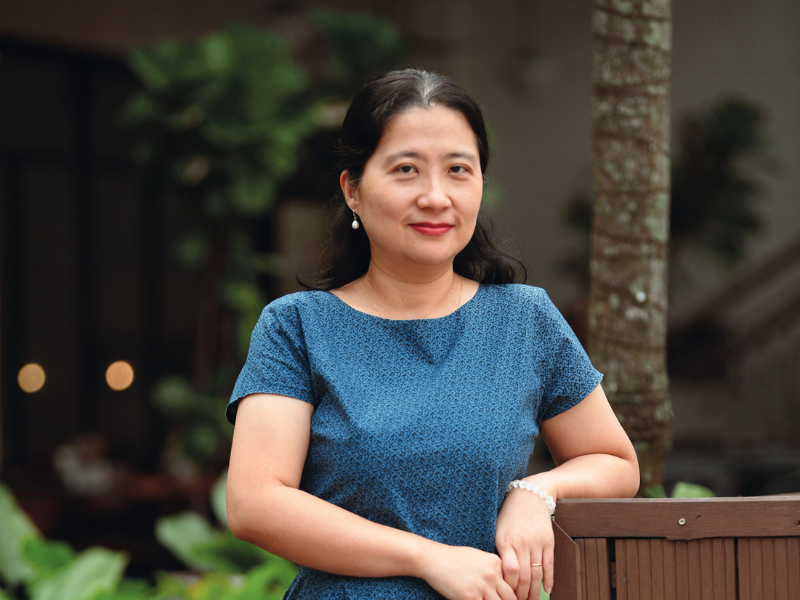
Tay shares that she almost gave up on writing the book, but a support system of industry friends helped realign her focus (Photo: Pansing Books)
Malaysia is known as a nation of gourmands and gourmets. And no wonder. With its vibrant and diverse cultural (hence, culinary) mix, it justifiably deserves its title as the foodie capital of Southeast Asia. Though most appreciate their meals at face value, others go so far as to evaluate the quality and taste of a steaming bowl of curry noodles or a plate of classic nasi lemak in great detail.
For Petaling Jaya-born author Janet Tay, 49, it was definitely the latter. A simple restaurant visit with her family would be more than merely filling bellies or savouring flavours. “When I was a kid, whenever we went out, we didn’t just go eat. Every meal would become a review of sorts, with everyone analysing and discussing their food,” she shares.
While young Tay found those moments vexing, she grew to value food on a deeper level, indulging in the subject across different mediums, including movies and books. “Looking back now that I’m older, that was kind of cool because I not only learnt about eating, but also how to discern what tastes good and what does not.”
At the age of seven, she and her family migrated to Sarawak, and they quickly became regulars at one of Kuching’s many laksa shops. “But one day, it just ceased operations,” she recalls. “I was disappointed because I thought it would be around forever. I had been patronising it for years and even harboured the thought of, someday, bringing my kid there. But, of course, that won’t happen anymore,” Tay laments.
“I didn’t know the owner personally, so I couldn’t find out why they closed down. At first guess, I think it’s pretty much the same storyline: they didn’t have anyone to take over the business. After selling laksa for two generations, maybe they got tired and didn’t want to continue anymore. I remember feeling sad about it. It’s like how people see crafts such as wau or Chinese Opera as a dying art. To me, hawker culture is an art as well.”
body_pics.png
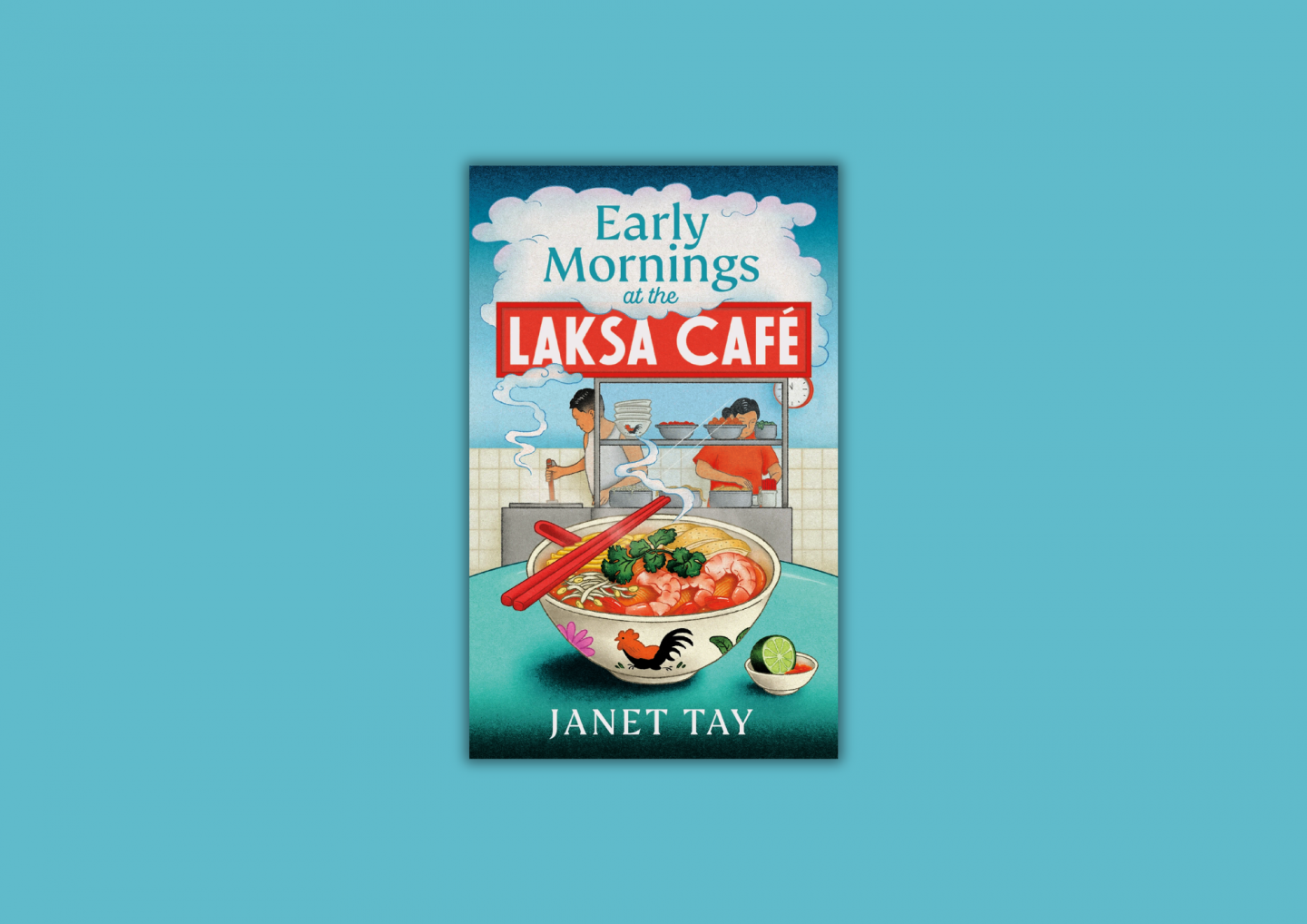
Inspired by childhood memories and driven by the desire to preserve this form of intangible cultural heritage, Tay wrote her first novel about Ah Hock, a kopitiam owner selling laksa in Kuching, whose son works as a sushi chef in Hong Kong. Early Mornings at the Laksa Café is built upon these two characters who do not get along as the father does not trust his child enough to inherit the family legacy.
In 2018, after coming up with the first draft, Tay only had son Wei Ming as the protagonist. “It was essentially a coming-of-age story about him moving to London to pursue his culinary career and the adversity he faced along the journey.”
She eventually expanded the narrative to include the parent, who turned out to be just as multi-dimensional. “If there is going to be a father-and-son conflict, at least get both sides of the story. I try to make them quite balanced. If someone were to conclude that Wei Ming is right, I didn’t do my job well. I want people to understand both perspectives and say they can see the pros and cons of decisions made by the two characters. Then that means I successfully did what I set out to do.”
Turning the spotlight on filial piety — the Asian emphasis on a child’s obedience to their parents to maintain family harmony — the book may resonate with certain demographics more, Tay thinks. “It’s a concept that doesn’t really exist in the West since it was conceived by [Chinese philosopher] Confucius. For many Asian families, however, they refer to this virtue for guidance and sometimes end up sacrificing their lives trying to comply with the principles. They can’t live their life the way they want because they have to obey and be good to their parents.”
Instead of sermonising, this work encourages readers to explore that notion. “It is not about who is right or wrong, but how people come to a mutual concession where everyone is content with the outcome — you don’t disappoint your elders too much, but you also stay true to your dreams. Both parents and children have to meet each other halfway.”
While writing the book, Tay found the most challenging part was building a fleshed-out protagonist. “It’s not so difficult to think of the setting or even the plot to an extent, but [creating] the character is tough. I feel like once I have that sorted, the story will come on its own. If I can at least picture the gender or age, everything else slowly falls into place.”
body_pics_2.png
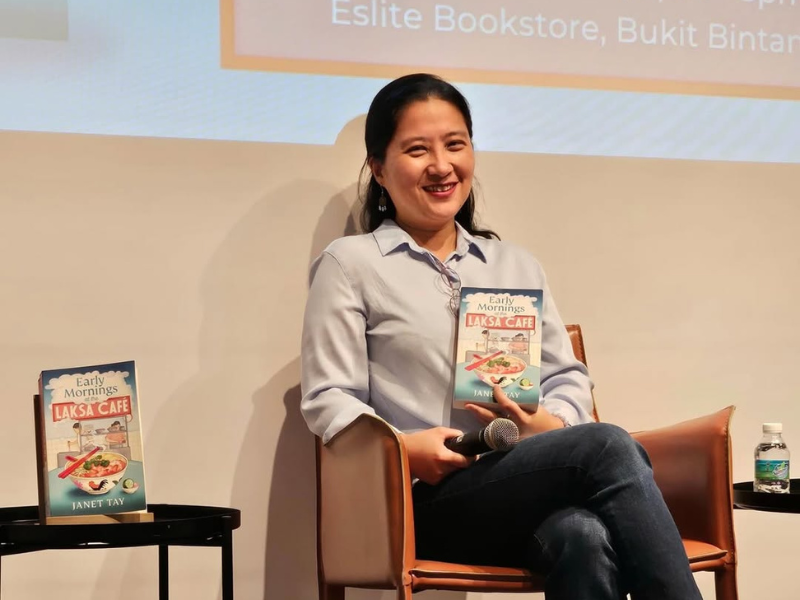
Character development was not the only obstacle that slowed the writing process of Early Mornings at the Laksa Café, which took almost a decade to finish. The former litigation lawyer had initially planned to take a year off from her legal career to focus on the book. “I really enjoyed my job. I think if it wasn’t for the fact that there was this thing at the back of my mind, I would have continued [being a lawyer]. I used to joke that the desire of writing a book is like keeping a mistress. And I didn’t want to be distracted by my mistress anymore.”
But when the time came, she could not justify being out of the workforce for a year with no income. “It seemed very indulgent and I would’ve had to depend on my husband. After I quit law, a job opening at MPH came up, so I immediately grabbed the opportunity. I then worked as an editor for the next three years,” she reveals.
The Covid-19 pandemic put a complete stop to her literary journey. As a new mother, she was constantly worried about her son’s well-being. When the global situation improved, she began picking up speed again. “There were so many pauses throughout. I felt like if I had been more focused, I could have published the book while still in my thirties.
“If you don’t believe you’re going to do it, then you probably won’t. I learnt that you have to take yourself seriously. Anything that doesn’t match your goal has to be removed from your life.”
Tay credits fellow industry friends she met after joining the Tin House Winter Workshop in 2023, such as DK Furutani and Samuel Burr, for helping her realign her focus and giving invaluable advice that shaped the novel’s final outcome. Though the act of writing itself is very much solitary, she emphasises the importance of community in that sphere.
“You need a support system. Not just for feedback, but also emotional [health]. People always think that everything is smooth sailing. It is not. I faced years of rejection and didn’t have anyone to talk to about it because I thought non-writers would not understand how it all works.”
At press time, Tay has already completed her second novel, which will be released next year. Contract aside, treating writing like a real job helps her stay on track. “I finished the second book in one year. I was amazed at myself. People asked if it’s because I had experience, but I jokingly said it’s because I had a contract and deadline to meet. To a certain extent, you need these [factors] to push you.”
On her new career path, she smiles and says contentedly: “I’ve taken a really, really long time to reach this point. Of course, there were many times I wanted to give up. I’m glad I didn’t.”
This article first appeared on March 9, 2026 in The Edge Malaysia.