
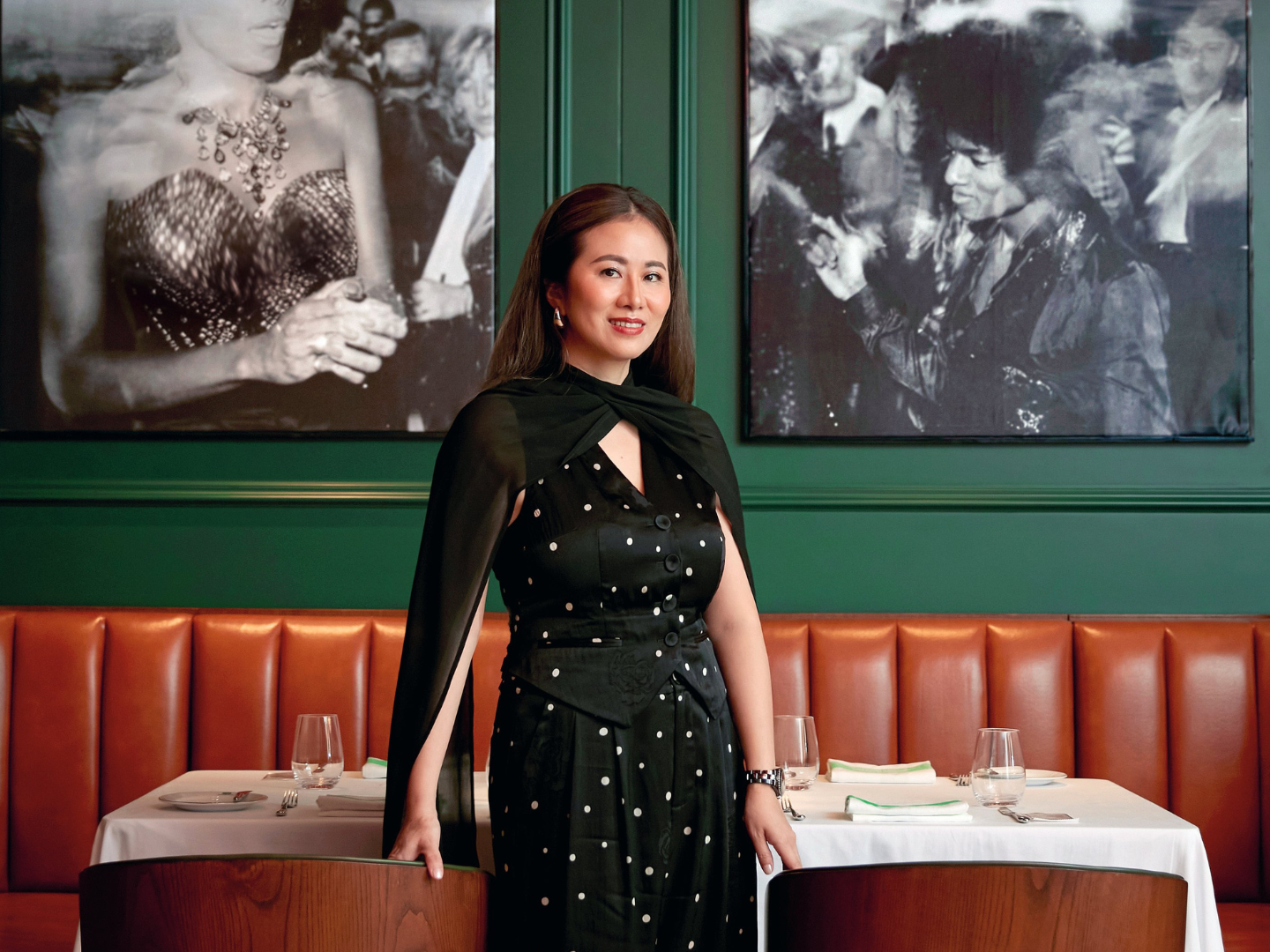
Despite the idea of being a tourism major being new during Hsia's teen years, she was inspired to walk down the path of hospitality and pursued that with determination (Photo: SooPhye)
When Shirley Hsia visits a country for the first time, she makes a point of going to its Chinatown. The Taiwanese real estate veteran, who has travelled and worked across Asia and beyond, believes that seeing how the resilient diaspora has found ways to thrive, culturally and economically, is the clearest measure of any place’s latent capabilities. Decades dedicated to hotel internships, state-owned developments and luxury groups have honed her eye for potential: She saw it when she moved to Malaysia in 2017, and again when she agreed to bring a legendary American restaurant brand to Kuala Lumpur.
The CEO of Smith & Wollensky KL says: “I was having dinner with a business partner at the S&W in Taipei. We saw a great opportunity, especially since he was already an investor, and I thought this would be perfect for Southeast Asia as an up-and-coming market.”
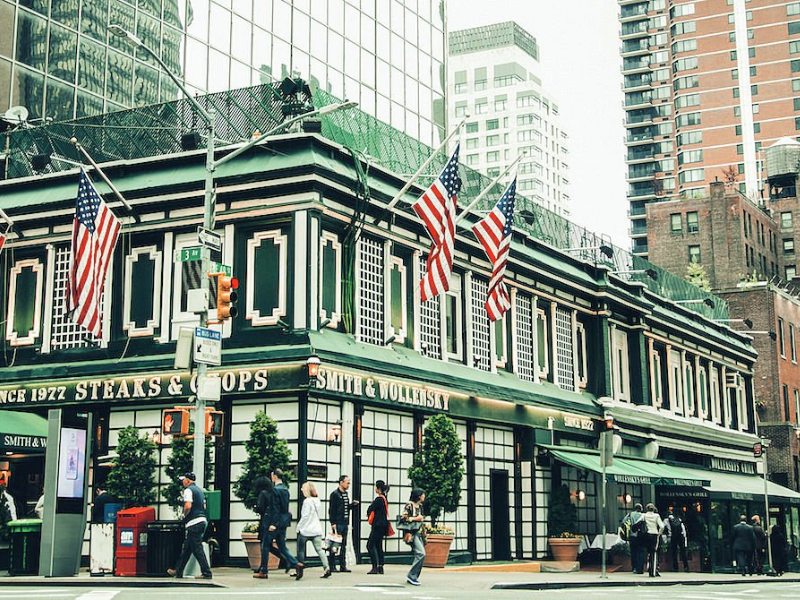
Admirers of US philanthropist and investor Warren Buffett will recognise the moniker from the Oracle of Omaha’s annual Glide Foundation charity lunches. The Manhattan icon, founded in 1977 by Alan Stillman and memorialised in The New York Times as “a steakhouse to end all arguments”, is synonymous with society suppers and swinging cuts, often spotted in Hollywood movies and favoured by millionaires for a midday munch. Today, the S&W name has spread to 13 prestigious international addresses, the most recent being its Suria KLCC branch, officially launched on Jan 18.
This is more than the story of an American institution making landfall as the capital’s latest hotspot for stylish power brunches or a celebratory evening of fine wining and dining. To Hsia, an ambitious hotel management major who had been steadily building a formidable skill set in the hope of someday owning her own hospitality project, S&W KL is nothing short of a dream come true.
Tour de force
It can be said that the hotelier life chose Hsia, on account of the fact that the concept of it as a professional path barely existed when she was a teenager.
“I wanted to be either a lawyer or a diplomat, so I knew language skills would be very important. English naturally felt like the first I needed to master,” she says. Hsia’s mother advised her to study abroad, allowing her to pursue a degree of her choice while picking up English at the same time.
In her high school days, Hsia found joy travelling and exploring the world at her parents’ encouragement, most often tagging along with mum and uncle to visit relatives in Japan. “My family appreciates food a lot. Every gathering was like a competition to see who cooked better, though back then, I was just doing the eating,” she chuckles. That exposure made her more attuned to an industry that was only just beginning to take root in 1990s Taiwan: tourism.
“The idea of a tourism major had just been established. But it was still such a unique topic. Nobody really had an understanding of what it could bring in terms of economic growth. What I needed then was a mentor,” she says.
5.png
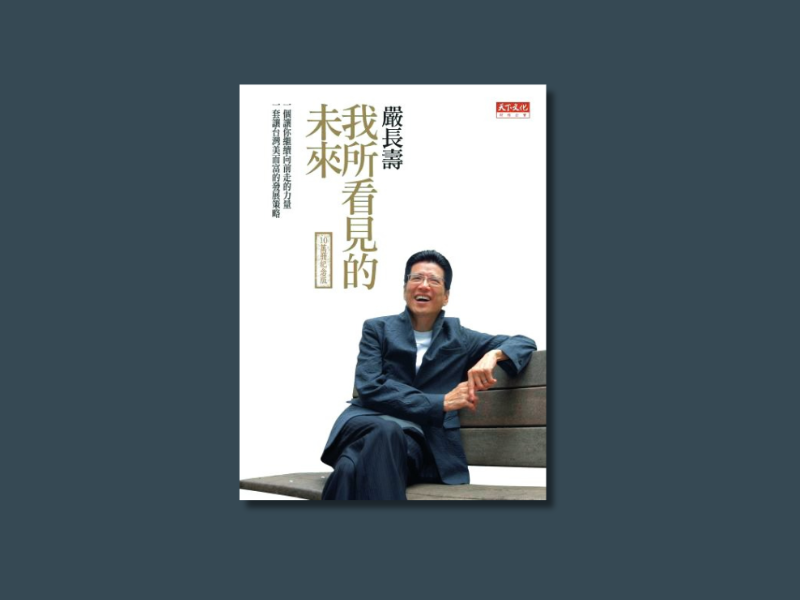
A friend of her mother’s happened to attend a seminar on the subject, and referred Hsia to the speaker, Stanley Yen — the man widely revered as the godfather of Taiwanese tourism. Formerly CEO of the Taipei Landis hotel, Yen is also a life coach, best-selling author and current president of The Alliance Cultural Foundation.
“He was one of the pioneers who helped us gain international recognition as a travel destination. Before becoming a hotelier, he worked for American Express as a private tour guide, bringing affluent local customers overseas as part of the company’s curated programme. Eventually he realised, ‘We keep taking people abroad to spend, but why isn’t anyone coming here?’” she says.
“We have a beautiful country. That’s why he decided we needed to build our own hotels.”
In order to achieve his vision of a flourishing industry, Yen knew nurturing young talent was key. He proposed to the Taiwanese government that tourism studies were necessary for long-term growth, thereby kick-starting the birth of a whole new field. “What he did was not easy, and for that reason, he became my idol. I attended a few of his speeches, read his book and even got his autograph. He really inspired me to take this journey.”
Armed with direction and determination, Hsia went on to study tourism and hotel management in Adelaide, Australia, completing placements at several international brands, including the Hilton in Melbourne and Taipei’s Shangri-La Far Eastern. “I’d done accounting, human resource management, quality control, bartending… but it was all very basic. It still wasn’t enough for me,” she stresses. “If one day I wanted to own my own hotel, what other skills would I need?” To better bolster her entrepreneurial acumen, she pursued a bachelor’s degree in business administration at Macquarie University and a master’s in accounting at Western Sydney University.
3.png
All the while, the bold bootstrapper was working part-time at a state-owned property management company in Beijing, which extended her a full-time position following her graduation.
“I got my start in real estate there. The project I joined in Shanghai was a mixed-use development that encompassed offices, a hotel, shopping centre and yacht club. I thought, ‘Fascinating — I know nothing about this!’” she recalls. “I’m an adventurous person. I’m not afraid of trying new things because I believe that, eventually, you will always figure it out.”
Real estate presented fresh opportunities to learn about a world that was literally and figuratively foreign. “Imagine a piece of land going from nothing to something. To do that, you need to have a keen understanding of demographics, and be able to do a lot of data analysis and systems planning,” says Hsia.
“Those five years… oh my god, let me tell you, it was a boot camp. If you want to become business-savvy quickly, you need to receive that China training!” she laughs. “I remember I would call my mother every day and tell her, ‘I’m not sure I can survive’.” Being the only Taiwanese member on her team, not to mention a female manager in a male-dominated field, inevitably drew scrutiny and doubt from peers.
But for this self-proclaimed “very stubborn person”, hurdles were just another thing to leap over. “If I want to get things done, I will, no matter what. I had to prove them wrong.” She credits her then boss’ trust and guidance for helping overcome those doubts. “He brought me travelling to view and buy land, and would teach me how to identify valuable spots, make sure the traffic and transport were good, and recognise why a plot might be worth that price. I was very lucky he never saw me differently, and I think he appreciated that I was eager to work hard,” she reflects.
Not long after, Hsia was headhunted by the Inter Ikea Shopping Center China to handle its central leasing, and again by Michael Kors, helping the brand to open 20 stores in the country. “Then I was invited to join Kering, managing 179 stores across 20 cities, and after that I was appointed head of the Southeast Asia market. All these experiences, I’m so grateful for. They really shaped who I am today despite the fact that it was very hard and I almost — almost — gave up on multiple occasions. But in those moments, I’d tell myself, ‘You’re already halfway through, why not see it to the end?’ I’ve kept myself going because of this mentality.”
High steaks
2.png
After more than a decade overseeing real estate portfolios, and even setting up her own boutique retail consultancy firm, hotel life seemed rather tangential to Hsia. That is, until the exciting chance to fulfil a lifelong goal presented itself at that fateful dinner three years ago.
“I didn’t have any doubts,” she offers coolly. “I know all about negotiation and sites. Retail helped me understand customers, service and the proper system required. Ever since my hotel studies days, I’d always wanted my own hospitality concept, and the possibility finally came along. So I figured, let’s just do it!”
Hsia, through her company PAC & CAP Hospitality Group, obtained a licence to franchise the steakhouse brand in Malaysia, Singapore and Indonesia. She chose KL as the base of operations to leverage her existing network and resources. “[Malaysia] is a treasure people haven’t fully looked into. Moving here has allowed me to examine myself and better plan the journey I want to embark on. My passion for service and people has always been there, and that’s a big part of why I said yes to this restaurant.”
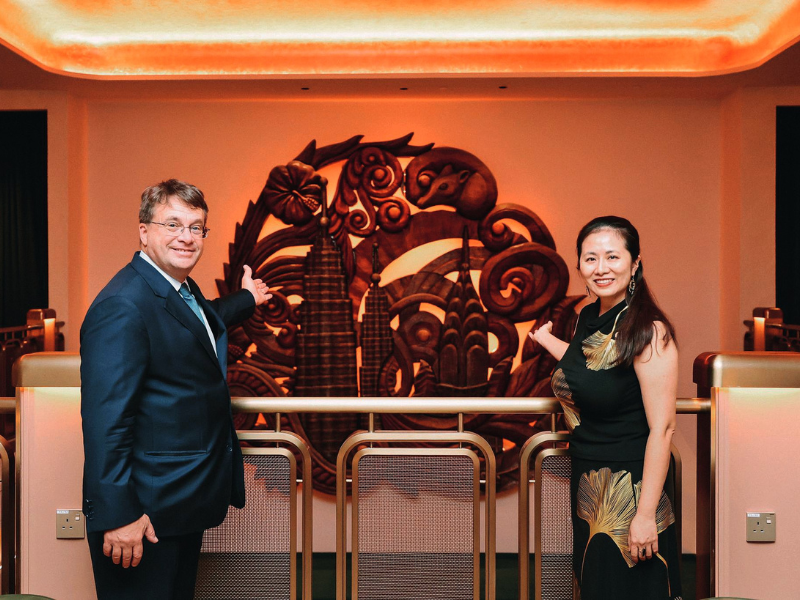
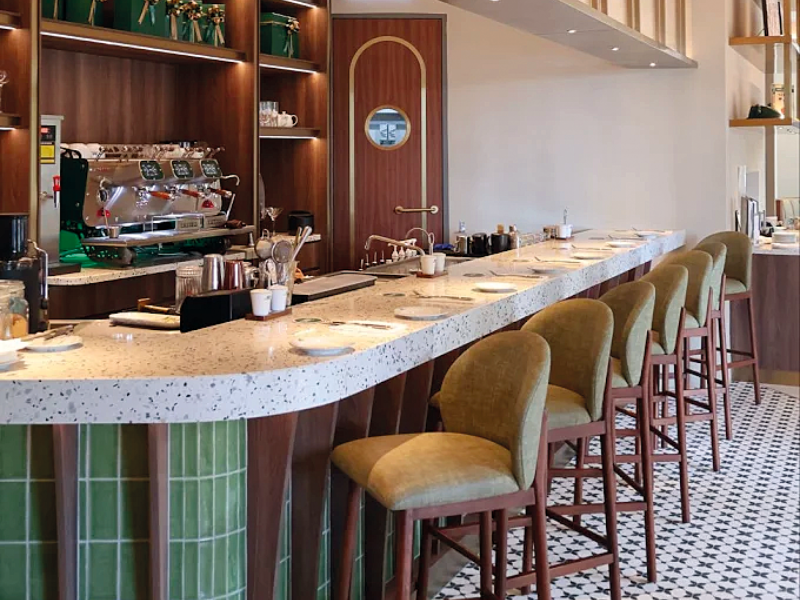
S&W KL, in all its green and white grandeur, feels right at home on the mall’s luxury floor. Occupying two distinct segments — an airy, casual all-day dining area, and a two-storey steakhouse and double-volume bar oozing chic city sophistication — the outpost is rich with period charm. Diner-style booths and custom pendant light fixtures fashioned after the Chrysler Building reference the restaurant’s roots, but Hsia has also taken great care to weave in local details such as palm leaf wallpaper, batik patterns and even a close-up canvas print of the Petronas Twin Towers (mirroring New York’s own Art Deco skyscraper). A stunning wood carving of the two landmarks encircled by swirls of local flora and wildlife encapsulates this unified spirit with artistic gravitas.
At a time when global giants and luxury maisons are making a beeline for The Exchange TRX, why set up shop in Suria KLCC? Provenance carries greater weight than trends, and the seasoned Hsia was seeking profundity over popularity. “S&W dates back almost 50 years, which is why I knew I would need to match that heritage with heritage for us to align our storytelling. It had to be a landmark building,” she explains.
“I’ve visited nearly all the S&W branches in the world, but the ones that left the biggest impressions on me were New York and London,” she says, adding how she adopted the latter outlet’s copper ceiling for KL as an homage to British influence in Malaysia. Individual dining sections in the steakhouse side have been named after key S&W locations as tribute to the legacy these locales have worked hard to consolidate.
1.png
Smith & Wollensky All Day Dining, though, is one of one. Hsia’s brainchild, featuring café-style fare, breakfast items and free-flow coffee, was intended to make the esteemed establishment more approachable, not to mention visible to those walking or driving by.
The KL outpost’s menus have been curated to reflect both historical identity and cultural individuality. “I knew the classic American items had to be in there: root beer, coke floats, milkshakes,” she says. These are not your average diner dishes, though. Hearty plates like the Louisiana Po’ Boy Prawns, served in a bánh mì-esque baguette for that shatteringly crisp bite; sweet-yet-savoury Crispy Chicken Waffles; and the super-sized Peanut Butter Jelly Sandwich are elevated yet nostalgic takes on regional favourites.
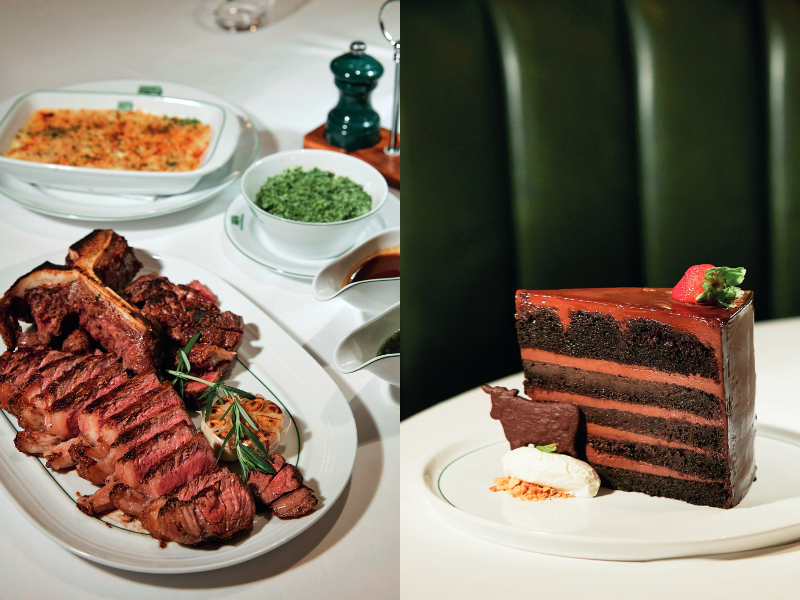
“[The brand principal] allowed me about 30% variance from the standard menu to create something diners here would find appealing,” says Hsia, pointing to the Nasi Lemak, Aged Beef Fried Rice and house sauces, which use tamarind and coconut. Portions have been adjusted from the gargantuan ratios of its US counterparts to better suit Asian stomachs, though servings are still by no means small. Any of S&W’s signature steaks, dry aged for exceptional tenderness and intensity of flavour, can be easily shared by two diners.
“R&D was very difficult because a lot of the original recipes contain pork and alcohol,” she reveals, noting that this is probably the first S&W to use all halal ingredients, down to the clay plates instead of bone china. “Take the Gigantic Chocolate Cake — in other parts of the world, cream liqueur is used. To overcome that, we have to buy superior-quality dairy to recreate the same silky mouthfeel.”
The kilogram confection is the stuff of dreams: supple yet delicate layers stacked between luscious bittersweet mousse, with a ruby-like strawberry and adorable cow-shaped cocoa cookie to seal the deal. Speaking of the fantastical, S&W KL’s pandan Bombe Alaska allegedly came about when a vision of Masterchef Australia alumna Poh Ling Yeow pitched it to Hsia’s husband in his dream, and he eagerly told his wife upon waking up.
Capita investment
4.png
A world-famous franchise, perhaps paradoxically, sets itself up for two things: the benefit of the doubt and merciless scepticism. Quirky selling points can grab overnight fame, but enduring success needs more than gimmicks. Although standout dishes and posh pedigree are S&W’s bread and butter, nothing compares to the je ne sais quoi of teamwork that keeps people so closely bonded to the brand, says Hsia.
“On the New York flagship waitstaff’s uniforms, you’ll notice they have stars, which represent five years [of service], and stripes, for one. Many have been there for 10, 20 years. There’s even a father-son, chef-waiter duo. That this deep sense of family and unity is what I strive to create here.”
Her idea of leadership begins with showing by example. “I never want them to think of me as a boss who sits in an office and tells them what to do,” she emphasises. When S&W KL had its soft opening in late December and staff were struggling to handle the more than 300 guests a day during the holiday season, Hsia leapt right into service, cleaning plates and bussing tables.
“I showed them what I was willing to do, and I think that really helped me earn their respect. When they need a hand, I want them to know I’m here,” she smiles. “We all come from different backgrounds. There are things they know that I may not. Never be afraid to ask questions, everything can be learnt. I’d love for us to be able to develop what New York has for ourselves.”
Hsia has taught the team to take notes and track guests’ preferences to create the most bespoke dining experience possible, with gestures like birthday vouchers and customised orders to ensure they feel genuinely cared for and thought of.
Beyond the restaurant, PAC & CAP conducts workshops and talks at universities in a continued effort to support hospitality hopefuls. “Many doubt the market here,” she laments, recounting her past recruitment struggles. “But I wouldn’t have taken such a big step if I didn’t believe in Malaysia. There is so much talent, and the best way to retain it is to go to academic institutions. We talk about the clear career path as well as training and mentorship we offer.
“As a foreign investor, it is our duty. We can’t just take from the country, we must give back. Without those aspiring students, the industry cannot grow. We need to do our part,” she affirms, in words that echo the philosophy that guided her idol.
While Hsia spends nearly every day at S&W monitoring operations, taste testing dishes and providing feedback — “I do have trouble letting go!” — free moments are typically spent taking her three Frenchies to Desa ParkCity or Bangsar’s Kopenhagen Coffee. At home, the avid chef takes pride in whipping up a knockout lu rou fan and apple pie. For a quick bite between meetings, the mall’s Sushiro is her go-to. “Otherwise, I like Concorde Hotel for my yum cha. It’s the best. When it comes to dim sum, you must go for trolley service,” she insists.
The Chinese adage goes that “a journey of a thousand miles begins with a single step” and Hsia readily admits that despite her grand plans for the future, solidifying a strong foundation and empowering her people are critical. “This isn’t simply a restaurant. In hospitality, we are sharing life. S&W is a celebratory place, but it’s also accessible — people walk in wearing shorts, with their families. It’s been a very rewarding journey for me. I’m happy!”
This article first appeared on Mar 30, 2026 in The Edge Malaysia.