
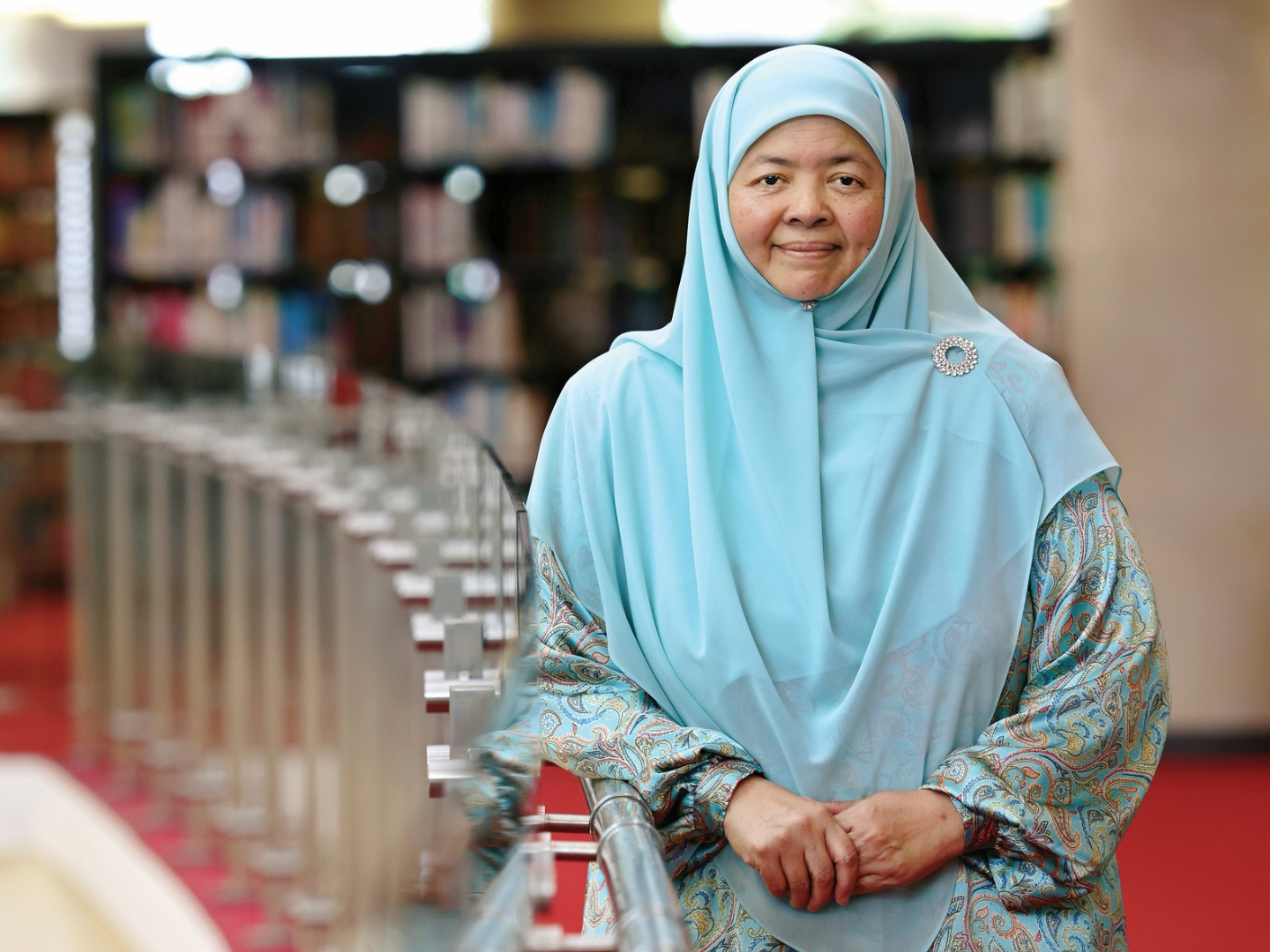
Mastura: Governments establish libraries to grow the people’s minds, help their lifestyles and thinking... We need to make a place where all children feel safe and happy. (Photo: Sam Fong/The Edge)
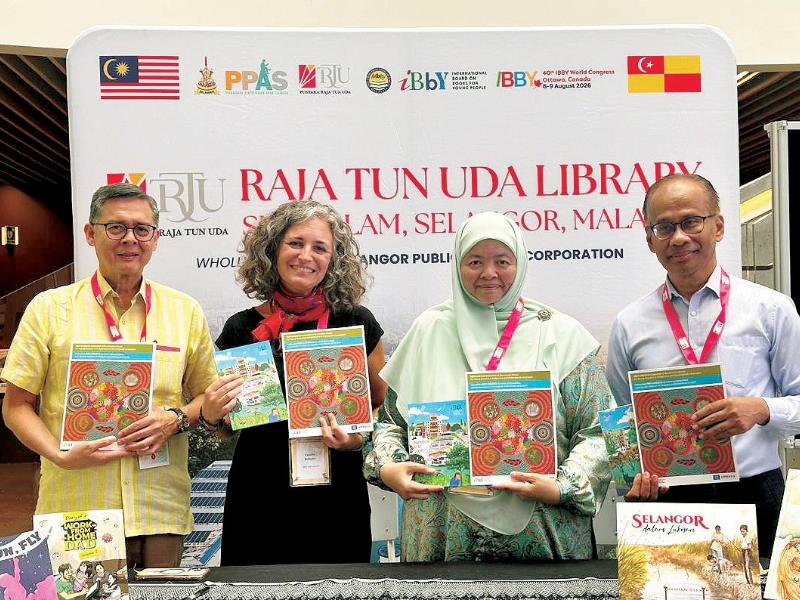
When Datin Paduka Mastura Muhamad announced that the world’s most prestigious prize in children’s literature would be sponsored by the Selangor Public Library Corporation (Perbadanan Perpustakaan Awam Selangor, or PPAS), “the five or six hundred people in attendance were quite stunned”, she laughs.
The director of 18 years had flown to Ottawa for the 40th International Board on Books for Young People (IBBY) World Congress to witness months of teamwork and relentless pitching finally pay off. For the first time, a non-private entity — and a library corporation at that — would be funding the revered Hans Christian Andersen Award (HCAA), considered the highest global honour for authors and illustrators of children’s books.
Often called the “Nobel Prize of children’s literature”, the distinction was established by IBBY in the 1950s. Presented biennially, it recognises two living individuals, an author and an illustrator, for their lasting contributions to the field. This year’s laureates were English writer and professor Michael Rosen and Chinese illustrator, editor and past nominee Cai Gao.
The day after the conference, questions followed: Why was this library taking on the huge responsibility? Could they afford it? Within Malaysia, many seemed perplexed as to what any of this even meant. Mastura herself confesses, “When I received the letter accepting us for the commitment on May, I got goosebumps. Once we returned from Canada, we were like, ‘Aiyoh, what are we going to do? We have to plan for the next 10 years!’”
But she has never been one to let the daunting reality of an unfamiliar task put her down. Rather, if her nearly two decades of overhauling the brand image, culture and philosophy of PPAS and its headquarters, the Raja Tun Uda Library (Pustaka Raja Tun Uda, or PRTU), have proved anything, it is that her gentle disposition belies an unstoppable, go-getting spirit.
“The beauty of it is that with PPAS as the official sponsor, PRTU will be its enabler. We want this institution to be a trailblazer. Our whole story started from here,” she says. As HCAA opens new doors for Malaysia on the international stage, the director shares how a legacy of investing in reading ecosystems, serving the community and uplifting young talent has led to this pivotal partnership.
body_photo_-_2026-11-10t161724.971.png
Tides of Change
Entering the library sector was a wholly unexpected move for Mastura. A Kuala Terengganu native and graduate in economics from the University of Kansas, she began her professional career on the other side of books, handling purchasing for Yayasan Pelajaran Mara Trading & Marketing. After 11 years, she left to run her own book trading and retail business. “It was not easy to penetrate the market. It became a huge lesson for me, seeing how difficult it can be to run an enterprise while being honest,” she reminisces.
The corporate environment, with its fixation on profit and quantifiable results, was worlds away from what awaited her at PPAS. “I was asked to join the state statutory body on Sept 1, 2008. At the time, the Selangor state executive council member was Dr Halimah Ali. I had worked with her on an NGO [for female youth] called Nisa’ where we assisted in its rebranding journey. She wanted me to lead PPAS in the hope of revamping it.”
Established under a 1968 enactment, PPAS formed its board of directors in 1971 to develop public library services in Selangor, acquiring the Kuala Lumpur Book Club as its original headquarters. Fifteen years later, it moved to Shah Alam, where the first Raja Tun Uda Library was constructed, before relocating again to its present building in 2011.
Its current base covers over 200,000 sq ft across six floors, featuring a garden-themed architectural concept and housing more than 400,000 reading materials, assorted study facilities and dedicated special needs areas. Today, PPAS encompasses a sprawling network of 106 libraries in urban and rural regions of the state, catering to a population of about 7.2 million.
Despite her initial hesitation due to a lack of formal credentials (“I had no idea what cataloguing was”), Mastura notes, “I realised the fundamentals of management remained much the same: people, resources, strategy and discipline — only now with a much broader social purpose.” Knowledge can be accumulated, but the wisdom of experience has few true substitutes. Her economics perspective compelled her to question how such an institution could become more competitive and relevant to people’s daily lives — somewhere they would be eager to keep returning to.
“The first thing I did was look into benchmarking exercises. I went to bookshops like Kinokuniya and Borders, as well as the PETRONAS [Resource Centre] in KLCC, to see how they were designed and arranged.” The director even brought an entourage to Singapore, including 20 customer-facing staff, to tour the National Library of Singapore, Woodlands Library and Singapore Discovery Centre. “All these places were full of people. So I thought, ‘Why is it that in our library, where everything is free, there are no queues? If our books can be accessed at no cost and still nobody comes, we must be doing something wrong!’”
body_photo_-_2026-11-10t161713.067.png
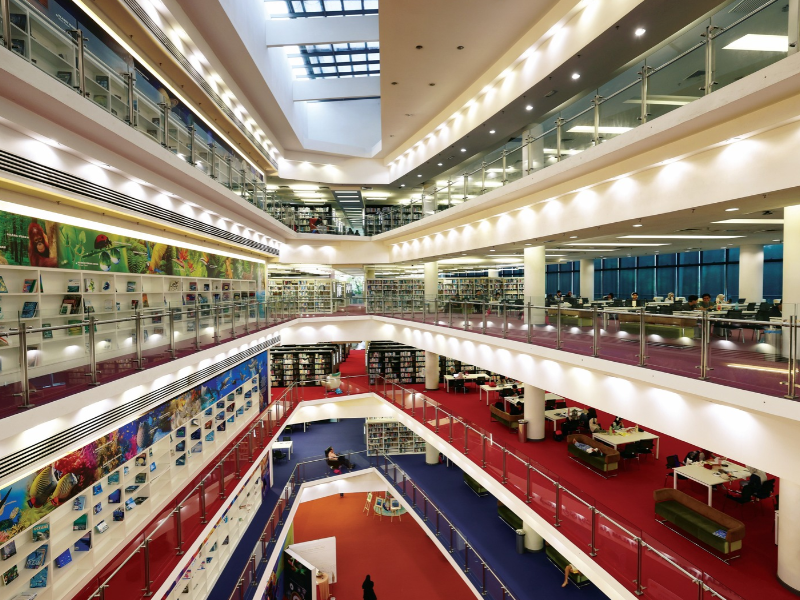
Mastura set out to transform PRTU into an appealing, welcoming and inclusive space, adapting best practices and developing new services. Notable changes have included a renewed title curation approach, which prioritises books of interest and quality over just the price; expanded daily schedules of enriching, creative programmes; and an increased borrowing limit of up to 20 copies per person.
Interior modifications have greatly improved the ambience and practicality of PRTU as well. Instead of “sandwiching” desks, bay clusters are kept in one corner of the floor, while work tables get the window view.A café area, private pods and children’s zone align offerings with the institution’s refreshed edutainment approach. On weekends and holidays, the library receives up to 8,000 visitors a day.
Beyond physical aspects, inculcating a mentality of motivation in her employees was another early hurdle for Mastura. “The biggest challenge for me has been getting my staff to buy into the idea,” she admits. Devoting time to professional team-building exercises and instilling confidence in their job has been instrumental in strengthening workplace relationships, sharing expertise and making unified steps towards building a comfortable and conducive library. “I tell them, ‘Whoever shows up at our doors, please treat them like your own family. I believe in karma. When you give your best to these people, you will get the best back.’”
She further credits Sultan Sharafuddin Idris Shah of Selangor for his continued support of PPAS and PRTU, the latter of which was conceptualised upon his request for a “full-fledged public library as a gift to his people”.
“This place is the result of that wish. When the structure was completed and he saw the interiors, he was thrilled! He told me, ‘We have given you the hardware. Now, you have to provide the content — make sure they are the best,’” says Mastura. Regular donations of limited and first edition texts from the royal patron are given a dedicated section within PRTU, while multiple paintings from his private collection can be spotted adorning the walls.
body_photo_-_2026-11-10t161701.405.png
Mapping beyond
These major shifts and contributions have translated into important moments of recognition and critical opportunities for Selangor and Malaysia on the world industry stage. PRTU receives over 1,000 benchmarking visits from international libraries, and Mastura and her team are active participants at literary fairs and conferences around the world.
“We received an invitation in 2014 from the Sharjah International Book Fair to present on how our rebranding improved footfall. The following year, we went to Cape Town for the International Federation of Library Associations and Institutions’ World Library and Information Congress (IFLA WLIC). Since then, we have never missed an edition. It’s awesome and I’ve learnt a lot,” she says enthusiastically. PPAS is even a regular podium finisher for Best IFLA Poster, shares the director with a proud smile.
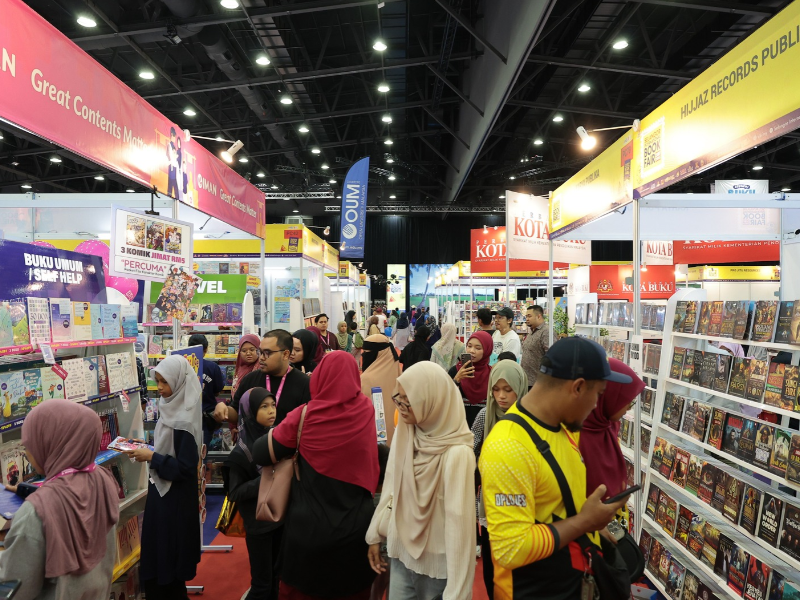
Back home, PPAS operates two of its own flagship events. The first, the Selangor International Book Fair (formerly just the Selangor Book Fair), has played a substantial role in strengthening relations with world libraries. “I’m very grateful to chief minister Datuk Seri Amirudin Shari for pushing me to expand this festival because after entering the global scene, we’ve gotten invitations from countries like Sri Lanka, Thailand and even the Philippines. These trips give my staff exposure and let them see how different places work. It’s a great avenue for our authors too, because it means their works can be translated into many other languages.”
Its second key programme, the Selangor Children’s Literature Festival (SCLF), is Mastura’s brainchild, inspired by a trip to the 2022 Frankfurt Book Fair. “I noticed around 75% of the rights being sold were for children’s books. Meanwhile, the Malaysian children’s literature industry was very quiet. Many who produce these books cannot survive,” stresses the director.
Our home-grown authors are no strangers to high-profile honours — Tan Twan Eng and Tash Aw have famously graced Booker Prize short- and long-lists — but Mastura points out the same is less true when it comes to local literature for little ones. Appealing to the board, she sought approval for an event that could target a younger demographic and provide a platform for these struggling creators. This year’s iteration brought special guests like Manisha Choudhry of the Jaipur Literature Festival, William Phuan of the Singapore Book Council and HCAA 2026 winner Cai to share their insights and cultivate strong international connections.
body_photo_-_2026-11-10t161718.945.png
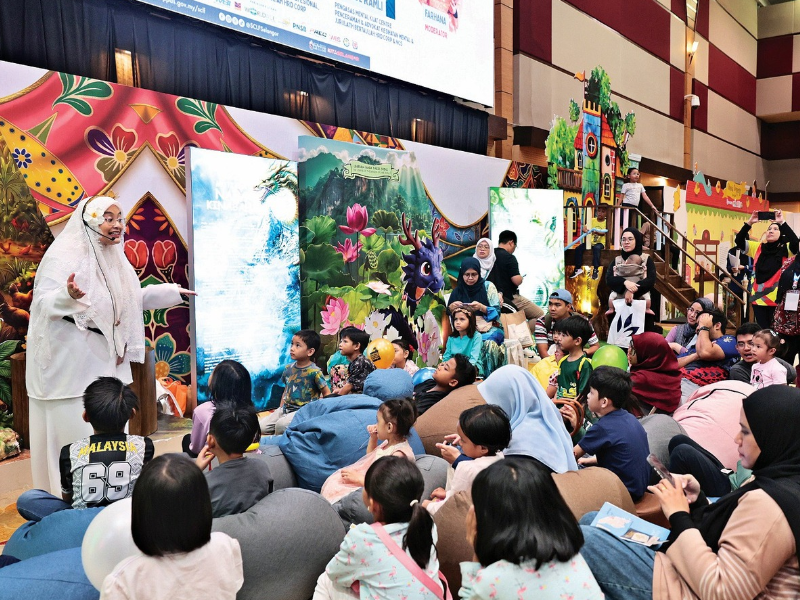
In organising the fair, Mastura became deeply acquainted with the Malaysian Board on Books for Young People (MBBY), the local arm of IBBY. “I discovered so much about painting, picture books and teenage literature, and even got them to be our event adviser,” she says.
“One day, the president, Datuk Ahmad Redza Ahmad Khairuddin, told me he had been elected chairman of the IBBY trust, and that the South Korean company Nami Island was planning to end its HCAA sponsorship after 16 years. He was looking for someone to assume the responsibility. After a few suggestions, I said, ‘Why not us?’”
The idea had not crossed Redza’s mind, but upon further discussion with the Selangor government, they concurred that the possibility was too appealing to pass up, especially when Mastura and her deputies had researched the positive impact that the sponsorship brought to its host nations. A delegation travelled to South Korea, led by state financial officer Datuk Dr Haniff Zainal Abidin, to discuss the predecessor’s legacy, specifically how it leveraged the position to create its widely respected illustration competition commonly known as Nami Concours. “The transformation was huge. The children learnt so much about the arts and reading. I knew we needed the same.”
As sponsor for the 2027-2036 term, PPAS’ duties primarily entail facilitating the judging process and covering costs incurred during the award’s administration, including the award reception at the IBBY Congress and special Andersen issue of Bookbird, IBBY’s international journal of children’s literature.
“We will have to attend and participate in the Bologna Book Fair, where the winners are announced, and the IBBY Congress, held every two years. There, the board collects the Honour List containing the best recently published children’s books, and we will receive two copies of every title for the library,” explains Mastura.
While she acknowledges there are big shoes to fill, she adds, “We don’t necessarily want to replicate what Nami did. Instead, we want to ask: What can a public library system uniquely achieve? How can we use this chance to strengthen the children’s literature ecosystem in Malaysia and Asia?”
For now, the statutory body is considering an Andersen Reading Programme, with opportunities for residencies and direct engagements with nominees and laureates; an international conference focused on Asian writing, translation and publishing; and a global library-to-library network around children’s literature. Hosting regional meetings and collaborating with national tourism boards can supplement economic growth and give back to the government.
“This is where our infrastructure comes in. The new wing of PRTU is set to be completed by the end of next year,” she says. “It will be about 105,000 sq ft across four floors, and designed to primarily serve individuals with special needs — in other words, furniture with no sharp edges, a calm room and even hydrotherapy facilities.” The building is set to become a critical hub for PPAS’ coming HCAA-related activities.
body_photo_-_2026-11-10t161707.791.png
The little prints
Scaling up its ongoing schemes is just as important as brainstorming exciting new initiatives. Mastura asserts that the HCAA sponsorship is a golden opportunity to cultivate and bring awareness to Malaysian talents.
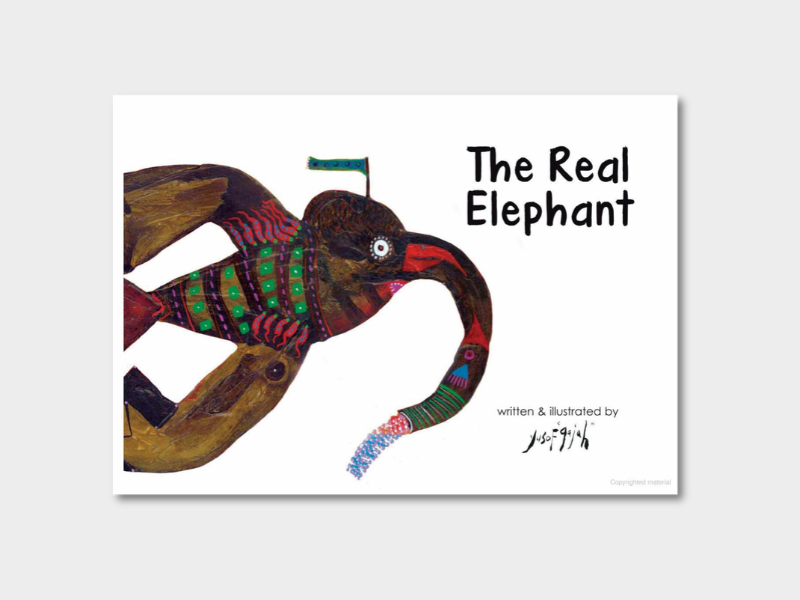
The Yusof Gajah Illustration Award is one such platform. Launched in 2023, the accolade is named after the late picture book illustrator and artist Mohd Yusof Ismail, who won the Nami Concours in 1996 (then called the Noma Concours) with his popular work The Real Elephant. The contest, which is currently accepting submissions for its fourth edition until Nov 8, selects three winners and offers 15 consolation prizes in the adult (18 and above) and children’s (ages 10 to 17) categories.
“Even the HCAA doesn’t have a designation for kids. If a child is not academically gifted, they should still be rewarded for their creativity. For the underprivileged, if they are able to win some money, it might help their families. I give sagu hati so the amount can still go towards materials, which are not cheap,” she says.
The increasing allocation for cash prizes not only helps motivate participants by enabling them to acquire better resources, but helps the competition go toe to toe with e-sports tournaments as a viable outlet for young individuals. “Some people are surprised by the money, but I disagree. This year, I’ve set the highest prize at RM10,000. If gaming competitions can offer that much, why can’t art be worth the same? When you draw, it enriches your mind and heart. You have to acknowledge the people who deserve it.”
Between the festivals, sponsorships and competitions, Mastura emphasises that prioritising the empowerment of young people could not have been a more timely cause. Wander around a shopping mall or restaurant, and you are sure to see toddlers with their eyes plastered to flashing, colourful videos. Screens have become parents’ sole defence in dealing with public tantrums. “Naturally, as a library director — and even simply as a grandparent — I see children spending more time on gadgets, often at the expense of reading,” she laments.
This is where innovative book fairs and accessible learning spaces push against the digital tide. “For this year’s SCLF, we received a lot of comments from parents who were very pleased. They said that for three or four days, their kids did not ask for smartphones once because they were so happy reading!” she says. A panel also addressed practical ways for families to navigate online content consumption and use technology responsibly.
It is Mastura’s hope that by nurturing the talents of our future generation, they may go on to represent our nation’s creative scene globally. To date, no Malaysian has won the HCAA. “If we invest in our children, things will be different. We had two Malaysians who made this year’s IBBY Honours List, and that alone is huge. During my speech, I spoke on the Yusof Gajah Award and how it may help someone eventually participate in and win the HCAA. It is not our budaya yet, but we have to start somewhere,” she says.
“Governments establish libraries to grow the people’s minds, help their lifestyles and thinking. The best thing that could come out of all these projects is for them to benefit families. We need to make a place where all children feel safe and happy.”
The Selangor International Book Fair will run from Nov 27 to Dec 6. For more information, visit sibf.my.
This article first appeared on Oct 19, 2026 in The Edge Malaysia.