
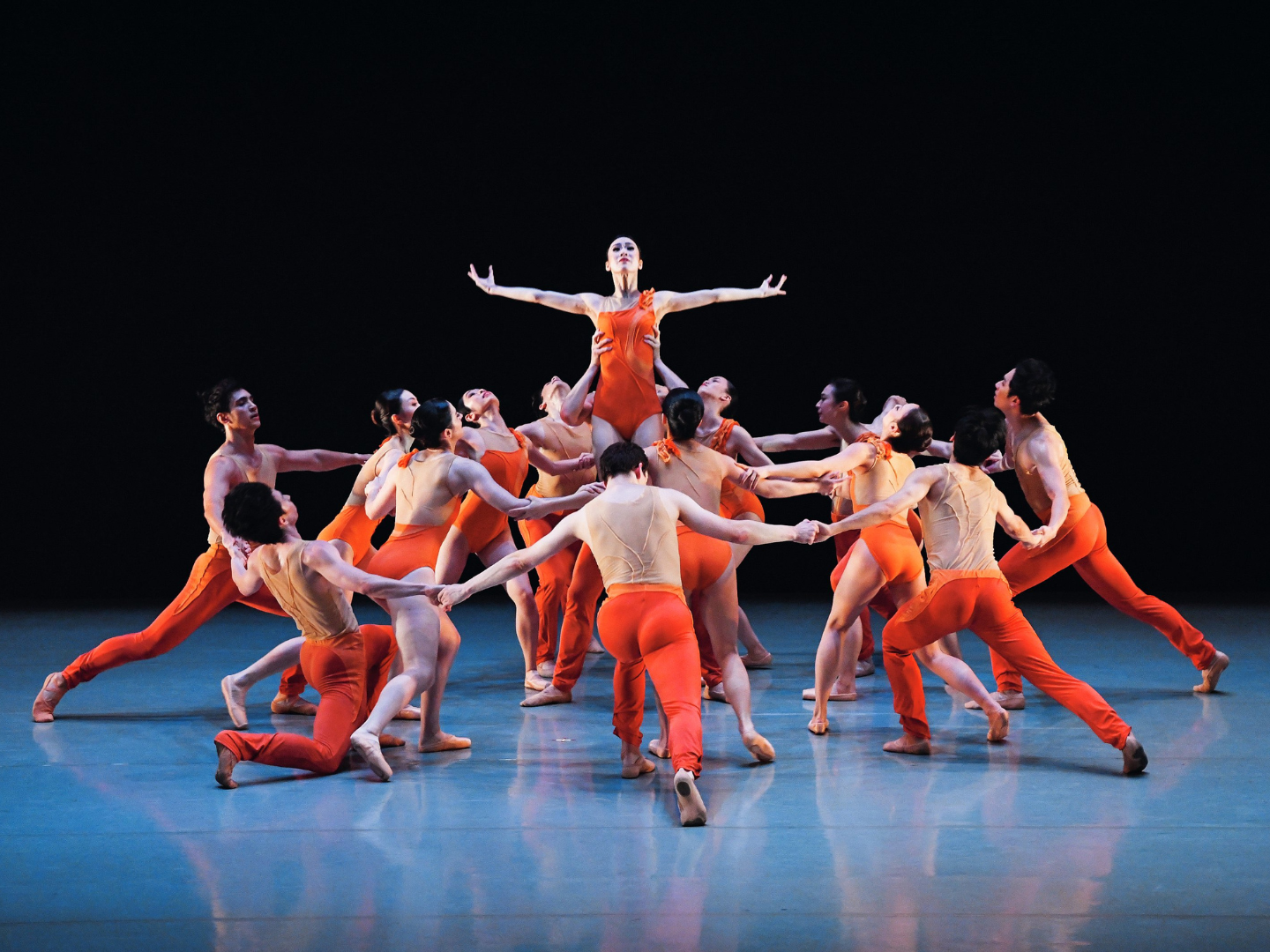
Guided by artistic director Janek Schergen, the troupe performs the dynamic, neoclassical Shadow's Edge by Ma Cong (All photos: Low Yen Yeing/ The Edge Malaysia)
There is a certain stillness in the anticipation of watching a performance. The quiet excitement is heightened by the deep ambience before movement, music and light take viewers on an intimate artistic journey. Ballet, in particular, is profound in the way it carries emotion and pieces of history. Of course, it is considered one of the oldest surviving forms of the performing arts. However, what the audience sees is only the final layer of a world of vigorous discipline, ritual and resilience.
In Kuala Lumpur for a successful short tour which included an additional show — such was the demand — Options was given the privilege of shadowing the distinguished Singapore Ballet and its artistic director for a rare behind-the-scenes look. What exactly goes into the making of a ballet production?
Hours before showtime, the day unfolds in a rhythm of its own.
When we step into the auditorium, dancers are already present, scattered across the stage in various states of preparation. Clad in athleisure, bodies stretch and fold into positions that seem both unnatural and effortless. Some lie on the floor with limbs extended beyond what appears possible, while others gather at the barre, legs lifted in sharp precision.
Each individual follows a personal sequence. Warm-ups are not uniform; instead they are tailored to meet the needs of each performer.
“It becomes sort of ritualistic,” says Janek Schergen, who is found behind the curtains, in mid-stretch, fully immersed in his own routine.
As artistic director, Schergen oversees not only the creative direction of the company but also the well-being of its dancers. Yet he remains firmly embedded in the physicality of the craft. “If I ask something of them, I need to be able to do it myself,” he states.
1.png
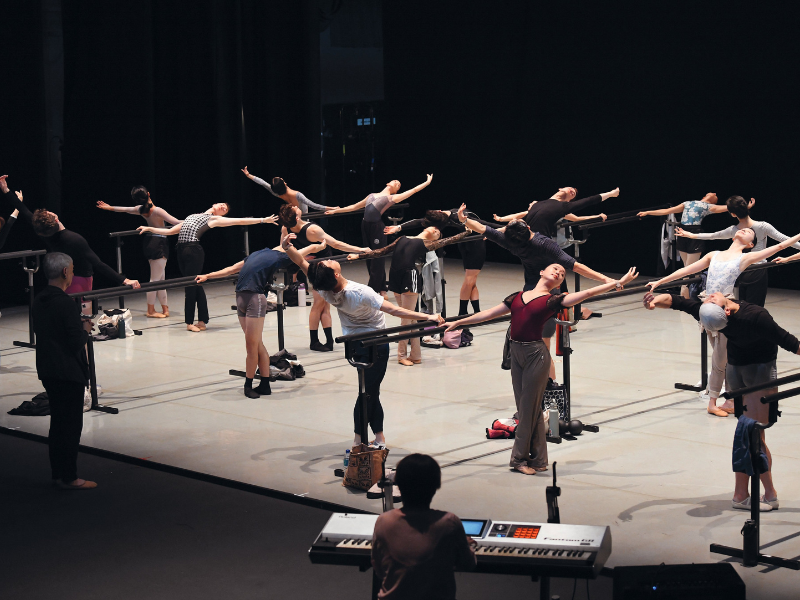
At 10am sharp, the official schedule begins. Company class is a cornerstone of a dancer’s discipline, essential to maintain technique, prevent injury and prepare the body for performance. Acclaimed dancers such as Rudolf Nureyev have long emphasised its importance — “When I miss class for one day, I know it. When I miss it for two days, my teacher knows it. When I miss for three days, the audience knows it,” he famously remarked.
Accompanied by a live pianist, the session begins with measured movements at a low intensity before progressing into more energetic combinations as muscles come into motion.
In addition to shared looks and gestures, hand claps are used to keep tempo and envision the complex combinations that are given as drills for both physical and mental awareness.
Moving into centre work, barres are replaced with empty space as the dancers search for balance and control. Adage sequences require elongated extensions followed by steady pirouettes. The pace quickens with allegro — first in small, intricate jumps, then in expansive leaps that cut through the air.
The level of synergy required to sustain both discipline and ease becomes immediately apparent. While the regimen is focused and exacting, there is a lightness that runs through it, with jokes being thrown about and laughter surfacing between combinations. The dynamic feels intentional yet natural, and it is refreshing to witness.
This runs for about 90 minutes, though restraint before performances is vital. “On show days, class is there to warm you up and get you ready. That’s its job,” Schergen explains. “You don’t want to overdo it.”
2.png
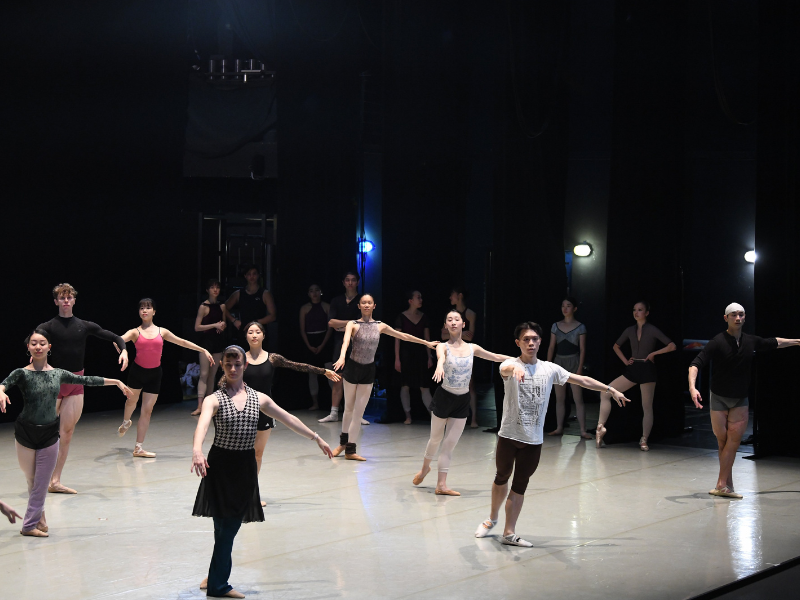
Beyond physical capability, he emphasises qualities that cannot be measured as easily.
“You need a certain physique and technical ability,” he says. “But you also need adaptability, humility and a willingness to take risks. To explore and try new things — even if that means breaking convention, as conventional as it is becoming.”
That openness extends beyond the studio. The demands of ballet are as much on the mind as they are on the body. Sleep is essential as fatigue can affect clarity and quality. Stuffing cotton into pointe shoes does less than one thinks to beat the pain caused by constant pressure on the foot. Instead, dancers use water-based pads known as jelly squares or “second skin”.
By midday, attention shifts towards recovery. Meals are typically catered on show days, often consisting of balanced, easy-to-digest options such as bento boxes.
Some dancers opt to secure their own provisions due to personal preferences. Whether they consume bread or rice, the goal is to ensure that no discomfort occurs and each person feels their best.
For soloist Timothy Ng, simplicity is key. “No processed or fried food,” he shares. “I focus on carbohydrates, protein, fruits and water to help with muscle recovery.”
Despite the strict measures, there is still room for indulgence. Sweets, chocolates and small snacks make frequent appearances, offering bursts of energy to last throughout the day.
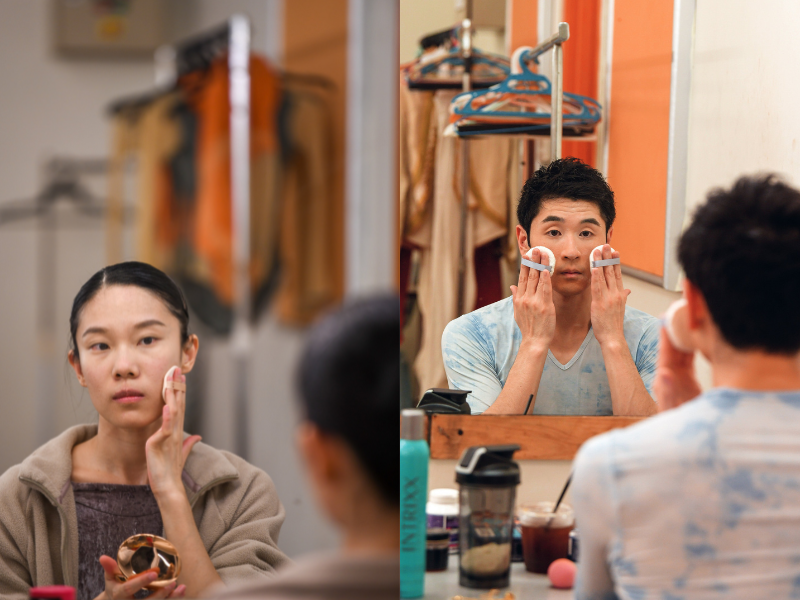
Elsewhere, physiotherapists attend to those in need of treatment, providing on-site care for aches, tension or minor injuries. Some dancers retreat into secluded corners to listen to music or take a short nap, while the rest begin preparing in the dressing rooms — applying makeup and styling their hair independently.
3.png
By 2:30pm, the focus shifts back to the stage for a slower, deliberate run-through of each piece.
Spacing rehearsal is used to mark positions, adjust formations and refine lighting cues as the dancers familiarise themselves with the venue dimensions. Certain works demand more attention than most, particularly those with intricate sequences or complex transitions.
After an hour, there is a brief pause. Thirty minutes are allotted for final preparations: costumes, makeup and last-minute adjustments.
Behind the scenes, a network of individuals ensures everything runs seamlessly. A wardrobe mistress manages quick changes, often executed in under two minutes in between sequences. Additionally, a ballet master, stage manager, lighting designer and music director alongside other technical staff work in coordination, geared like a well-oiled machine.
As the clock approaches 4pm, an unspoken reverence settles over the space. The heightened awareness of the stage and what it represents carry a sense of ritual for many dancers.
Ng begins with a prayer, grounding himself before stepping into performance mode. Some, like apprentice Ashley Kook, follow their own traditions — small gestures like hand-kisses towards the stage, putting a specific shoe on first or spritzing perfume.
When the lights finally dim, those involved take their positions while the remaining few wait by the theatre’s wings.
4.png
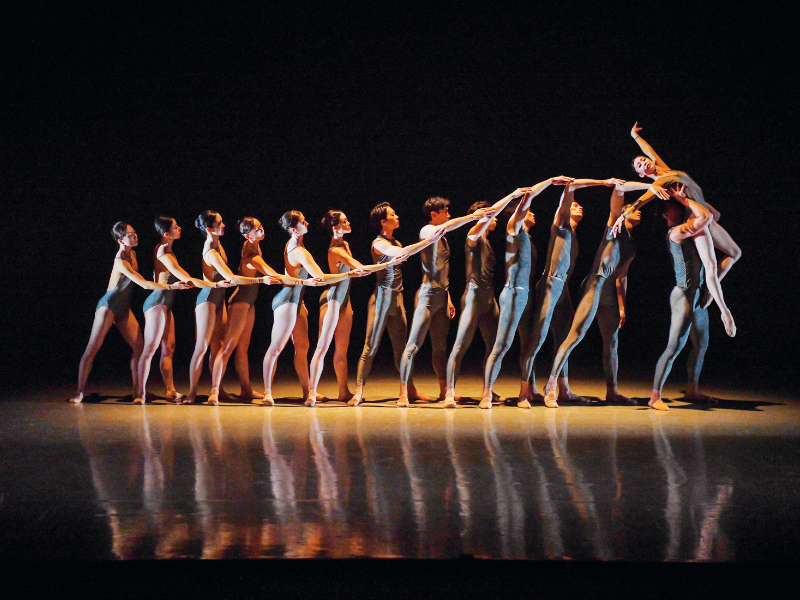
The rehearsal mirrors the structure of the performance itself. For Ballet Illuminations, the company put together three works that best represent the current state of its repertoire. The programme opens with Shadow’s Edge by Ma Cong, a neoclassical work defined by sharp lines and dynamic energy. Dressed in striking orange, the dancers move with intensity and control as the evening kicks off with pulses of energy.
Evening Voices by Tim Rushton follows next — a contemporary piece that shifts the mood entirely. Fluid and introspective, it unfolds like water in motion, with softer tones of grey and blue enhancing its atmosphere.
After a brief intermission, the final act arrives — Paquita, choreographed by Marius Petipa. The piece showcases classical technique at its finest, from intricate footwork to grand pas de deux sequences. Vibrant costumes and ornate staging complete the picture, bringing the programme to a resounding close.
Applause from those present concludes the dry-run. To wrap up, dancers gather back on stage as Schergen and ballet master Mohamed Noor Sarman offer feedback to further refine details and address specific nuances. It marks the end of the day, but only the beginning of a demanding series of packed-house shows in KL.
All hard work brings reward, and when it is over, there is a well-deserved breather. “I owe them a day off,” Schergen says with a hint of humour. “They get one but I’ll give them two — one to rest, one to recover. But not all the time,” he adds, smiling. “We do our best to find that balance. Sometimes we get it right; sometimes we don’t.”
On pointe
Artistic director Janek Schergen on his colourful background and approach to breaking new ground with Singapore Ballet
5.png
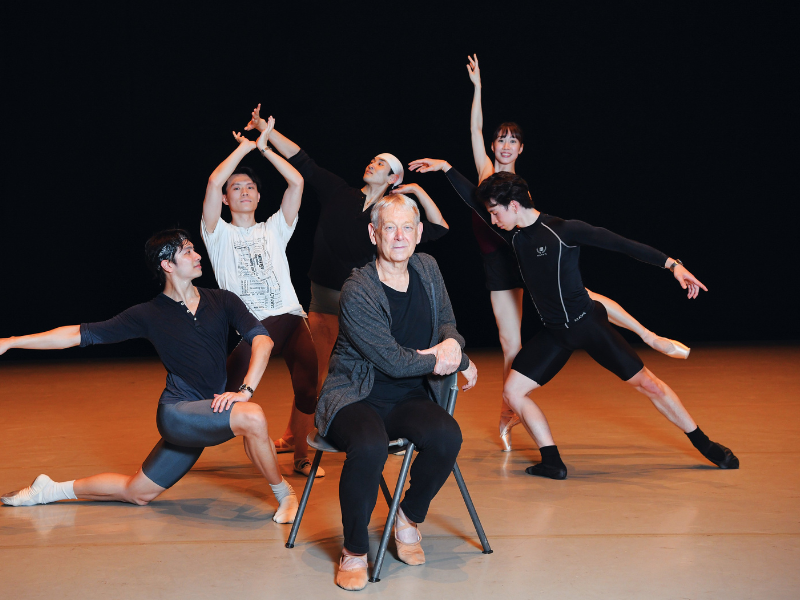
For Janek Schergen, a life in the arts was not a question of choice. Raised in Sweden within a family steeped in creative tradition, he grew up surrounded by mediums of expression — his mother was a dancer, and his grandfather a symphony musician. “In my world, if I decided to do anything outside of the arts, my parents would have given me to the neighbours,” he laughs. They believed that if one was given a gift, it was a shame not to use it.
Yet even within that certainty, the journey was not without resistance. As a child, the weight of expectation bore heavily on Schergen. At 12, he walked away from everything, but by 14, clarity arrived with a newfound force. “If I don’t become a dancer,” he recalls thinking, “I will never be happy.”
Schergen did not initially see himself confined to classical ballet. His abilities extended across disciplines and, for a time, he imagined pursuing something less defined.
One unusual advantage that set him apart early on was his exceptional memory, which earned him the nickname “the robot” from peers. This would later shape his work in reconstruction and coaching.
An early stint with a Canadian company proved formative, if not entirely fitting. It was only after moving on — almost by chance — to another ensemble with a more varied repertoire that things began to align. There, he immersed himself in a range of works, from Swan Lake to those of George Balanchine, whose neoclassical style shifted Schergen’s innovative sensibilities and influenced the trajectory of his career.
He also encountered other pivotal figures — among them, a director connected to the Netherlands Dance Theatre. Under his leadership, Schergen transformed into a main dancer. “I wasn’t prepared for that direction, but I loved it,” he admits.
Teaching entered his life almost organically. He began with instructing children and gradually expanded into a deeper engagement with the craft beyond performance.
There is no formal training in becoming a rehearsal director. “They spring out of nowhere, and they need to erase themselves while also inspiring others to perform the piece exceptionally,” notes Schergen.
Innate precision, combined with his study of Benesh Movement Notation — a system for writing down choreography — equipped him with the tools to preserve and restage works with extreme accuracy. Schergen compares it to Latin, “a language that may not be widely spoken, but its value doesn’t diminish”.
This expertise led him to become a répétiteur for the late and celebrated Singaporean choreographer Choo San Goh. The two worked closely but were more like brothers.
“That was what I had always wanted,” he says. “To work with someone who was vital, fresh, taking something old and making it new.”
6.png
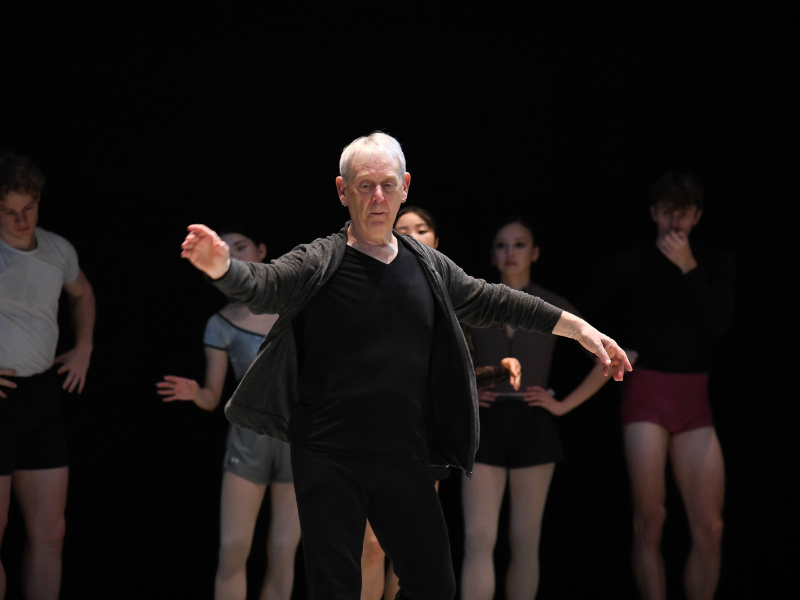
Today, as artistic director of Singapore Ballet, a role he has held since 2007, Schergen carries that philosophy forward.
Following Goh’s passing, Schergen returned to Sweden. He was with the Washington Ballet, but continued staging works in the Lion City. It was only after repeated encouragement from Singapore Ballet’s board that he accepted the position. “I actually turned it down the first time,” he reveals. “They spoke about radical change. I’m not radical, but I come from the real thing.”
Having been established by founders without professional dance backgrounds, the company required restructuring both visionarily and operationally. Where most renowned institutions had already established a method of working, Singapore Ballet did not.
“I had to bring it in line with how professional companies function globally,” he says. “That was the hardest part and it’s still ongoing.”
At the heart of Schergen’s approach lies a careful equilibrium. He resists the temptation to remain solely within tradition, just as he avoids change for its own sake. Instead, he advocates progression that acknowledges its roots. “Everything should evolve, but you can’t forget what you were built on,” he explains.
For him, the co-existence of classical and contemporary works is essential as the two realms are best complemented by each other.
Schergen’s life outside the studio reflects the same sense of balance. A lifelong vegetarian, he maintains a routine centred around daily exercise, often beginning his mornings with a 45-minute session of stretching, strengthening and breathwork. Classical music or just pure silence are the perfect soundtracks for him to reflect and centre himself for the day.
As uncompromising as he may seem, Schergen has his doses of fun. He finds joy in reading from his extensive collection, frequently attends concerts and orchestras, and is always open to fresh experiences like getting a new ear piercing. At other times, he values solitude as much as he does connection.
Beyond everything, his focus remains firmly on those he leads. “I spend all my effort on them and I like it. I want my dancers to look back at their careers and say they worked on great pieces, with great people, at a high level — and that it was worth it.”
When it comes to preserving art, dedicated individuals such as Schergen ensure institutions like Singapore Ballet are protected as cultural artefacts, with a unique outlook that takes the establishment to greater heights each season.
This article first appeared on May 18, 2026 in The Edge Malaysia.