
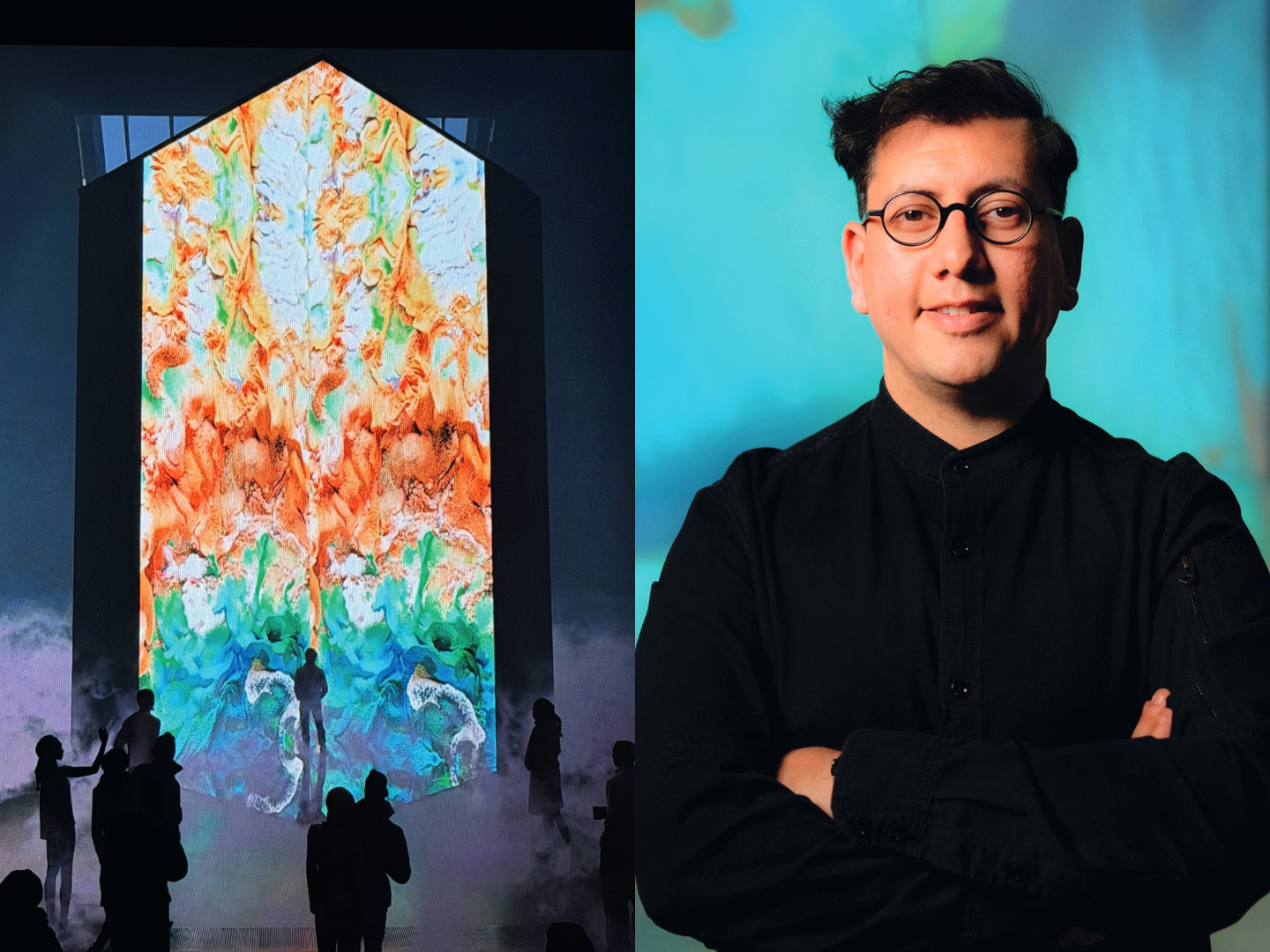
Latent City is Anadol’s 10m-tall living data sculpture for the new Brusk art gallery in Belgium (Photos: Diana Khoo/ The Edge and Refik Anadol)
Mention Bruges (it is also spelt as Brugge) and most people would immediately visualise a fairytale town, defined by romantic canals, striking Gothic architecture and charming cobblestoned streets. Located about 90km northwest of Brussels, the Belgian city’s heart is a picture-perfect example of a well-preserved medieval epicentre and also, understandably, a designated Unesco World Heritage Site.
Its imposing 13th-century Belfry dominates the skyline and visitors often mill about the canals or bustling Markt, its central market square. But aesthetes come for something else altogether — the small but perfectly formed Groeningemuseum, home to priceless Flemish masterpieces by names like Jan van Eyck, Hans Memling and Hugo van der Goes.
Giving this visually driven demographic one more reason for a return visit, however, is the new Brusk — a contemporary art gallery and museum that opened in May, just a stone’s throw from the Groeningemuseum. Designed by the architectural firms Robbrecht en Daem and Olivier Salens, the new cultural landmark’s name is a portmanteau of Bruges (Bru) and schone kunsten (Sk), which means “fine arts” in Flemish.
The glazed concrete and red brick structure is divided into two massive halls, which are presently showing Bigger Picture, an exhibition that celebrates Bruges’ heritage as a cosmopolitan trading hub, and the undoubted star of the show Latent City, Refik Anadol’s first solo show in Belgium.
1.png
To those unfamiliar with his name, Anadol, 41, is one of the world’s most renowned media artists and a groundbreaking pioneer in AI-driven digital art. He is also quite possibly the first to use artificial intelligence in public artworks. Several of his works command prime positions in the greatest places, including but not limited to MoMA (New York), the Guggenheim Museum Bilbao (Spain), Munich’s Pinakothek der Moderne (Germany) and the National Gallery of Victoria (Australia).
If you have visited the stunning Renzo Piano-designed Istanbul Modern, you would not have missed his Infinity Room: Bosphorus, part of the modern art museum’s permanent collection of artworks and which bases itself on a dynamic dataset that represents the real-time weather conditions of the Bosphorus Strait. The installation works to reveal all the colours, both visible and invisible, of the strait, creating — in the Turkish artist’s own words — “a hypnotising palimpsest of what it has been and what it could become in our imaginations”.
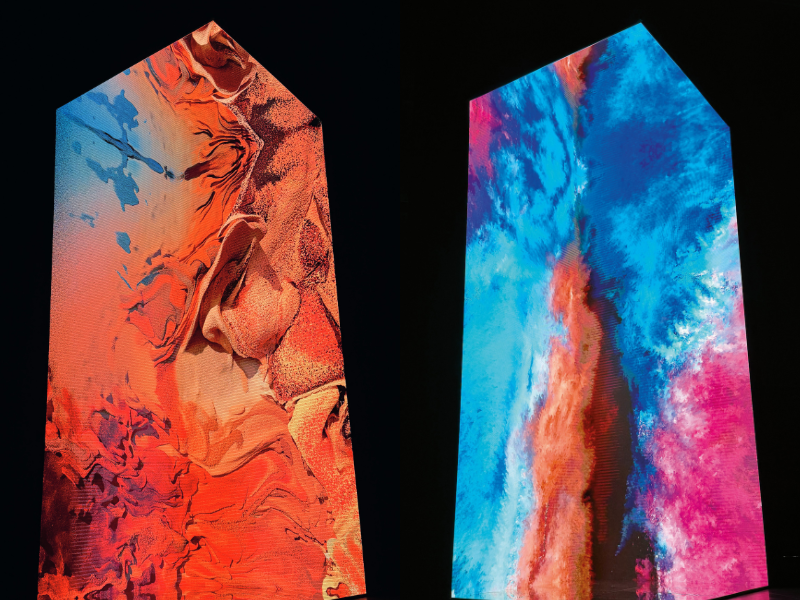
Famed for fusing human creativity with machines and data, Anadol has created a massive data sculpture that almost reaches the full height of the exhibition hall — 12m high, to be precise. Continuously fed by incoming data, it is perpetually in flux, constantly reorganising itself into a never-ending, visually arresting flow. Through custom machine learning models and generative systems, Latent City honours and celebrates the unseen layers in concentrated urban environments, using analytics to create imagery so beautiful and compelling it can be likened to visual poetry. In short, it converts human metropolises into a sentient, breathing entity and a shape-shifting work of art.
What makes Latent City particularly compelling is its inclusion of other major cities around the world such as Seoul, Berlin, New York and Stockholm. Harvesting vast amounts of publicly available data, Anadol then transforms it all into datasets augmented by imagery, archival information, atmospheric conditions, computation and algorithms, presenting a novel way of seeing a city, while placing Bruges within the broader dialogue and yet tracing resonances across geographies.
Those expecting to be simply delighted by mesmerising swirls of colour would not be disappointed. But beyond superficial visual pleasure, what makes Anadol’s art increasingly important is the underlying truth of how, beneath all the differences, eventually we, all of us, are one and the same.
'Latent City' is on until Nov 8 at Brusk, Dijver 12, Bruges, Belgium.
This article first appeared on July 20, 2026 in The Edge Malaysia.