

The 2025 season will include Chang Ching Feng's The Gathering (Photo: Raintown Film Festival)
Storytelling is an elemental, if sometimes overwrought, concept these days. Across Peninsular and East Malaysia, the beginnings of places and their names can be found in founding tales — the stuff of first, imagined sources.
In the Larut district of Perak — once the richest area in all of Peninsular Malaysia — a nobleman, poised to become the grandest of tin merchants, owned an elephant. He named it Larut. The nobleman, Long Jaafar, had a great love for the elephant, taking him on long and arduous journeys between the locations of Bukit Gantang and Lubok Merbau.
On one of these journeys, the elephant went missing, leaving Long Jaafar in a state of great anxiety and depression. The elephant was discovered several days later, its feet covered in mud. Embedded within the clumps of mud, however, was a glittering mineral — tin ore. This discovery was to lead to Long Jaafar’s immense wealth, and the naming of Larut, later the principal tin mining region in all of the world, after the beloved elephant, the bearer of great fortune.
Taiping — the abode of peace: a name borrowed from the Taiping Rebellion in China, and bequeathed upon a town set in the valley of the Bintang Mountains, girdled by Maxwell Hill. The location with the greatest amount of rainfall in this tropical country. Or, in the words of Jacky Yeap, founder of the Raintown Film Festival: “There is no separating Taiping and the wet afternoon. It rains almost every afternoon.”
jacky.jpg
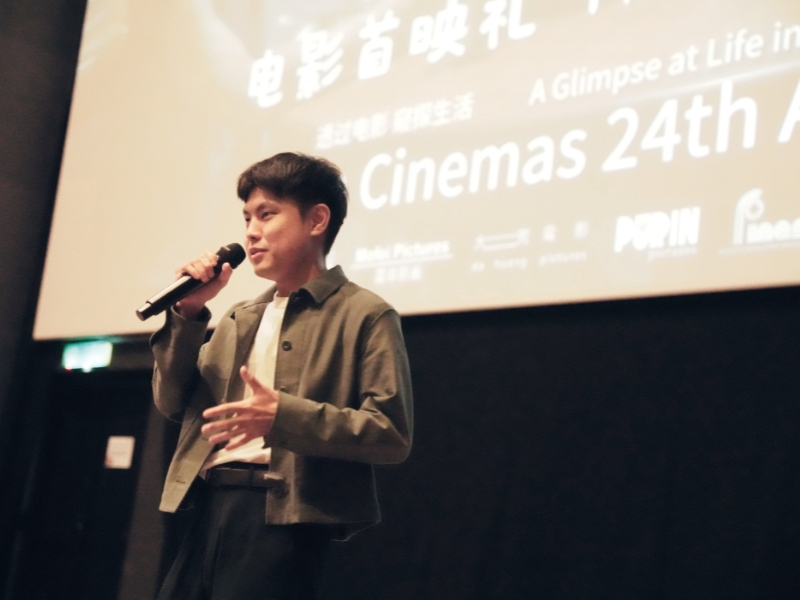
The setting for the brutal Larut Wars of the 19th century, the one town with a modest air strip, where, while fleeing the Dutch, the revolutionaries of Indonesian independence Sukarno and Hatta made a brief landing to discuss the possibility of creating Indonesia Raya (Greater Indonesia) with the leaders of the burgeoning Malay Left. Or where, while on a visit to Malaya, departing Taiping and heading for Ipoh, a young Indira Gandhi, accompanying her father, Jawaharlal Nehru, leader of the Indian National Congress, met with a near-fatal car crash, posing one of the great questions of virtual history in the world: “What of India without Indira?”
“For all its being eclipsed in later history,” the historian Khoo Kay Kim wrote in his essay on Taiping, “the life of Taiping beyond the Larut years were never uneventful”.
There must be something in the eccentric history, the dramatic stories, the curious narrative of Taiping that must have stirred an adolescent, living amid an environment that was “just boring”, to pick up a Nokia phone, film little events in his life, put them together and forge his first “clips”.
The son of a fish seller in the local market who, “still sells fish, but now only part time”, Yeap set his sights on studying film and becoming a filmmaker.
Born in Aulong — on the borders of Taiping town, designated as a new village during the period of the Emergency and noted for a temple, church and mosque as well as the famed Aulong biscuit — Yeap ventured to Universiti Malaysia Sarawak to study cinematography. He later interned under Da Huang Pictures, coming under the tutelage of filmmaker Tan Chui Mui.
Yeap had wished to come back to Taiping to pursue his vocation but, lacking a film community there, he departed for Kuala Lumpur, “which is not home”, with Taiping still very much in his head and hopes of eventually returning.
He made his debut film Sometime Sometime in 2023. A sensitive, capricious story about a single mother and her son, the internal politics of relationships, and a curious fable of appearances, it coincided with the 150th anniversary of Taiping. Yeap himself played the role of the son and Tan, the mother.
sometime.jpg
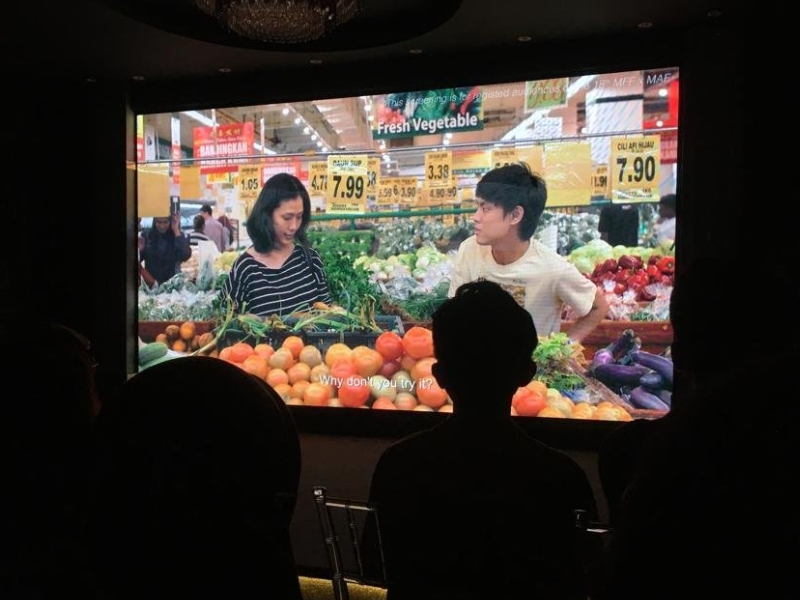
The idea for the Raintown Film Festival was sparked by an observation and an experience.
“For a long time, the young were leaving Taiping in great numbers,” Yeap says. “But after the Covid pandemic, I began to notice that significant numbers of young people were returning to Taiping, opening cafés and other businesses.
“Meanwhile, around the same time, I had participated in the Pesta Filem Kota Bharu and began to get a sense that it was important for local communities around the country to experience local films and film culture rather than having to travel to big cities for that experience.”
The Raintown Film Festival had the idea of community at its heart. Collaborating with local businesses and Paragon Cinemas, but with a curatorial team based in KL, the inaugural festival was held in 2024.
“We had sought to draw audiences from beyond Taiping, but most of the attendees last year were still from the community. Nevertheless, I was still very encouraged by local support, many among them uncles and aunties who were very animated in post-screening discussions. Some were able to converse only in Hokkien so we had to improvise and find translators. We hope to attract broader audiences from beyond the state this year.”
Among the more fascinating aspects of the Raintown Film Festival is that it showcases films with a Taiping setting or theme. Notable screenings at the inaugural festival 2024 included Tunku Mona Riza’s Rain Town and Ho Yuhang’s Rain Dogs. An evocative screening at the Taiping Lake Gardens Raintree Walk car park of P Ramlee’s timeless Seniman Bujang Lapok evoked remembrances of the Wayang Pacak age.
ship.jpg
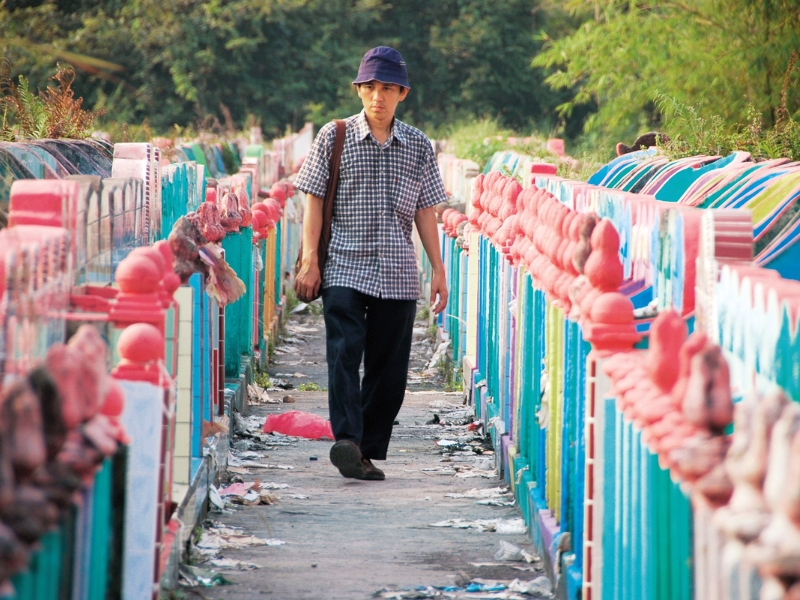
For Raintown Film Festival’s 2025 season, screenings include The Gathering by Chang Ching Feng, produced by Jin Ong, who is lauded for his film Abang Adik; and The Pirate and The Emperor’s Ship, which centres on the enigmatic figure of pirate king Tan Lian Lay, by the intriguing documentary filmmaker Khoo Eng Yow.
A tribute to the late filmmaker Mamat Khalid is occasioned with the screening of the first of his Rock quartet of films where, “we have invited about 100 rockers to attend, [fully decked out in their signature gear,] to take part in a discussion,” Yeap explains.
Selections from the Raintown Short Film competition are among the highlights, proving that Taiping’s apparent appeal as a film setting and in inspiring filmmakers remains quite inexhaustible.
“I have often been asked how long we can keep going if the films we screen have to have an element of Taiping in them,” Yeap says. “But it seems, for reasons I cannot explain, that there are so many filmmakers from Taiping or who wish to make Taiping a setting for their films.”
rock.jpg
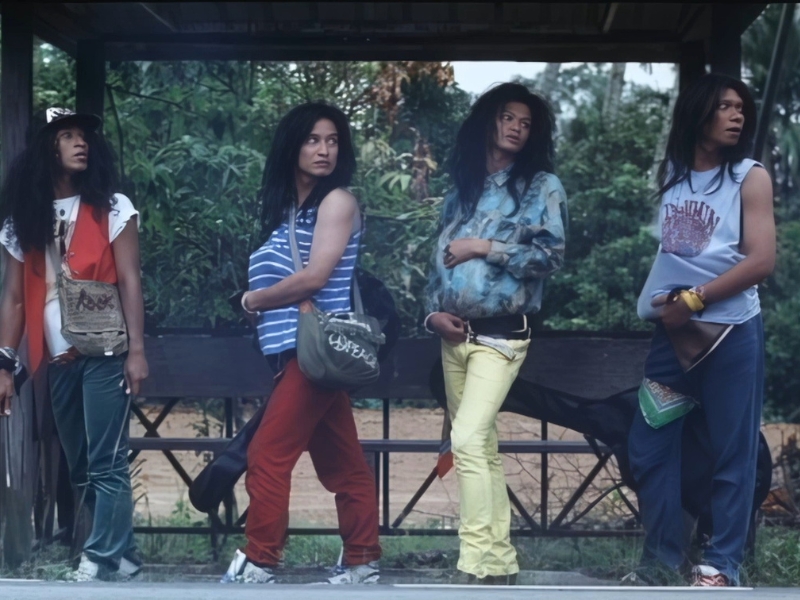
It is an aspiration that falls into a broader yearning that appears to drive aspects of self-discovery and authenticity in an increasingly fractious historical and cultural landscape.
“I hope the festival will be able to draw filmmakers who can deliver their pictures and stories in a way that makes complex narratives with a rich historical background easy for people to understand,” Yeap once said.
In engaging local communities, delving into local stories and establishing a lineage to home, the Raintown Film Festival reaches into the heart of what was once considered marginal cultures, emphasising the legitimacy of the homegrown and the promised “return”.
“Perhaps if things are able to grow from this and a film community with it in Taiping, I may be able to realise my wish — of being filmmaker, and returning home,” says Yeap.
The Raintown Film Festival runs from Sept 12 to 14 at the Paragon Cinemas, Taiping Mall. Admission is free. For more information, visit @raintownfilmfestival on Facebook or Instagram.
This article first appeared on Sept 8, 2025 in The Edge Malaysia.