
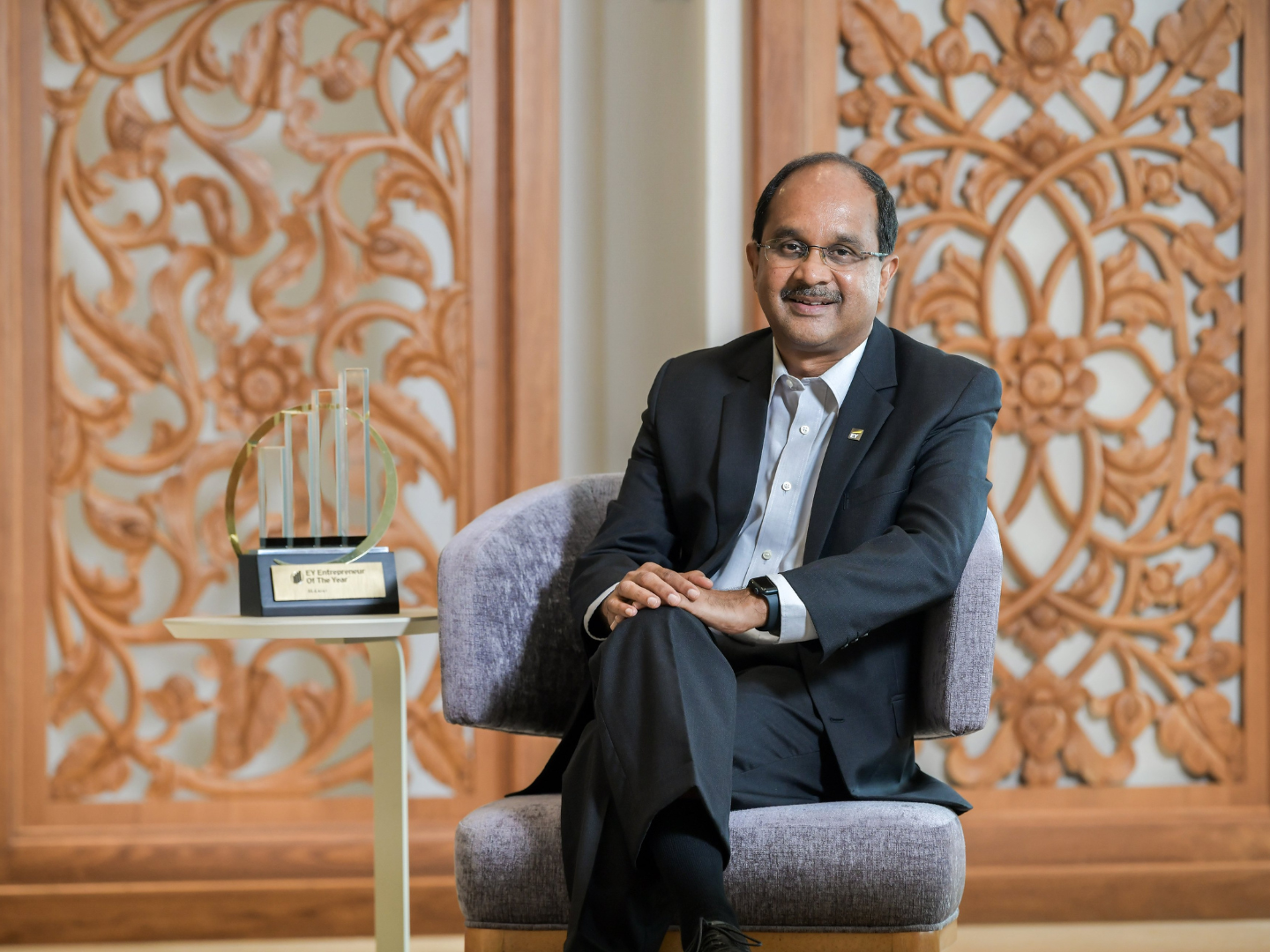
Decades spent understanding institutions, leadership and headwinds had prepared Rao to lead the EOY programme (Photo: Zahid Izzani/ The Edge Malaysia)
Few people have had a better front-row seat to the unofficial history of Malaysia’s entrepreneurial scene than Philip Satish Rao. As programme director of the local EY Entrepreneur Of The Year (EOY) award since 2007, he has heard enough origin stories to last several lifetimes: the accidental breakthroughs, strategic pivots, and near-collapse of family empires that, improbably, turned into tales of survival.
Such a vocation is an unlikely perch for a man whose temperament and training were forged in the unsentimental discipline of audit. For the better part of four decades, Rao’s job was essentially one of productive scepticism: sitting across from businesses and stress-testing their narratives against the hard realities of the books. Yet, over time, he found himself drawn to the peculiar leap of faith at the heart of entrepreneurship — the ability of disruptors and daredevils to summon belief before there was tangible proof. How do you ask others to invest in a future that sometimes does not yet exist on paper?
Rao, with some relish, points to Uzma Bhd as one such example. “If I had told you years ago that a homegrown energy company could one day launch its own satellite, would you have believed me? Probably not, but Uzma did it, having transformed from an oil and gas service provider into a diversified group spanning renewable energy, geospatial intelligence and space technology.”
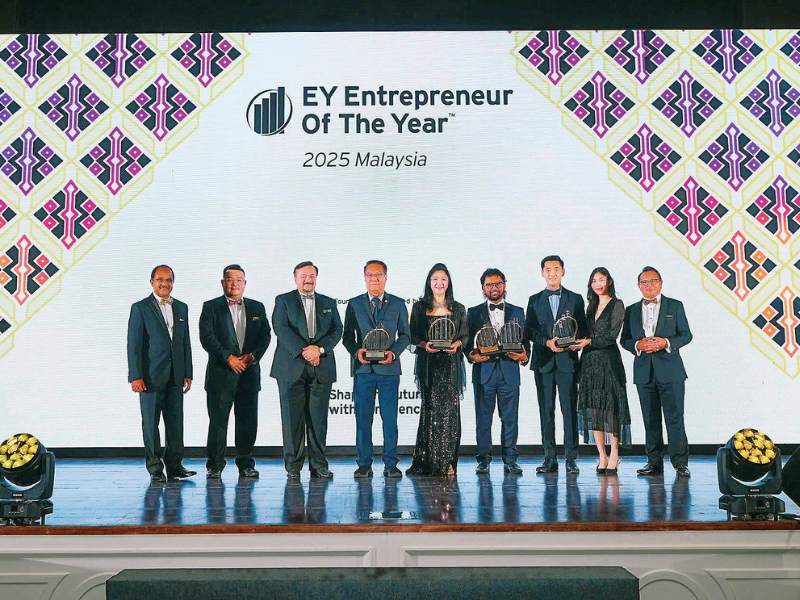
Its managing director and group CEO, Datuk Kamarul Redzuan Muhamed, named EOY Malaysia 2025, will go up against 46 other country winners at the World EOY event in Monte Carlo, Monaco, the highlight of a flagship programme established in 1986 that now boasts more than 30,000 members in its network.
But not every dream is propelled into space. For Rao, entrepreneurship has always existed as much in the everyday as in the extraordinary — in those who spotted a gap, however small, and decided to fill it. He recalls the itinerant traders of his childhood: the fishmonger arriving on a bicycle before families owned cars to drive to the pasar; the satay sellers making their evening rounds so dinner could come to the neighbourhood; or the hardware man peddling brooms and scissors from house to house. Long before “start-up culture” became boardroom vocabulary, these, too, were enterprises of a pioneering kind.
“Every ringgit of GDP we earn has an entrepreneur behind it. Collectively, they are the lifeblood of our economy,” he says. “We’re often distracted by the big companies and multinationals but if you cut it down to size, a lot of the basics we have today began with somebody seeing a chance to solve a problem. I think the entrepreneurial spirit brings a lot more agility in helping the country navigate these current times, especially with the pressures of rising costs and energy challenges.”
3.png
The tools may have changed through digitalisation, allowing organisations to scale in ways previously unimaginable, but Rao is convinced the underlying DNA has not. Beneath the rhetoric of innovation, the purpose remains fundamentally constant: to create livelihoods and widen opportunities for entire communities.
Today, even a modest char koay teow stall is subject to the logic of algorithms and can be undone by its own digital invisibility. “Those who are not connected to a large marketplace may not grow as fast. They will lag behind,” he warns, noting that consumer behaviour has shifted decisively online. “Word of mouth is no longer enough. The young and savvy will go on social media first to check the ratings or see if there’s a YouTube video. Otherwise, they may not bother.”
Rao smiles, admitting he still has his favourites — O&S in Taman Paramount and Robert’s in Section 17, Petaling Jaya — though even these traditional hawkers have since graduated to QR payment. Relevance is no longer assumed: entities that fail to adapt risk becoming outliers in a consumption culture that outpaces them.
Light-hearted as the anecdote is, it reflects a far larger transformation underway, one in which technology is collapsing geography, displacing middlemen and reorganising labour. Rao recounts, with some admiration, how 2017 EOY alumnus Mark Koh and co-founder of Supahands built a platform connecting businesses with a global network of remote gig workers for tasks ranging from research and transactional support to the data-labelling functions underpinning artificial intelligence systems. The company, later acquired by Singapore-based Omnilytics, had already been gaining traction before Covid-19 became a major inflection point. “During the pandemic, there was difficulty getting resources but he managed to overcome that without having to go out and recruit.” It is the sort of parable Rao finds most instructive: Success often belongs to those already working patiently at the margins before the world realised it had a need.
Grit minds
For all his familiarity with the founding myths of others, Rao has his own — and it begins, as the best ones often do, with a detour.
Growing up in Alor Setar, Kedah, as the middle child of a headmaster father and homemaker mother, life was comfortable, though not in a way that afforded endless choices. A product of Kolej Sultan Abdul Hamid, one of the north’s most storied schools (and whose old boys’ association he still serves as treasurer), Rao completed his STPM with neither the means nor any great inclination to pursue a degree overseas. An uncle, sensing a few idle months ahead, arranged a vacation traineeship at Ernst & Young while he waited for university placements. When the offers finally arrived — science at University Malaya or agriculture at University Putra Malaysia — neither held much appeal. Fortunately, the hardworking lad had made enough of an impression that he was invited to stay. “That three months,” he reminisces, amused and grateful in retrospect, “became 38 years.”
Staying on did not mean stepping immediately into a polished corporate career. Rao began as an articled clerk, earning RM300 a month, much of which went straight back into paying for his Malaysian Institute of Certified Public Accountants (MICPA) classes. The conditions were simple: pass the papers and the fees will be reimbursed. Days regularly spilled into overtime and evening lessons, while an aunt in Kuala Lumpur kindly waived rent to keep finances manageable.
“I never studied as hard as I did for MICPA,” he admits. “Back in school, I played the fool most of the time, but I managed to complete my professional qualification in five years.” What emerged by the end of that apprenticeship was not only a set of credentials but also the opportunity to supervise a team of degree holders, some with far more impressive CVs. Work experience, it turned out, counted for a great deal.
Soon after, he was selected in 1994 to represent Malaysia on an international secondment to Cleveland, the US — home to Ernst & Ernst, one half of the firm that would eventually become EY.
The posting abroad would prove to be the first of several positions that steadily expanded both Rao’s remit and outlook. Between 1999 and 2000, he was seconded to serve as head of finance at Malaysia’s national railway, overseeing a department of more than 70 people and joining top management on strategic and operational matters. Later came an assignment with one of the world’s largest oil and gas companies, where his responsibilities spanned Asia-Pacific, the Middle East and Russia.
By 2007, decades spent understanding institutions, leadership and headwinds had prepared him for an entirely unexpected outlet: leading the EOY programme.
1.png

Asked what his predecessor saw in him, Rao is careful not to overclaim. “Maybe my capability to deal with various stakeholders. This role was never meant to become the be-all and end-all of my career — rather, a complement to it. EOY has taught me to see founders differently. Meeting entrepreneurs across industries and personalities gave me a more human perspective — not just as a business advisor, but someone with genuine empathy for the ordeals of constructing something from nothing. You see, in a firm as big as ours, the danger is that we only want to work with the most mature and developed clients because, well, it’s better risk management. But this award allows us to connect with those who really need help.” He pauses. “This is something I will never give up on.”
Initiated in 2002, the Malaysian EOY chapter had yet to become the hallmark it is today when Rao stepped in, leaving room for reinvention that elevated it into the top six among EOY programmes globally. One of the earliest and most consequential changes he introduced was face-to-face interviews. Previously, judges assessed, shortlisted and determined winners entirely on paper.
“I can give you examples of judges who were absolutely hell-bent on a certain candidate — but after meeting the person, they came back and said, ‘Sorry, Philip, we’ve changed our minds.’” Real exchanges, Rao discovered, often revealed nuances impossible to capture through written submissions. He shares one nomination in particular: a family had put forward its patriarch, insisting that “everything we have today is because of him”, even though the son had already taken over and was driving the business forward. “We had to ask them to reconsider who was truly at the helm. Unfortunately, they weren’t very happy.”
The due diligence does not end there. Every nominee undergoes a deep-dive with a senior EY professional — conversations that can last two to three hours. Background checks continue from the close of nominations in June right up until the moment the envelope is opened at the gala in December. “If there are any doubts, we can still pull someone out on the day of the announcement. So before that, we have to learn every single thing about the entrepreneur, whether they say they walked barefoot to school, came from a family of rubber-tappers struggling to put food on the table, or were born with a silver spoon but chose a different route. No accounts are taken at face value.”
The process, Rao insists, was never about identifying flawless individuals or forecasting permanent success. Entrepreneurship, after all, is too contingent for that. Some past winners have gone on to face setbacks, sell their ventures or encounter crises. “I’m not saying everyone who has come through our door is a saint. But we can definitely hold our hand on heart and say, ‘At that point in time, this was the best entrepreneur we awarded that year’. Because at the end of the day, I don’t think it’s fair to expect any business to only have ups and never downs.”
Perfect pitch
Modern society has a tendency to treat entrepreneurs as a breed unto themselves — a class supposedly endowed with unusual instincts, greater resilience and some ineffable quality that sets them apart from the rest. It is an appealing premise, but Rao has come to believe that upbringing and circumstance often leave a deeper imprint than innate talent.
“Years ago, EY conducted a study on whether entrepreneurship is nature or nurture. My view has always been the latter, and the findings supported it — around 60% had worked elsewhere before setting out on their own. Take [Tan Sri] Tony Fernandes, for instance. He worked in the music industry before building a low-cost airline. I learned quite a few things from him, like the way he handled the media during our time in Monte Carlo, which was also my first trip to Monaco. No gatekeepers, no entourage. I even jokingly told him to take a break and let me handle his interviews because I already knew the story by heart.”
Rao speaks from more than observation, as the AirAsia founder is not just the 2006 EOY winner but also a long-time friend. “Many would give up on the journey 50% of the way. But someone like Tony sees it through. That relentless, never-say-die attitude — you can’t really put it into words.” Yet persistence, he argues, is rarely enough on its own. Even the strongest leaders need counterweights — trusted voices, not yes-men — willing to challenge assumptions. “Those surrounded by people who tell it like it is are the ones likely to go the furthest.”
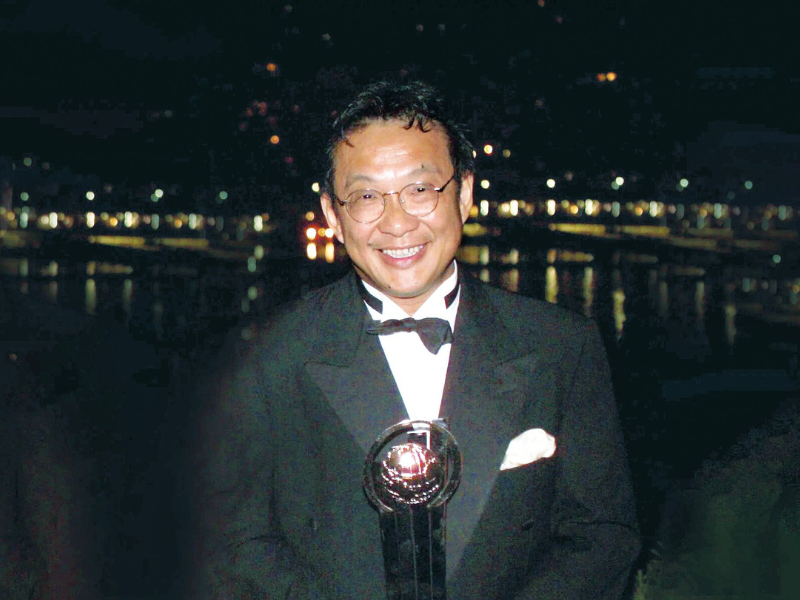
Another symbolic victory arrived in 2011, when Tan Sri Francis Yeoh, executive chairman of YTL Group and the very first Malaysian EOY winner, became chief judge of the WEOY — a coup Rao describes with pride. “That almost felt like winning the global award,” he laughs.
Yeoh brought to the role a rigorous, almost scientific approach to evaluation, commissioning detailed analytics on each finalist and presenting the results to the panel. For a programme that had spent years refining the credibility of its selection process, having a figure of Yeoh’s stature and charisma command the room was, in Rao’s words, a validation in itself.
2.png
Such milestones gradually dismantled another assumption: that Malaysians somehow stood a rung below their Western peers. Stripped of mythology and examined up close, the differences often proved smaller than expected. More often than not, it was never an issue of calibre but of exposure, access and self-assurance.
“Our candidates always find themselves on the international circuit talking about ‘we’, when others actually want to know what you have done. We’re as good as anyone, if not better. In fact, one of our entrepreneurs almost won a world award. But we need to get out of this mindset of ‘I don’t want to show off or blow my trumpet’. Sometimes, you have to be a ‘me’, and not hesitate to say, ‘I did this’. Humility and familial piety are part of our culture, and those are great values. But when the moment calls for it, you have to be willing to own what you’ve achieved.”
Confidence beyond borders must also be matched by an equally expansive vision at home. If entrepreneurship can arise from varied backgrounds, then the lens through which it is evaluated has to be broad enough to acknowledge more than a single archetype of accomplishment. Spanning four categories — Emerging, Technology, Woman and Master — and guided by criteria centred on purpose, impact and growth, EOY has assembled a roster of judges from diverse fields such as trade, policymaking, technology and media. Past panellists have included Tan Sri Datuk Dr Rebecca Sta Maria, former executive director of the APEC Secretariat; Anuar Fariz Fadzil, CEO of Malaysia Digital Economy Corporation; Ganesh Kumar Bangah, executive chairman of Commerce.Asia; and senior editors from The Edge.
“I often get asked: Why have a women’s category at all? They can already compete across the other awards. But I still feel it’s necessary because, like it or not, we want to ensure women are spotlighted every year. In our part of the world, the landscape is male-dominated — I don’t like saying that, but it’s the reality. The key thing to understand is that this is not a separate or secondary track. Women qualify at exactly the same level and can still go on to win the country award. If I were running a multi-billion ringgit powerhouse, I’d proudly enter as a woman entrepreneur because visibility is important, and someone else might look at that and think they can do it too,” explains Rao.
Spend enough years around entrepreneurs and one begins to notice every dialogue about growth eventually circling back to continuity. Much of Rao’s work has been devoted to creating structures that outlast individuals, ensuring acclaim is not confined to the loudest names or the most obvious frontrunners. After decades charting the paths of others, those same questions are now turning, gently, towards his own life.
“EOY has taught me to see things very differently, even in my day-to-day [life]. Once, a nephew of mine — probably having noticed the material things around me — asked what my secret to success was. I told him, ‘You may think I’m going to talk about my car or house. But success is when my children do well, and when no one complains about them’.” Rao’s two sons are pursuing medicine and his daughter, law — all seemingly raised under a household code that prizes manners over outward measures of achievement. Guests arriving at the house are expected to be greeted politely; speaking roughly or behaving impolitely is simply not tolerated.
Much of what Rao values as a parent, he inherited from his own. “My father continued teaching well into his eighties. What I learned from him was his ease with people from all walks of life. He could speak to the man on the street or royalty in the same manner. My mother, meanwhile, dedicated herself to helping domestic workers and lower-income families who regularly came to our home. Even after her passing, almost every year someone still visits her grave — a reminder of the many lives she touched through her advice and guidance. I think these lessons rubbed off on my wife and me, and eventually on our children.”
With 2½ years to go before retirement, Rao has begun thinking about succession and the next custodian of EOY. Technical competence alone will not suffice. “They need to see beyond just what they do in the firm and understand the softer side: how this impacts the wider community, society and economy.” Above all, he is seeking the right fit who can connect the dots and grasp the bigger picture.
“The only thing you take with you when you leave is your reputation and personal brand. You don’t take anything else. That is what remains, long after everything else is gone.”
Editor's note: This article was published prior to WEOY, from May 26 to 29. Event details were accurate at the time of publication.
This article first appeared on May 25, 2026 in The Edge Malaysia.