
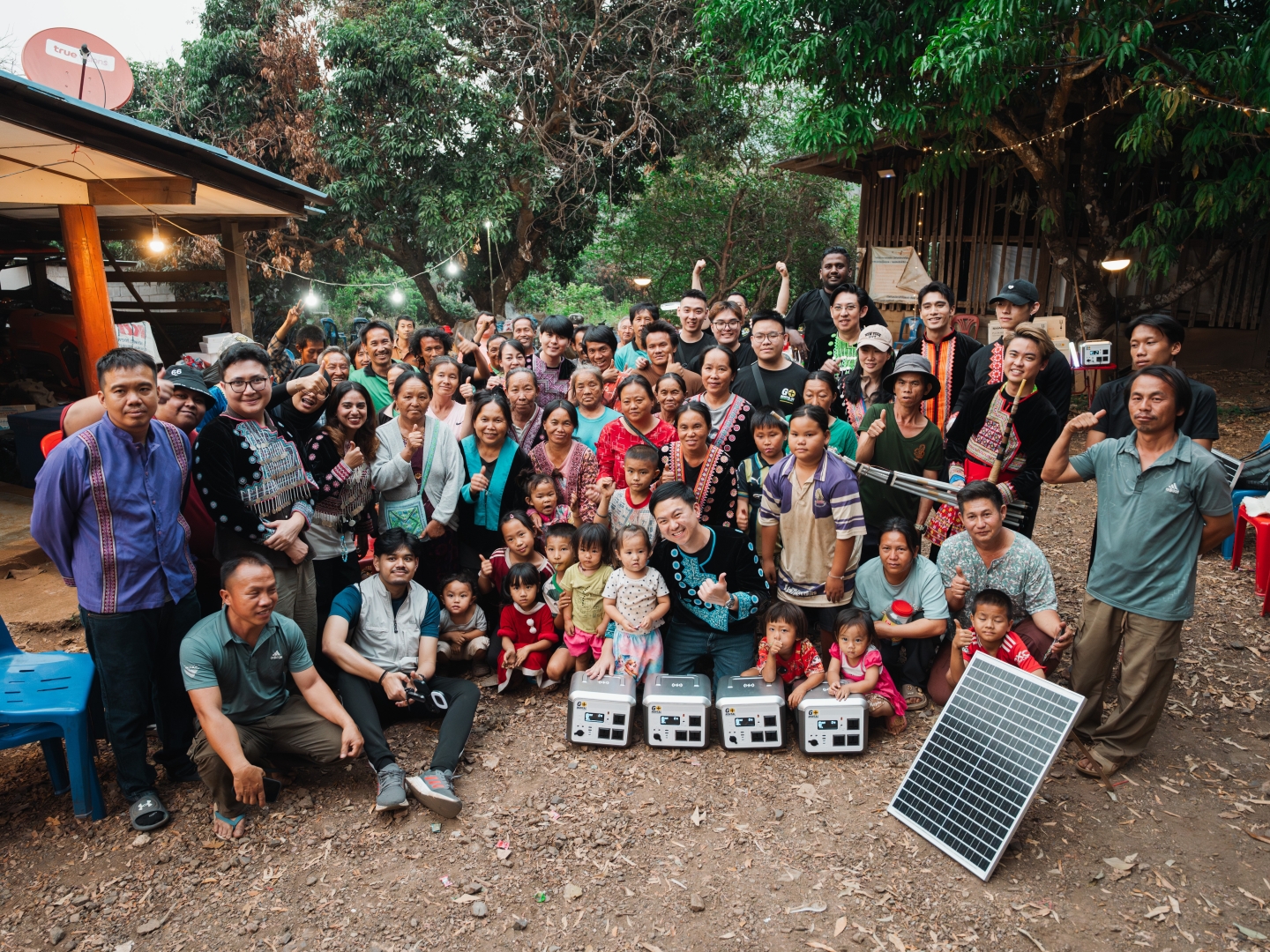
The Huay Nam Rin community with the GoRental Global team after the successful execution of Power to Empower in Chiang Mai, Thailand (All photos: GoRental Global)
"Can I borrow your power bank?” The statement has become somewhat common, taking the meaning of BYOB (bring your own batteries) to a whole new level. Though the portable dry cell battery was officially invented in 1888, it only grew popular in the 1950s due to the use of flashlights and transistor radios. Despite that, its proliferation was truly cemented by the early 2000s, coinciding with the introduction of smartphones and the device’s increasing presence in day-to-day rhythms. Today, access to a power bank ensures uninterrupted connectivity, eliminating the need for wall outlets and allowing users to stay connected anywhere and anytime.
Realising the efficiency of non-disrupted power, Singapore-based GoRental Global embodies this philosophy through modular battery systems or microgrids. Even better, they are emission-free. But before the focus turned to clean energy, the company was rooted in the world of motion pictures.
On set
GoRental’s founder and CEO Colin Peh graduated with a master’s in film from the University of California, Los Angeles. As a fan of black-and-white cinema, he favoured the works of Orson Welles and Stanley Kubrick. “I did dream of becoming a director, but I mostly worked behind the scenes as a cinematographer. That is how I learnt about equipment.”
Setting up True Colour Media Group, he provided technical solutions, equipment rental and manpower. The group has worked on a number of established projects including Crazy Rich Asians, Wolverine and Blood Brothers: Bara Naga. The entity is also an official strategic partner of Iskandar Malaysia Studios, a media production facility based in Iskandar Puteri, Johor.
1.jpg
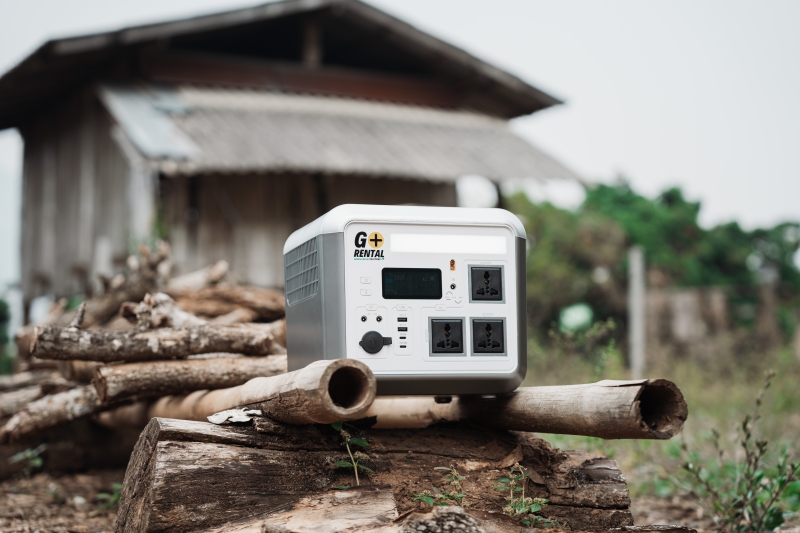
Like most hardware, film equipment also requires power, which in this case, was sourced from diesel generator sets (gensets). Peh and his team constantly had to navigate the hurdle of noise, especially when shooting outdoors. Diesel gensets produce inherently loud sounds that carry over long distances and can penetrate walls. “In Singapore, especially if the shoot runs late, people will complain and the production has to be stopped.” Not to forget, the complex machine is also carbon-intensive due to the burning of fossil fuels.
Could there be a better — and quieter — solution, Peh pondered. This led him to China, where major manufacturers specialise in making batteries for cellphones. Peh approached them, asking if they were able to electrify generators. The result was giant portable batteries with the ability to power a wide range of applications — from individual electrical appliances to open-air events, construction sites and even entire off-grid communities.
Energy shift
Peh set up GoRental, the pioneer of these systems in Singapore, in 2017. It has since supported more than 200 events in the island state, and has powered similar functions in neighbouring nations. These are mostly “unplugged” outdoor affairs such as camping, festivals and marathons that utilise mobile equipment. On the critical end, the company has supported fundamental affairs such as Singapore’s 2018 general election and even military-related projects in Sarawak. GoRental’s products can also be found at airports, supplying electricity to scanners, thermal cameras and kiosks.
Attaining a quieter solution was not the only requirement for Peh and his team. Safety was equally crucial. In comparison with lead-acid batteries, modern variations are built with smart management systems. As the “brain” of the pack, the built-in computer guarantees safe operation of devices by regulating the flow of electricity. Channelling the majority of funds into research and development, GoRental collaborated with master manufacturers and relevant authorities such as the fire department to ensure the patented designs followed regulatory compliance. For instance, in the rare case that the pack catches fire, a pin activates a black mass that wraps around the battery and prevents oxygen from travelling in and out. Hence, no combustion will occur.
2.jpg
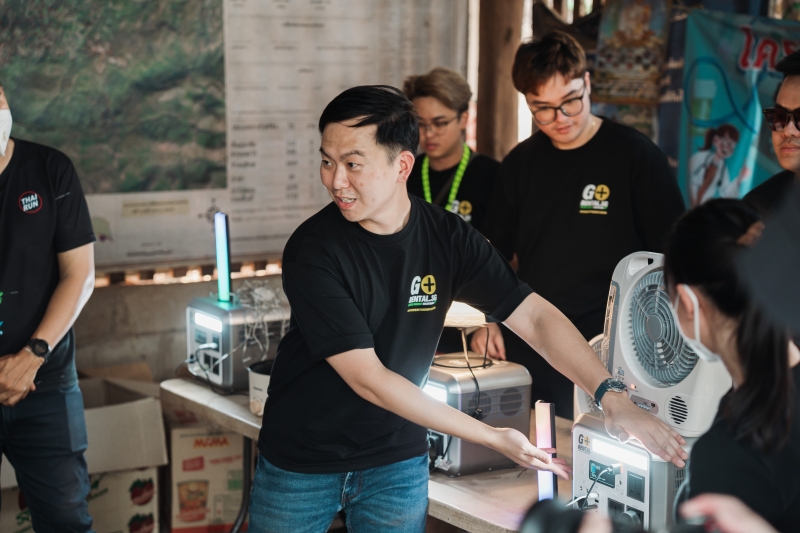
The units are available in different sizes and can be stacked according to individual needs. Peh compares this to the act of layering Lego bricks, an inspiration that came to him while observing his daughter at play. On the other hand, affordability is present both financially and temporally — features that are becoming even more vital as the price of power surges in tandem with current economic matters and higher fuel prices. At GoRental, a standard model costs only S$19.90 (RM63), though average rental rates can vary.
As the adage goes, time is money. Where traditional gensets require 90 seconds or so to turn on, modular gadgets have close to zero instantaneous switchover. For labour-intensive sectors like construction and oil palm plantations, workers can save costs by using hybrid systems rather than relying solely on diesel. “Instead of running a genset for 10 hours, they can use it for two while charging the battery [for the hybrid] and then use the latter for the remaining eight hours,” explains Peh.
Another factor that makes GoRental stand out is its framework. “People know us as a brand that offers solutions and impact,” he says. Beyond batteries, the business is all about bringing clean energy straight to doorsteps. Akin to tow trucks on the road, 90% of the company’s service is responding to demand that arises due to both planned and unplanned power outages in Singapore. For those staying in apartments and even for outlets in shopping lots, access to gensets is limited. Every year, the team answers up to 700 requests calling for unique uses of the battery packs. Interestingly, Peh notices that many households use the units to power fish tanks and refrigerators.
He recalls receiving a plea from a young girl living in a subsidised space with her grandmother, who was in the final stage of care. A blackout left the child scrambling to keep the bedside devices on. Although she could not afford the service, the team delivered the unit to her anyway. “A week later, she drew us a beautiful card and I realised, we could do something bigger,” reflects Peh. “This is not what we initially planned to do, but I feel that it is what the market actually needs.”
Giving back
Through its Power to Empower movement, GoRental has explored different avenues to promote the use of self-reliant and sustainable energy. Recently, the company executed its first outreach programme in Chiang Mai, Thailand. The initiative saw modular energy systems being delivered to a remote community. Overall, 60 solar panels and 31 portable battery units were deployed, supplying 29 households with electricity.
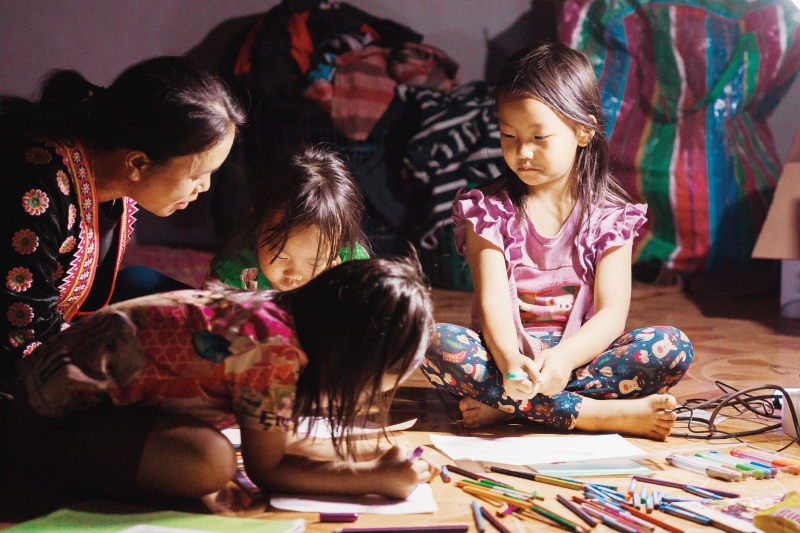
Located up in the mountains, Huay Nam Rin village has limited access to transport, water and electricity. Four-wheel drives are needed to traverse the steep and rocky path to reach the settlement, where families farm chrysanthemum and passion fruit for a living. Being isolated from the main power grid often leads to energy poverty. Residents, consisting mostly of the elderly and young, depend on flashlights to illuminate their nights and protect themselves from wild animals. This has been an ongoing challenge for over 30 years.
3.jpg
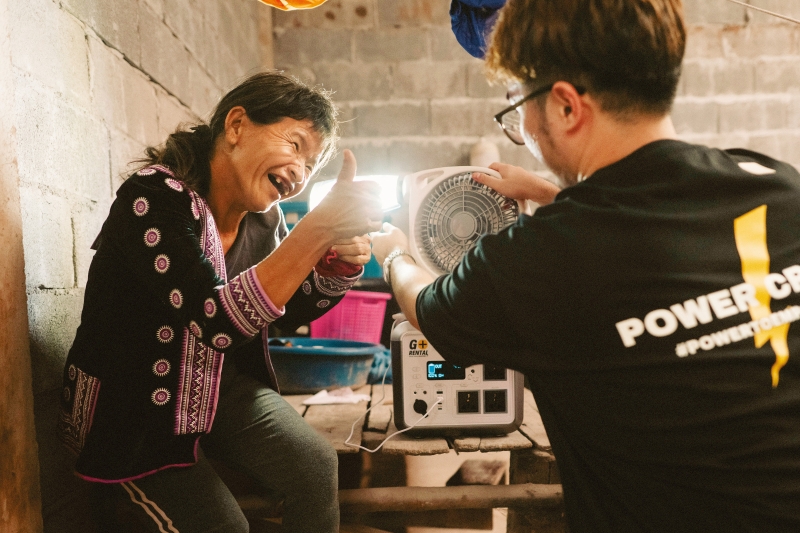
Through a non-governmental organisation, GoRental got in contact with village chief Kriangkrai Suya. He says being able to rely on practical energy will both strengthen and upskill his community. “People here will have a better life and children can study. It will also help us with dangers around the house.”
Peh says improved living conditions will also help to preserve culture and traditions, as people will be more likely to stay in the area.
The new system has enabled villagers to access basic needs — lights, rice cookers and chargers for electronic devices, being some of the most essential. In particular, GoRental’s Nomad Series captures solar energy during the day and provides stored energy after dark. With the capability to light up a whole household, the downstream impact created by a single unit goes beyond just infrastructure and commercialisation.
“For those in need, you can get 15 years of power for a fraction of the cost,” illustrates Peh. “With film and the media, it is more of a transactional business. Coming into the power segment of the market, I think there is a lot that can be done for the betterment of society.”
Smiling, the bright-eyed Peh is steadfast in his mission to raise awareness about the advantages of decentralised energy systems. He plans to spread the movement to other Southeast Asian countries including Indonesia, Cambodia and the Philippines.
Peh emphasises, however, that one does not need to go far to make a “powerful” impact. Across both cities and villages, and even in grid-stable areas, the issue of energy resilience is prominent. Families, individuals and businesses can all benefit from mobile batteries and clean power systems. “Beyond sustainability, we also provide convenience.”
4.jpg
As urbanites take to camping or “glamping” for a digital detox, the experience can be made more comfortable with assistance from modern-day appliances — bring along a mini air conditioner, a fan or even an air fryer without having to worry about plug points.
From a creative perspective, artists and musicians can utilise the devices for continuous connectivity during their performances.
Although the journey has been challenging, Peh looks optimistically towards the future. He acknowledges it is natural for consumers to be sceptical and hesitant to embrace change. “It was hard to get others to believe in the first Apple product or the first electric vehicle. Once other platforms started selling it and the ball started rolling, people said, ‘Why not? Let’s give it a try’.”
To further spread knowledge on sustainable energy and demonstrate the multiple ways it can be used, GoRental will launch its first energy experience gallery in Johor Bahru this month. Parallel to that, the company is planning to expand its philanthropic initiative to local households.
As the world continues to plug into new power paradigms every day, Peh asserts that the core is to help others no matter how much technology progresses.
“Later on, it might not be batteries anymore, but hybrid. In spite of everything, it is still about energy that is affordable and self-reliant.”
Calling for more partnerships between key stakeholders, private entities and those on the ground, he believes that to uplift each other, attention should segue from “hardware” to “heartware”. For the moment, perhaps a power bank that is both heavy duty and disturbance-free is the next best investment as the global energy transition shifts to embrace electrification.
This article first appeared on June 22, 2026 in The Edge Malaysia.