
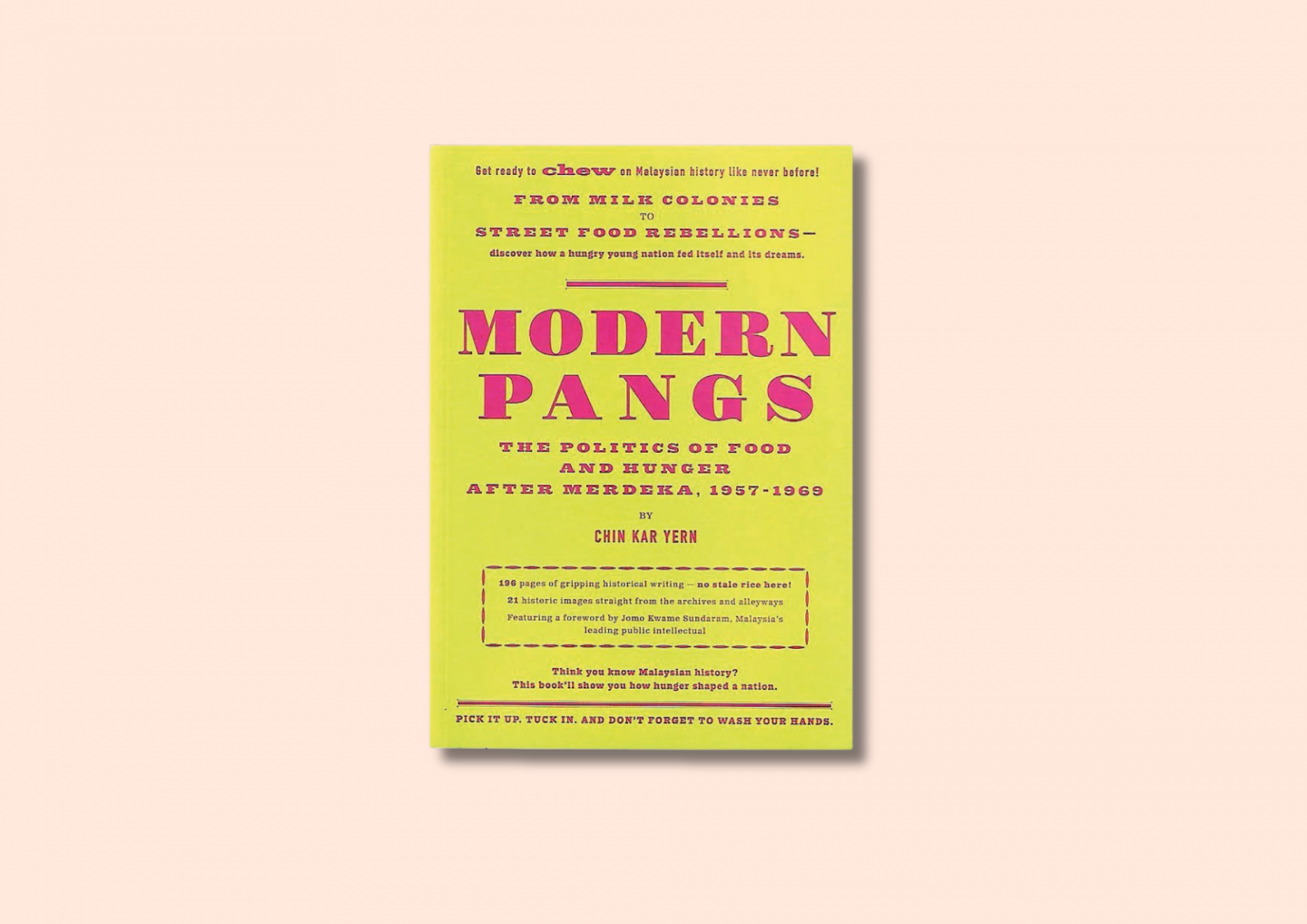
The book explores how specific practices centred on food were born, and how they impacted communities, labour and markets (Photo: Cloud Projects)
During a Dec 1, 1959 Dewan Rakyat session, People’s Progressive Party co-founder D R Seenivasagam asked if the country needed a local defence force to keep it safe. Prime Minister Tunku Abdul Rahman Putra al-Haj responded with another question: “Arms or food, which should we prioritise?”
Security was a prime concern during that time, with communist guerrillas a grave threat during the Emergency of 1948-1960, and Malaya still dependent on the British Commonwealth army for protection. More pressing, however, was the “hunger that gnawed at all levels” as World War II had unravelled local food systems and disrupted supply chains, on top of causing a global food shortage that had dragged into the 1950s.
Malaya was able to stave off famine, unlike neighbouring countries such as Indonesia, Vietnam and the Philippines, which Japan marshalled to make food for its armies during the Occupation, says researcher and writer Chin Kar Yern. “We also had the black market — people smuggled in rice — even with food patrols. Lots of squatters and orang asal planted their own crops, helping those on the rural frontiers to survive.”
A number of food programmes were popularised during the war for a critical purpose, Chin recalls. “You could mobilise entire armies to different parts of the world through food supplies,” he adds.
Independence offered opportunity for reconstruction, but weapons could not feed a starving population. As such, the nation’s foremost leader reasoned that its limited funds should go towards food for the rakyat so “no one would be left starving”. With that in mind, state planners sought to implement food programmes. They selected the commodities to produce and introduced ways to go about it.
In Modern Pangs: The Politics of Food and Hunger after Merdeka, 1957-1969, Chin examines the role food played in nation-building, how specific practices came about and their impacts on communities, labour and markets.
He zeroes in on three aspects — home economics and rural politics post-independence; hawker legitimisation in a time of hunger; and the limits of developments in local dairying, offering different ways of looking at food. Together, they show how policies formulated to overcome malnutrition, regulate hawking and raise milk productivity changed food systems and even altered the land makers lived in.
The goal was to remake the country into a food utopia but, as it commonly happens, ideas are easier to conceive than carry out. Chin pinpoints complex encounters between the state and producers. “There was collaboration, friction and contestation.”
2.png
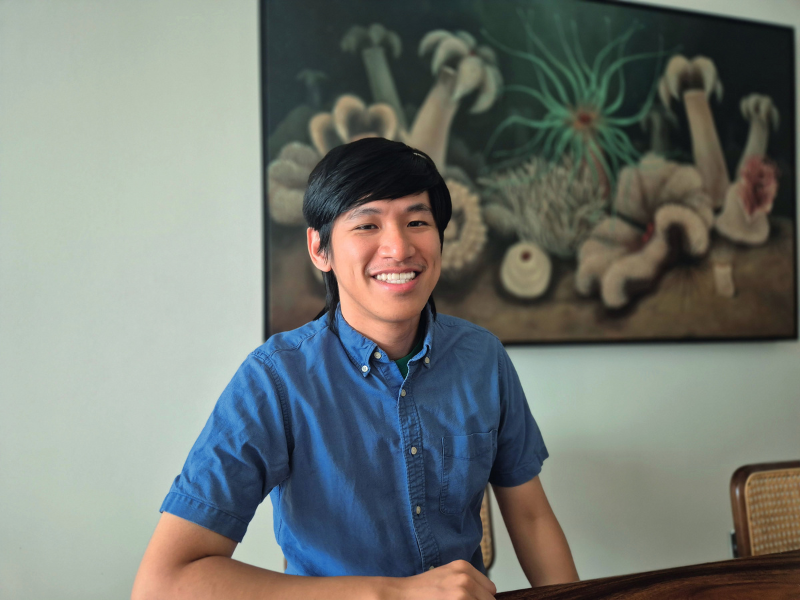
After the war, colonial and national programmes to end hunger and resolve protein malnutrition as well were ambitious but messy, “butting against people in clashes of logic and belief. They were often at odds with, and ignorant of, existing food cultures, practices and economies”, he explains.
Food projects are technocratic; they depend on technical experts, scientists, planners and architects to garner people’s support. In various ways, Tunku’s vision of feeding the nation was fraught from the start.
Doubt and resistance from producers heightened when programmes did not yield immediate benefits, or proved harmful. Besides getting them to buy into state logic, authorities had to deal with squatters and smallholders, and street food hawkers who operated in public spaces. The first group maintained a degree of autonomy at the frontiers, while the latter abided by or evaded municipal rules following their own needs.
Then, as now, politics and power shaped how people prepare and consume food, Chin says, starting with a chapter on home economics, a topic that interests him personally. His mother used to attend cooking classes and would take him, then about four, along. “The time and care she gave to cooking was inspiring.”
Modern Pangs recaps campaigns and courses that encouraged rural and urban Malay women to waste not, be self-reliant, plan ahead, budget and save money — to counter hunger and promote better health. Newspapers and magazines ran articles on mindful purchasing, stretching resources, cooking nourishing meals, proper food storage and making use of leftovers.
As new “kampung leaders” shared lessons on diet, nutrition and food science, state institutions taught home management, trusting families would have enough to eat when women were frugal and made household activities more productive. While state technocrats and academics said perceived cultural and social hurdles bogged down efforts to overcome rural poverty and hunger, female thinkers believed modernising rural women was the solution. On another level, home economics prodded thought about the gender of labour, ideas of what men and women were expected to do, and how these were shaped during the 1950s and 1960s.
Chin’s focus on hawking in chapter two leads readers to food markets, promised licences and affordable meals, issues surrounding place, traffic and sanitation, hawker protection by municipal authorities, locations set aside for vendors to serve different communities, business rivalry and an underlying anxiety about perceived economic differences.
Programmes for hawkers saw the government responding to what was already there — infrastructure, organisations, licensing — to build a regular policy framework, manage their jostle for space, improve facilities, relook dated social and economic notions, and consolidate a recognised labour force.
“It was about being attentive to the needs of different communities and trades, and shaping governance around that. Everything was new and changing.
“If you want to set up stall, how do you engage with others, make friends with them? There were many grey areas — what and where to sell, how to share space — and lots of collaboration going on behind what we saw.
“The working class was trying to survive and people were looking for meals they could afford. And how do hawkers honour food practices they had been carrying on for [generations]?”
Questions like these brought the state and communities together to rethink ways of hawking and rebuild food markets and economies.
1.png
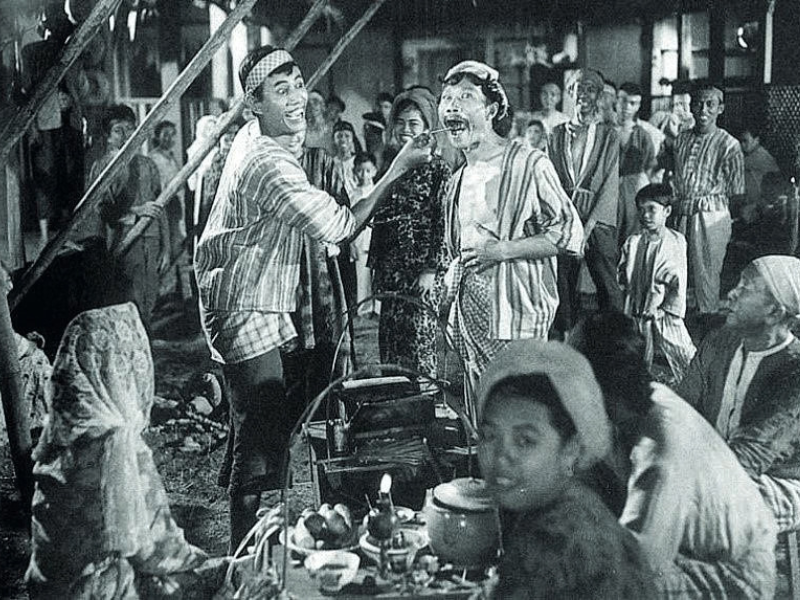
In 1957, the first film of the horror-comedy trilogy Pontianak was the year’s top Malay release, grossing M$1 million. It gave hawking a creative boost, with Abdul Wahid Ahmad as a satay seller who carried those tasty skewers of meat to villagers on a kandar. The inimitable Wahid’s performance stayed with fans, as did his screen name Satay. His role depicted hawkers as “agents in public space and imagination, whose lives and work were profoundly intimate to the rhythms of their community”, Chin writes.
Moving on to the “improbable saga” of dairying, he looks back on colonies established to increase fresh milk production, competition from rich foreign companies, the preference for imported condensed and powdered milk versus local supply, finding new markets, and the financial, cultural and logistics challenges Malaysian producers faced.
Experiments in national dairying hit snags. The state insisted on large-scale production, an approach at odds with the environmental and material conditions of the land and its plural foodways. As a result, livelihoods and ecosystems were upended. Subsidised school milk schemes fared better, giving a welcome boost to nutrition for underprivileged children. At maternal and child health centres, powdered milk was distributed to nursing mothers to feed their infants.
Asked what readers can take away from digesting Modern Pangs, Chin reflects: “Food is political, from the choices we make at home to how entire market economies and practices are structured. These are [determined] by different concerns, from health to economics to even socio-cultural practices.”
Elaborating on the last, he recalls the heated debate over whether migrant workers should be allowed to prepare popular foods synonymous with a place — like char koay teow in George Town, a Unesco World Heritage site. “It’s the whole question of deliberate decisions to preserve and protect status and practice. Such were steeped in public sentiments that seek to vilify and exclude people at the margins of Malaysian society, which was for long a confluence of migrant peoples.”
Food programmes rolled out in the decade post-independence had to contend with social and cultural factors, beside economics. “Things have changed; hawking is so normalised now and milk is everywhere despite the early failures. My book gives a bit more insight into what was going on and why some parts of the country are the way they are.”
Modern Pangs took five years to write; its seed germinated from the author’s undergraduate thesis on historical conceptions of Malaysian food practices from 1957 to 1969. He was preparing to return from the US before the 2020 lockdowns when friends who started independent publisher Cloud Projects asked if he would expand his dissertation into long-form writing.
Research consumed four years and the book was released last September, just before Chin left to do his Master of Philosophy in world history at Cambridge University. He returned home this June and plans to apply for a PhD programme. Currently, he is investigating the visual genealogies of Malaysian rural development in the 1950s and 1960s under a research grant by Harvard University’s Center for History and Economics.
As cries of “Merdeka” ring out again on Aug 31, Chin pauses when asked what, for him, would be a significant meal for the occasion. “Nasi lemak. It’s simple, fragrant, tasty and easy to bring everywhere. You can pick it up at any point — a sort of statement on what a mobile lot Malaysians are.”
This article first appeared on Aug 31, 2026 in The Edge Malaysia.