
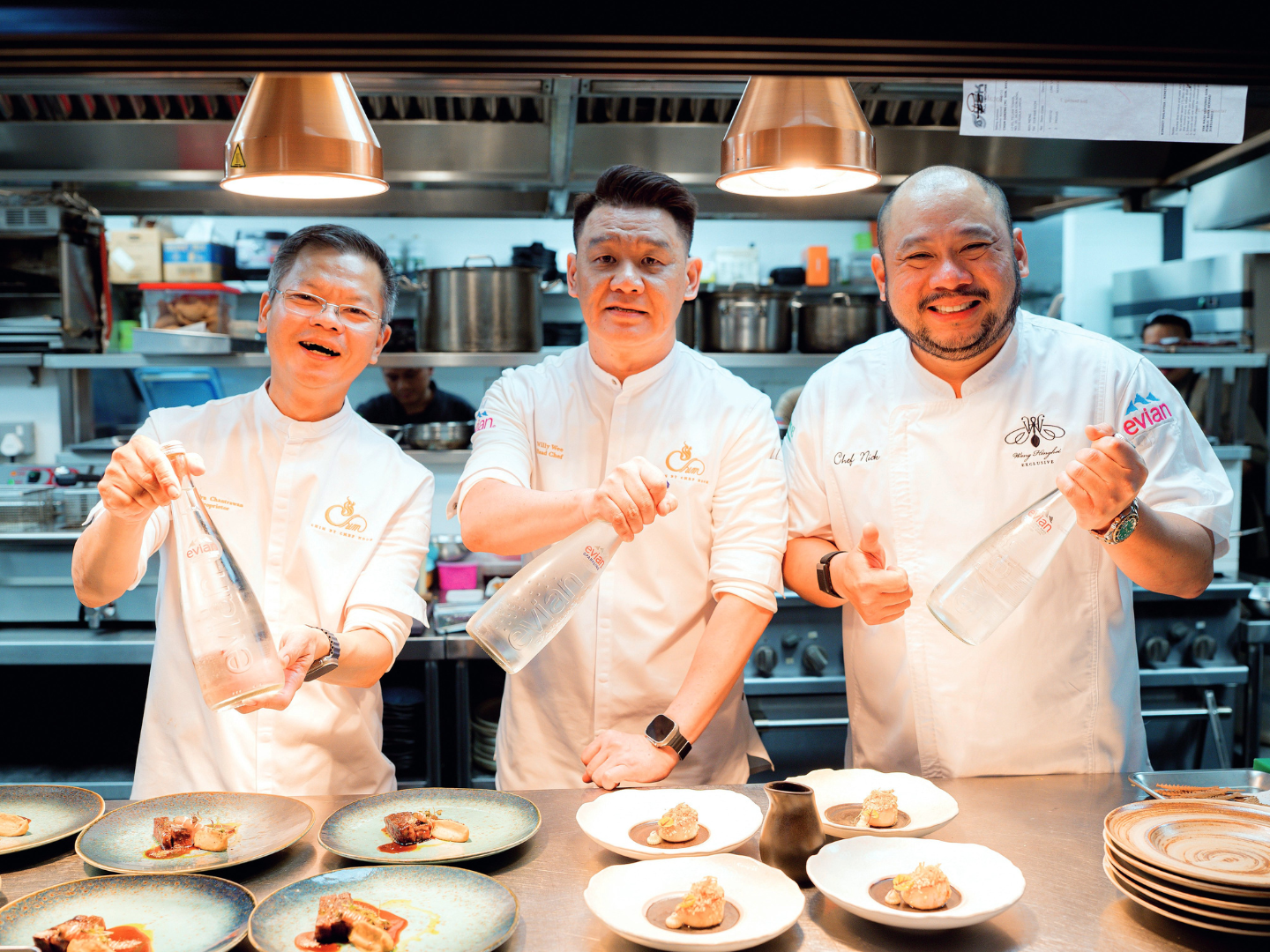
Noom, Wee and Nick co-developed a menu that would both pair with and utilise Evian to emphasise the water’s best qualities (All photos: Chim by Chef Noom)
There is a pot of beef soup in Bangkok that has been simmering away for more than 50 years. Its owners preserve a portion at the end of every day to make part of tomorrow’s base. The receptacle has been accumulating flavour by the decade, and regulars who sup from this dark pond of meat, herbs and history attest to its sheer depth and intensity — traits supposedly only time can provide.
So, it will surprise some to learn that one of Thailand’s most famous tom yum from one of Thailand’s most famous chefs uses not broth bubbled for the equivalent of an overworked city-dweller’s weekly office hours, but plain old water.
“Many people think that to make a good tom yum, you need to use fish or chicken stock. But, actually, in the olden days, they did not boil and reduce bones — they used rainwater,” says chef Thaninthorn “Noom” Chantrawan of the ancient soup that many credit with earning him his star (a claim he humbly disputes).
A fervent advocate of heritage methods that honour the true roots of Thai cooking, Noom once stumbled upon instructions in a library for a dish served to King Rama II. The remedial stew was crafted 200 years ago by noblewoman Madam Somcheen for the ruler, who had lost his appetite because of illness, but it eventually disappeared from the modern culinary vernacular. Centuries later, Noom’s version, aptly named The Lost Recipe, draws crowds to his one Michelin-starred restaurants Chim by Siam Wisdom in Bangkok and Chim by Chef Noom in Kuala Lumpur, all aching for a taste of tradition in its truest form.
1.png
Celebrating this spirit of past, purity and pushing boundaries, the Malaysian outpost recently hosted a one-night-only six-hands dinner that brought together Noom, head chef Willy Wee and Nutthapol “Nick” Pavapaiboon of Wang Hinghoi. Titled “Echoes of Siam”, the evening was held in partnership with Evian, as part of the brand’s continued commitment to supporting fine dining scenes across the world.
“Tonight, we’ve designed a menu that matches the mineral water, and I’ve also used it to make lots of fermented things,” said Nick, an Evian ambassador known for his larger-than-life personality and visionary interpretations of Thai gastronomy. The trio took advantage of Evian’s high mineral content, filtration level and clean profile to present a line-up that took diners back in time, focusing on natural flavours and innovative know-how that faithfully reflected the intricacy of Thailand’s culture and produce.
Typically relegated to an obligatory accompaniment, water instead pervaded the meal, serving as both a pairing option and fundamental building block of each course. Guests were welcomed with a lychee mojito mocktail, while a saké and wine supplement was available as well.
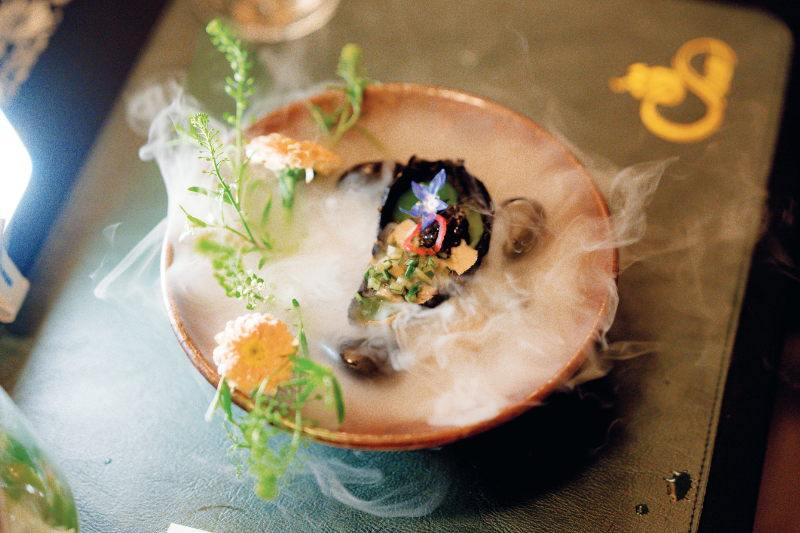
Asked what they were most excited to showcase, Nick assured: “We’re proudest of how we’ve applied native tastes and techniques to Malaysian produce, since we are such close neighbours. I’m really looking forward to your trying the blue crab, fermented in fish sauce mixed with sparkling Evian overnight and plated with a sour-spicy granita and clear seafood sauce, to open this evening.”
Amuse bouches can occasionally seem like utilitarian preamble, but to say this starter came out the gate swinging might be an understatement. A sweet, tender mouthful of raw crab bursting with oceanic freshness and funk made a mighty fine first impression, especially accented by the tantalisingly piquant dressings. Thin slivers of ginger, also fermented in sparkling water, proved an unforgettable detail — stripped of astringency and turned into a punchy counterpoint.
2.png
The Harima oyster, a Chim classic, effortlessly upheld the momentum. Creamy and properly briny, the sous-vided flesh was topped with Amur caviar, mayonnaise, tangy jalapeño gel, kyuri and pickled shallot nestled on an edible oat shell for a lovely assemblage of saline and vegetal notes.
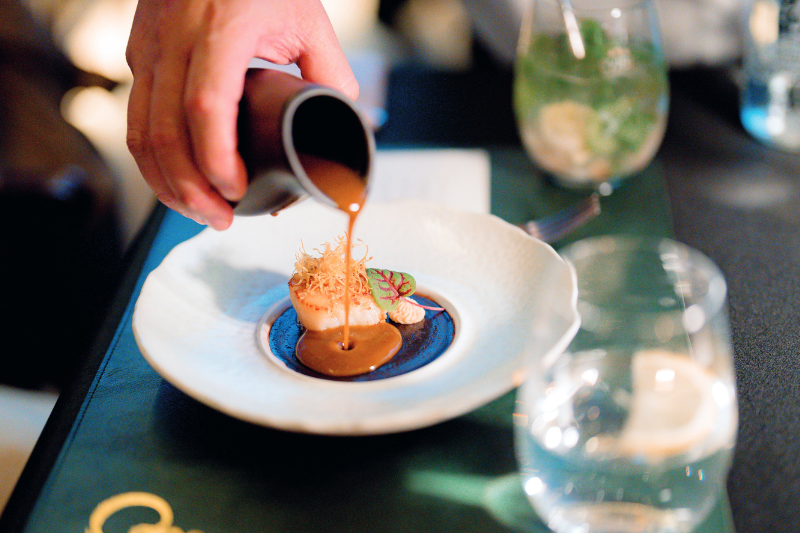
What followed was Hokkaido scallop, expertly seared on one side for a supple mouthfeel, with a crisp black garlic crust and lemongrass-forward curry sauce made from fingerroot that packed a burn not many fine dining establishments would be brave enough to serve. “Good water always brings good results. Each component has saltiness, sourness and spiciness, but after a sip of water, it should bring you back to balance again,” Nick remarked.
Taking heat in an alternative direction was Wee’s chilled deep-sea prawn, meaty and sweet, in a jicama and cucumber som tam with red curry espuma. “It’s something I believe our guests are used to experiencing hot; so, I hope it will be surprising for them,” said the local chef. Since the Thai New Year was approaching, the team experimented with temperature to craft a summery menu, inspired by seasonal ingredients.
3.png
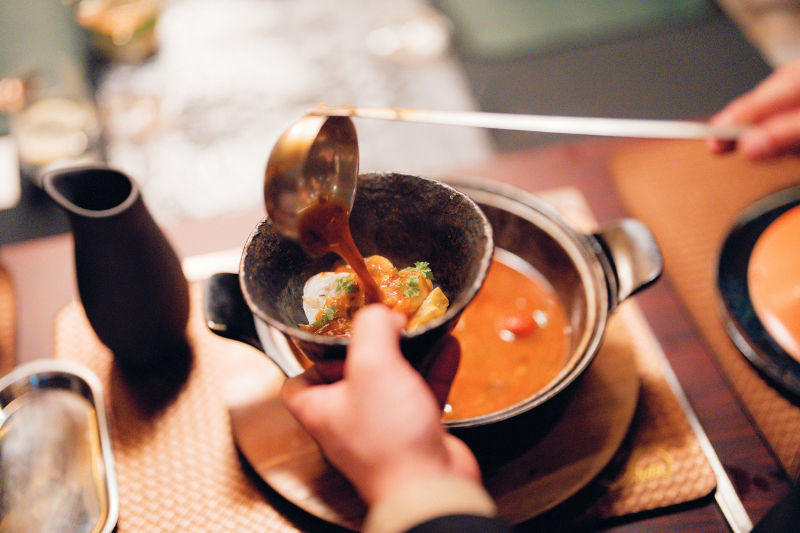
The appearance of a clay tajine astride a serving trolley could only mean one thing. Swirling steam from the vermillion vat of Michelin fame instantly transfixed the entire table like a tempting beckon of the finger. “I’ve used Evian as my base to capture the purity of herbs,” said Noom, adding that unlike stocks, which can kill an ingredient’s fragrance, water’s neutrality allows diners to better detect the essences of kaffir lime leaf and galangal.
In a gastronomic landscape infatuated with powders and Pacojets, it was indescribably refreshing to be met with a full, piping bowl of soup in the middle of a fine dining meal. Chunky with hand-charred shallots and ginger, intensely herbaceous and, without a doubt, plenty spicy, it captured the lip-smacking familiarity that makes Thai cuisine so adept at dismantling pretense, no matter how elaborate the setting.
Instead of harsh citrus, young mangoes and starfruit gave the liquid its iconic ripe, complex acidity, while rice starch lent the concoction a smoother body. Most pleasing, though, were the generous, lightly blackened slices of Phuket lobster — the sheer joy that comes from devouring a luxurious mouthful of beautifully cooked shellfish is simply bar none.
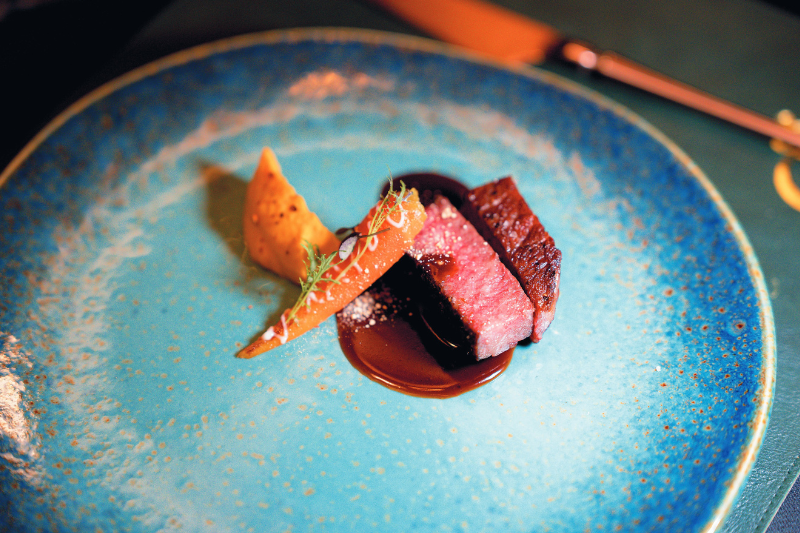
One palate cleanser later, we arrived at the mains. Oil-bathed goby, flaky with a firm bite, paired excellently with crisp green beans and mild lotus stem. The fish bone cracker made from — you guessed it — fish bone stock offered a collagen-rich relief from the spiced, zesty seasoning, though we found it tamer than the other actually hard-hitting courses. For a grand return to land, Wee delivered decadent Miyazaki A5 wagyu alongside an incredibly bright tamarind sauce — deglazed with Evian instead of wine — that cut exceptionally well through the steak’s dense marbling.
The meal’s epilogue was mango sticky rice à la mille-feuille, featuring juicy diced fruit, sweet cream and chewy grains between delicate layers of pastry, plus a toasty quennelle of coconut ice cream to seal the deal.
4.png
Though Nick admits he is not one for four- or six-hands dinners (“Chef Noom convinced me — he said I cook in a ‘weird’ way!”), this was hardly the first instance of the trio working together. They have been collaborating for nearly five years, considering themselves more like family at this point and constantly studying the others’ work to elevate their own.
“We expend a lot of time and effort on R&D — some dishes take three or four months; others, even a year,” explained Wee. “We are striving to make a perfect thing, though, of course, nothing can be really perfect. At the very least, we want you to take away a good memory from this experience. That’s the most important.”
This article first appeared on April 20, 2026 in The Edge Malaysia.