
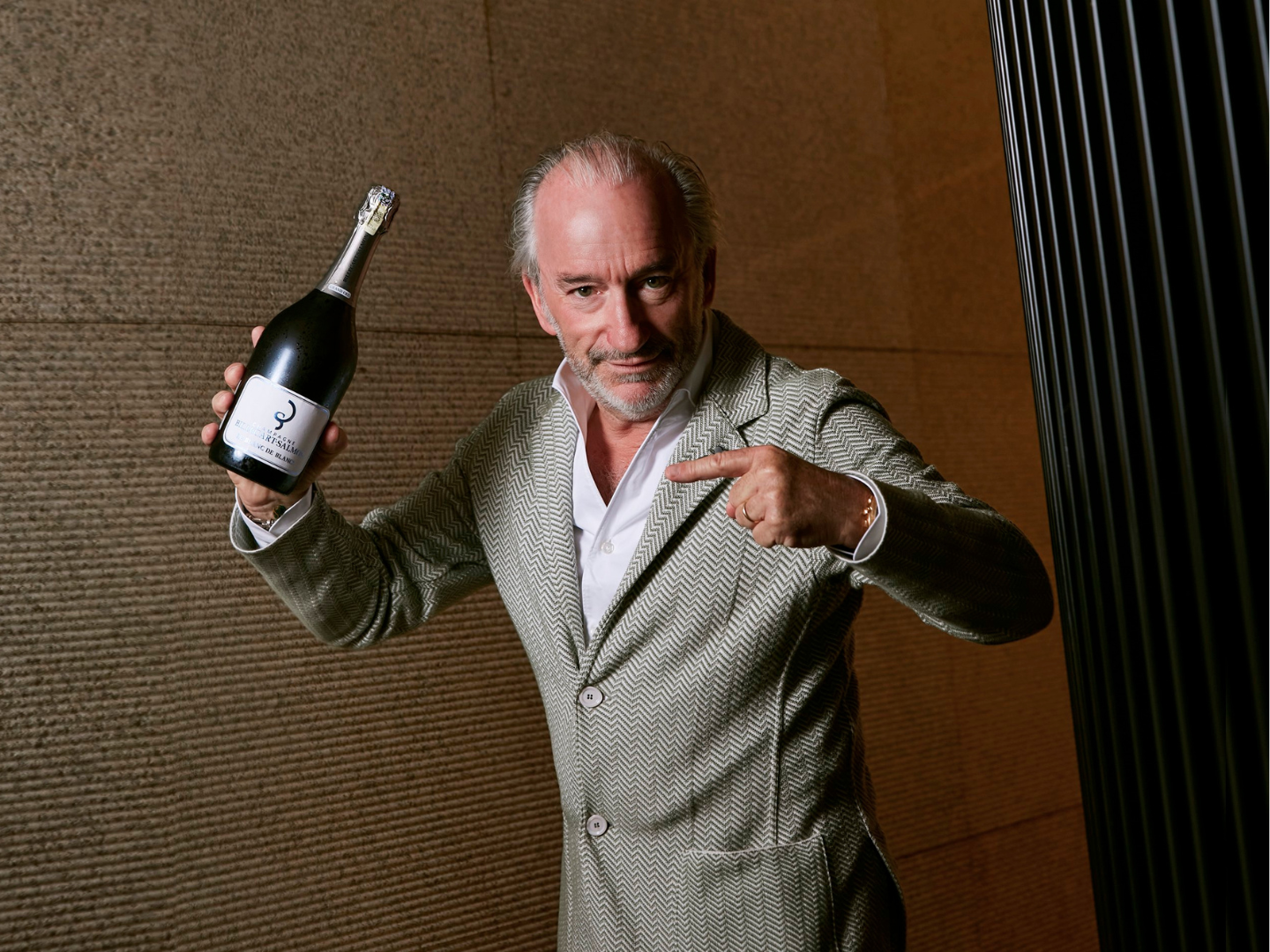
Bader: I ‘live’ Billecart-Salmon as if it is my own house, as do all of my colleagues, I believe. We make them comfortable when they enter, so that they genuinely feel like it is their home (Photo: SooPhye)
Wine has never been and will never be a foreign concept to the French. Hours-long family lunches where boisterous conversation flows as liberally as bottles of reds and whites are an inescapable ritual. In Champagne, babies undergo a baptême champenois, the wetting of the lips using a dab of the liquor during baptism. So, despite hailing from the historically non-vineyard growing department of Ardennes in the north, Alexandre Bader of Champagne Billecart-Salmon has always viewed working with wine as something of a ceremonial return to the familiar.
“It was in November 1993,” he says, recalling the day he joined the two-century-old maison before pausing to go briefly wide-eyed. “Wow. Yes, so it’s been 33 years.”
Once a humble trainee just looking for a side gig, the larger-than-life Bader has been vitally responsible for sculpting the house’s identity over his decades of involvement, an issue he continues to tackle as shifting attitudes towards the luxurious liquid spell challenges for the industry. In his official role, he oversees the company’s marketing strategies and digital presence, travelling far and wide to — in his words — “bring the good news of Billecart-Salmon to the world”.
In person though, Bader is not so much a stickler for titles. “You don’t know our real jobs,” he whispers, leaning in with a serious glare. “We are the sales guys of happiness. We share happiness, all day long. It’s formatted in bottles, from 75cl to Nebuchadnezzars of 15L — those are for when we are feeling more generous,” he grins.
At the Sunday brunch buffet hosted by The RuMa Hotel and Residences to promote its recent partnership with Billecart-Salmon, Bader is an absolute whirlwind of energy, bobbing and weaving through the hot and cold stations so nimbly the event cinematographer can scarcely keep up. One would not have guessed he had been on a non-stop, two-week journey jet-setting across Indonesia, Singapore and Malaysia, with a flight to Shanghai in less than three hours.
Billecart-Salmon’s Asia-Pacific director Sébastien Papin, all too familiar with Bader’s seemingly limitless pep, simply chuckles, “Oftentimes, people are not actually ready for Alex. He can be a handful but in a good way. He’s never boring.”
Well, what else should one expect from a man so deeply infatuated with the maison that he proclaims to have never truly worked a day in his life?
Carpe diem
body_pics.png
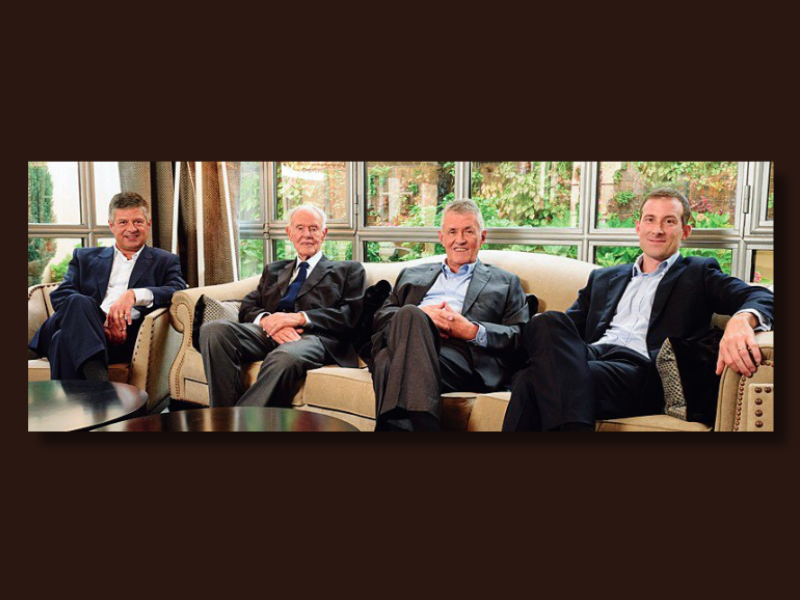
In the early 1990s, the young Ardennais was in the midst of completing his military service. “I became a driver for the NATO secretary-general in Paris. I would pick him up in the morning and drop him off in the evening,” he reminisces. With little to do between his duties, Bader sought out François Roland-Billecart, who had just taken charge of the family business. After explaining his circumstances, the head of house agreed to employ Bader at the estate on a part-time basis.
“When you are a student, you work. You don’t know exactly what your future will be, but you meet those from different businesses, religions and continents, and eventually you have these revelations. They will show you the way. Once you meet the proper people on that first day — and for me that was Mr François, his father Jean and brother Antoine — it’s like a pairing, you know? You go together or you don’t. Likewise, why divorce if you’ve met the right one?”
Passion is his motivation, according to Bader, but perhaps deeper than that is an absolute fearlessness and zest for life that informs this philosophy on committing to greater things. “Once you meet your passion, you have only one chance to take it. Marry it. I believe everyone will encounter an opportunity to become not only successful but someone useful to their family, community and beyond. But you cannot miss it — it is a small window that opens once and after that, bye-bye.”
Enduring legacies are paved by the visionaries who saw those windows and seized them, and Billecart-Salmon certainly did not sustain itself for over 200 years by refusing to adapt. Since its founding in 1818 — by Nicolas François Billecart, his wife Elisabeth Salmon and brother-in-law Louis Salmon — the Mareuil-sur-Aÿ-based company is one of very few to remain family-owned, managed by seven consecutive generations.
It bounced back from the devastation of WWI after being left with a scant 75,000 bottles in its cellars. Thirty years later, Jean reverted to traditional production techniques, introducing longer, low-temperature fermentation to achieve the champagne’s signature finesse. In the 1970s, he set about revolutionising public perceptions of brut rosé through Billecart-Salmon’s distinctive version, creating one of the best rosés on the market. At the turn of the century, Antoine secretly submitted the 1959 and 1961 vintages for the Champagne of the Millenium tasting; they placed first and second respectively, earning them landmark recognition.
1.png
Bader, no stranger to the tumult of trends, has played his own part in helping the house keep pace through several major moves. Among his first tasks was to buy back Billecart-Salmon’s stock from supermarkets as part of a radical strategy to reposition the brand within a more exclusive context, distributing it instead through independent retailers and fine dining establishments. In 2003, he revamped the maison’s logo, removing its old-fashioned coat of arms and adopting the minimalistic, streamlined symbol many of us now recognise — a half B joined with an S.
Bader has witnessed the handing over of the reins between heirs twice over, and that closeness with the generations of Billecart men has taught him the value of time. “From the start, with [François and Antoine], I already knew we were producing an amazing champagne. We have worked to develop it into what we have today, but there is still a long way to go. The only way to be successful will be to keep striving for purity and perfection in quality. But it will not happen overnight because we have had to improve generation after generation, vintage after vintage, harvest after harvest — we always learn from the former.”
Upstream responsibilities, including producing and maintaining the liquid’s pedigree while adapting to contemporary viticultural practices and consumer preferences, fall under the purview of the Billecart family. In that sense, Bader explains, “We are the supporters, the biggest sponsors. I ‘live’ Billecart-Salmon as if it is my own house, as do all my colleagues, I believe. We make them comfortable when they enter, so that they genuinely feel like it is their home.”
Papin agrees, “I’ve been with the company for 18 years. I always say, if we keep scoring goals, don’t change the winning team. At the end of the day, that’s what we’re here for.”
Keeping a solid roster also entails looking ahead to incoming custodians for when transitions eventually happen. “That switch is never easy. But throughout all this, champagne has always been the priority,” says Bader. “Right now, Mathieu Roland-Billecart, as with each of his predecessors, has brought his own taste to the company. And it is, to me, the closest to what the current market wants. Our production is small, so we can adjust. If we have to wait, we wait.”
The long game
5.png
It is a preoccupation with time that seems to enshroud not just Bader’s work, but the fate of wine at large in our present day. Since 2023, champagne shipments have declined annually, reaching their lowest level in the past 20 years in 2025 (excepting the pandemic) with little optimism for a rebound. Falling disposable incomes have played a role in this downturn, but most concerning, according to Bader, has been the transformation of drinking habits in a demographic that appears unable to contend with taking it slow.
“[Young people] today totally don’t care,” he laments. “They are interested in many things, but they do not care. We have lost, perhaps as a result of the pandemic or social media, patience. We have lost time.
“Until about 2015, we had a huge consumption of champagne. In 2016, we sold 350 million; last year, 266 million. Today, champagne producers like us have a big problem. And at Billecart, we are aware that young people are disappointed by how our products have evolved in both price and mood.”
Indeed, as Champagne Pommery’s former director Adolphe Hubinet once said, “le goût se modifie très vite” (taste changes very quickly). Daily interactions are too content with being touch-and-go, and when group meet-ups require grand feats of scheduling and serendipity, there is little freedom to pause and savour the finer things with friends. The art of hosting is fighting tooth and nail for a resurgence. Even when the opportunity arises, the lack of education or awareness on wine, combined with the daunting cost, tends to steer drinkers towards cheaper, poorer-quality liquor.
“We can talk all about this disinterest, but it is our own fault,” Bader admits. “We are guilty. We need to revive the interest in having an hour or two to sit with friends and family, and enjoy a long meal. That moment, be it in Europe, Asia, Africa or the Americas, is when you exchange ideas. We want to bring people back to something they like. Think pizza with champagne — not covered in shaved truffles or anything, just something good and approachable.
“It’s part of the reason behind what we are doing, organising champagne dinners, brunches and tastings. We are facing a huge wall now in the education of younger customers. Through sommeliers, maître d’s, cavistes and retailers, we do a lot of masterclasses. Seb conducts those up to six times a week,” he says.
Influencing behaviour on such a scale will take a village — or in this case, a region. Bader readily states that transforming the product’s image will require the whole industry’s initiative. “I myself do not know how to fix this, but I am not alone. If we band together, we can solve this problem and bring younger drinkers back to champagne.”
As synonymous as bubbles can be with happy days, the stigma of extravagance attached to the wine also deters customers, either for fear of judgement or the conservative compulsion to “save it” for a meaningful occasion. Accept the treat spontaneously at the risk of seeming overindulgent, or talk yourself out of it until abstinence runs ad infinitum? When is the best time to drink?
“Do you think you need to deserve a day to drink champagne?” Bader asks candidly in return. “No. If you never drink it, you can’t imagine or feel that taste. If you take it out of your life, you will forget it. It’s what we must avoid.”
As the globe teems with chaos and it is easier than ever to subject oneself, endlessly, to the depressive deluge of doom we are powerless to change, Bader’s perspective offers straightforward levity: why deprive yourself of joy if it is available to you? “We have had such a long cycle of crisis after crisis. We deserve to breathe, and champagne is part of that respite,” he insists. The simple, tangible delights of good food, drink and company should be embraced, not locked behind the bars of austerity or the notion of needing to earn it.
“Just to buy champagne — that name, ‘champagne’ — is magical. You remove it from the fridge, open the top and hear that ‘pshht’. I’ll tell you, when that happens, 98% of people will get this smile, like a banana. In France, it costs just €60 to have that happiness and memory with your loved ones. How much would it cost staring at your phone? How many videos would you have to watch? How long would it last?”
Alike in dignity
While Bader’s year typically involves 24-hour pit stops in every other country, fatigue is simply not in his vocabulary; on the contrary, that trust placed in him by the Billecart family is a privilege that gives him purpose. “I love to feel the market, going to restaurants and hotels, connecting with people. I travel abroad and beyond Europe for three or four months a year, I visit every region twice annually. The world is big, eh? If you need me, I’ll come. This is the force of the whole Billecart-Salmon team, we are at your service.”
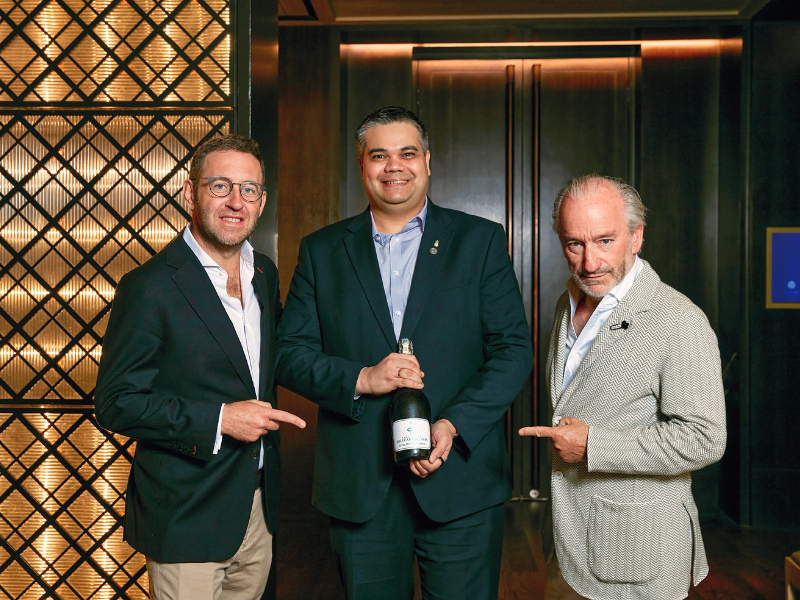
On strengthening the company in Southeast Asia, Papin explains, “The way we function is to try and identify what we call flagships, essentially people we believe can make the brand shine and be visible. In Singapore, for example, that’s Raffles Hotel; here, it is The RuMa.”
Their collaboration began back in February, but is now being pushed in full force primarily through the hotel’s Sunday brunches at Atas. Guests can order a bottle of bubbly to accompany an opulent buffet spread plus some cooked-to-order dishes.
3.png
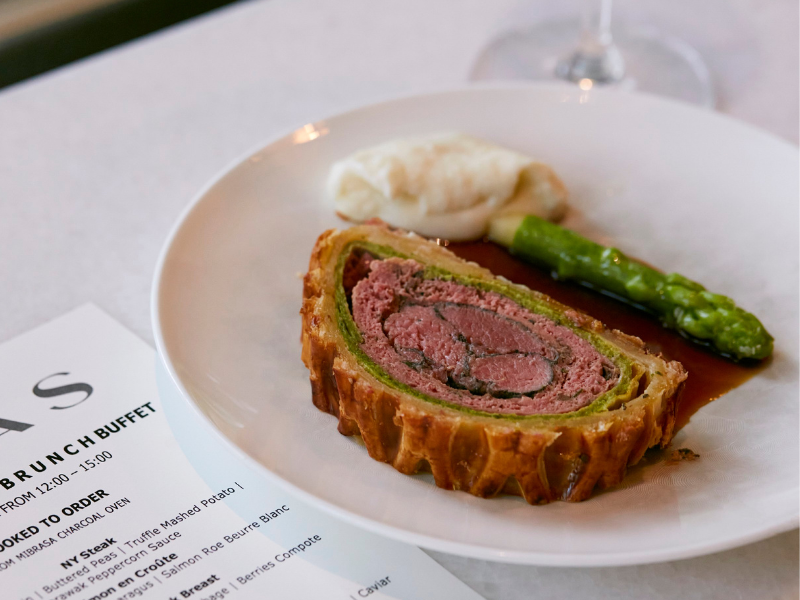
Michel Bachmann, general manager of The RuMa, reveals the reason behind the partnership: “We want guests to experience it and see the value. It’s not cheap, but it is a very good price. I chose Billecart-Salmon because I’ve known Alex for 10 years, and I worked with him as well at Amandari Bali, Indonesia. It’s a bit more quiet luxury — not new but also not everywhere.”
At RM380+ for Billecart-Salmon Le Réserve and RM480+ each for Le Blanc de Blancs and Le Rosé, the bottles are nothing short of a steal for the prestige and provenance. Bachmann stresses that approachability, whether through price or tasting events, is the establishment’s strategy for popularising the champagne within the local market. “We are trying to change the mentality. Yes, champagne is for celebration. But I hope people will realise there are lots more things in life to celebrate than just birthdays and anniversaries.”
“We are independent and don’t have the financial backing of many big groups, but why are we the champagne of The RuMa, Raffles and the best international hotels? It is because they know they will never be disappointed by Billecart-Salmon. The clientele will thank them for the privilege of tasting our champagne, because it is not easy to find. And I don’t want it to be easy!” laughs Bader.
The house promotes different expressions throughout the year in line with the seasons: entering the height of spring, Le Blanc de Blancs is perfectly suited to sipping under the cherry blossoms, he adds.
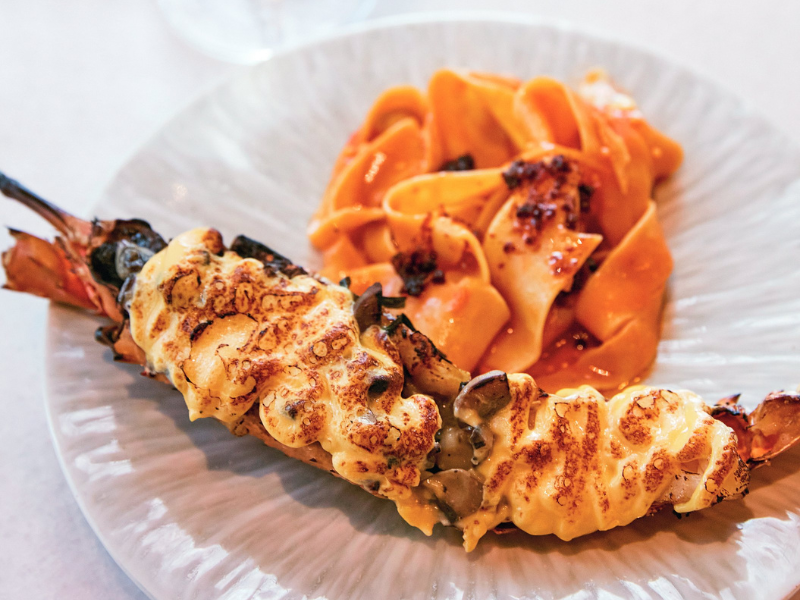
The glistening gold 100% Chardonnay is infused with an exceptionally delicate perlage for a uniquely smooth texture and sumptuous mousse. The entry bursts with acidity, crisp with citrus zest, almonds and a buttery touch of brioche. Seafood is naturally the acquaintance of choice here — we found The RuMa’s spread of slipper lobster and hamachi sashimi to be a delectable match-up.
2.png
At home, Bader — an avid chef with a dedicated Instagram account for his creations — enjoys the bottle with raw langoustine and a drizzle of olive oil. He also suggests Marennes-Oléron No 2 oysters for a tried-and-true accompaniment to its refined, dry character.
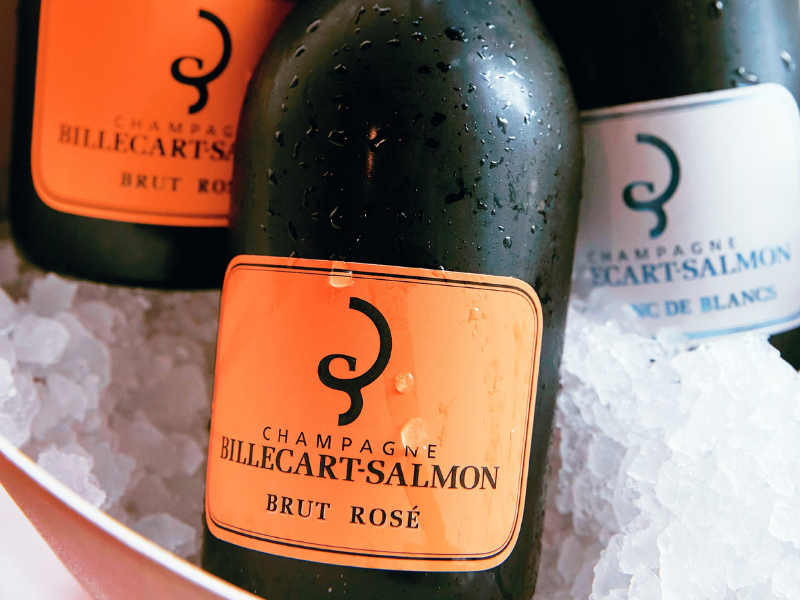
Le Rosé, Billecart-Salmon’s flagship cuvée, is the go-to for summers: livelier on the bubbles, with an enticing nose of ripe red fruit and florals that turns into subtle yet vivid berries on the palate. To go with it, Bader strongly advocates for viennoiseries to emphasise its freshness and understated sweetness. His other top dessert pairings include oaky, autumnal Le Sous Bois with fig pie and Le Blanc de Blancs with mirabelle plums.
After three decades, it might be hard to envision a Billecart-Salmon without Bader as its ardent ambassador. He plans to retire in the next six or seven years, but there is little to worry about the brand’s unshakeability. “We are confident about the quality, but we are even more confident about the future,” he says. “We know today how many investments we have made, from the vineyard to vinification process and, especially with Mathieu, hospitality. Consistently, we have never stopped investing.”
Wine will always have his heart though, as it has from the very beginning. His next adventure will be discovering never-before-tried champagne pairings, and he has already made plenty of headway working with various chefs. “The cuisines we are experimenting with are not French. Spicy cuisines — Indian, Malaysian, Indonesian, Thai — even Japanese and South American. We can explore outside of that traditional faith we have in pairings — foie gras with extra brut, camembert with demi-sec,” he shares.
For now, there are still people to please and corks to pop. As Bader jauntily asserts, “This is my first job, and it will be my last.”
The Sunday brunch buffet at Atas runs weekly from noon to 3pm.
This article first appeared on May 11, 2026 in The Edge Malaysia.